The most enchanting political romance witnessed in recorded history merged Roman military might with Egyptian wealth.
The year was 41BC when Mark Antony, the great Roman, left his troops in Tarsus to spend the winter of that year in the bosom of Egypt’s most influential woman, Cleopatra VII.
In Antony and Cleopatra, Shakespeare records the spectacle that ensued when Antony landed in Alexandria, Cleopatra’s seat of power. The mental picture of this epic show, as depicted by the great poet, is as vivid as it is enduring:
“The barge she sat in, like a burnished throne, burned on the water: the poop was beaten gold, purple the sails, and so perfumed that the winds were lovesick with them; the oars were silver, which to the tune of flutes kept stroke, and made the water which they beat to follow faster, as amorous of their strokes.”
For her own person, Shakespeare surmised of Cleopatra, it begged all description:
“The city cast her people out upon her; and Antony, enthroned in the marketplace, did sit alone, whistling to the air; which, but for vacancy, had gone to gaze on Cleopatra too, and made a gap in nature.”
Confronted with opulence and overt display of power, the ordinary man and woman are nothing. Their solid hearts melt in utter supplication, reason gives way to worship and pride departs them.
In the instance recited by Shakespeare, even nature joined with the commoners to gaze at the rare Egyptian. The Roman was left whistling into nothing since air, the receptor of his whistling, was in consort with the masses.
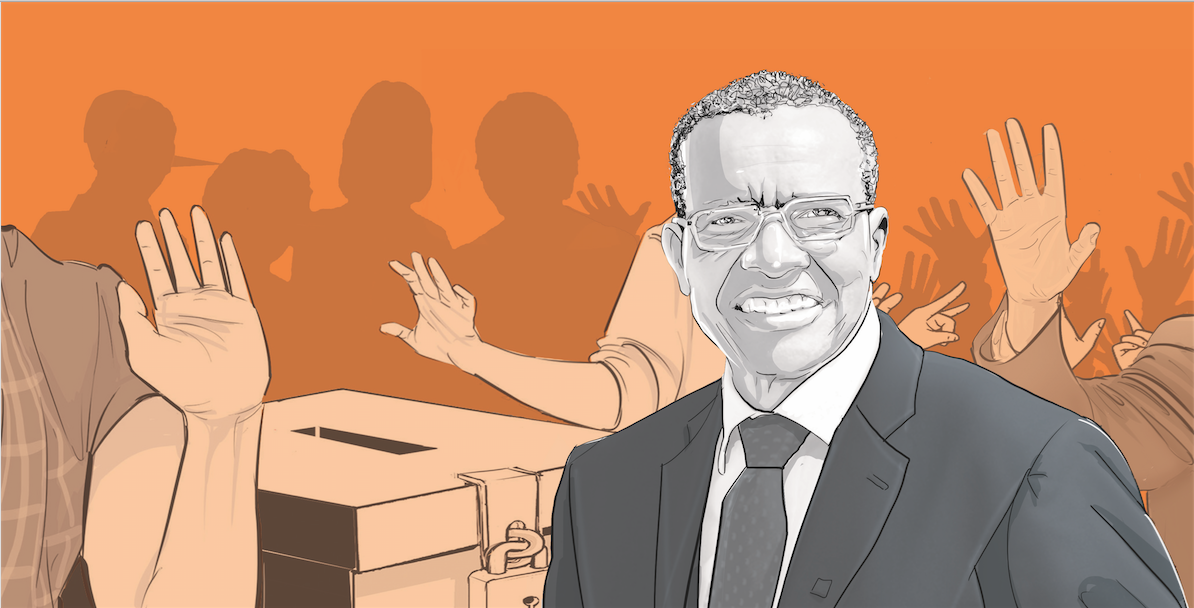
I have pitifully watched the former Chief Justice David Maraga make lonesome countrywide tours to popularise his presidential bid. Except for his loud public address, a modest convoy and a handful of sympathisers, he has attracted very little excitement.
Yet his message and record in public service are solid. His last posting as the chief protector of the rule of law in the republic was particularly remarkable. He led Supreme Court judges into overturning the will of millions of Kenyans over electoral infractions.
The greatness of a nation, he said while overturning Uhuru Kenyatta’s win, lies in its fidelity to the constitution and strict adherence to the rule of law, and above all, the fear of God.
It requires tonnes of moral courage to overturn a presidential election anywhere in the world, let alone in Africa. Maraga did it without batting an eyelid. As President Kenyatta scratched his sore self in Burma market, Maraga had long moved on and resumed his Adventist church elder duties.
He has now made the full implementation of the constitution the cornerstone of his campaign. This is the same document Kenyans overwhelmingly endorsed in 2010, whose full promise has been curtailed by successive regimes.
The man who led the charge against the document in the 2010 referendum is his main competitor. Unlike the rest of them, Maraga is not insulting anyone, not dishing out ill-got wealth and he’s certainly not hogging media space.
He is neither threatening to dispatch adversaries to the hereafter nor taxing the very air they are breathing. He is impregnating no one’s daughter.
Yet verily, Maraga will bite the dust next year. Barring a miracle, he will be retired for good from public service. He stands no chance of becoming the country’s sixth president.
Kenyans would rather elect seven of Barabbas stock in a straight row before a Maraga. Our electoral contests are decidedly rigged, tribal and a money affair. When the votes are counted, Maraga will be as hopeless as Antony in Alexandrian street, bereft of everything, including nature.
Maraga stands a much better chance elsewhere. He can choose to bequeath the country the gift of a comprehensive, broad-based civic education or choose to be a sore loser.
The quality of the country’s civic and voter education is inversely proportional to the age of our democracy. Kenyans are now far much worse voters than they were in 1992.
Maraga can lead the revival of quality civic and voter education, which will enable us to choose the better devil we deserve. We certainly do not deserve an angel in the ilk of Maraga.
Musau, an advocate of the High Court, is a Senior Project Manager with the Friedrich Naumann Foundation. The views expressed here are his own