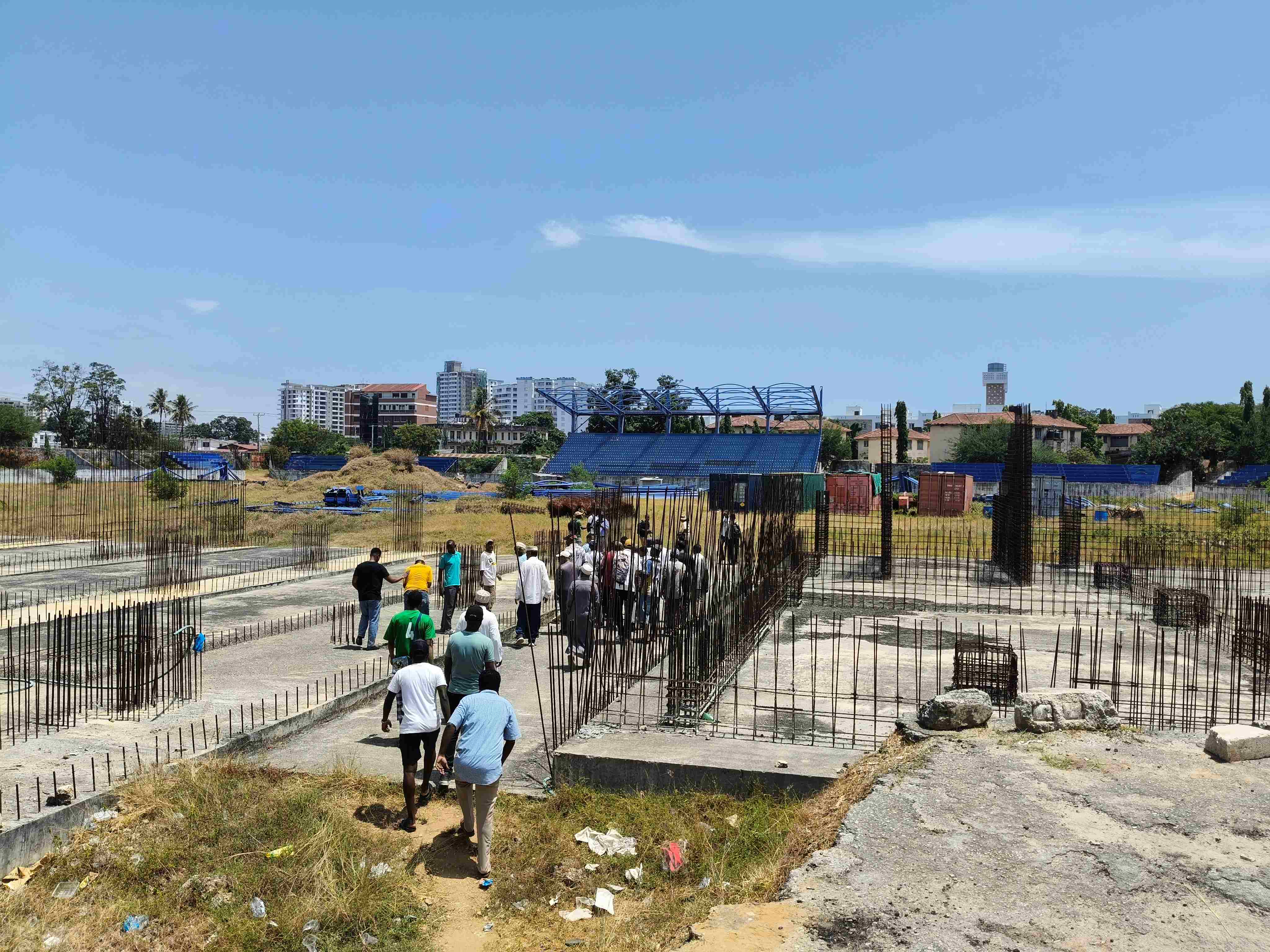
The Sh1.2 billion Mombasa Stadium which is under renovation / BRIAN OTIENO
WITH Kenya’s newly announced Sh5 trillion National Infrastructure Fund on the horizon, there is an urgent need to develop a skilled talent pool capable of meeting the country’s burgeoning infrastructure demands.
This pressing requirement has been highlighted by authorities in project management, who warn of a significant talent gap that could threaten the success of large-scale projects and the broader development agenda. Recent research conducted by the Project Management Institute (PMI) underscores a worrying trend: Sub-Saharan Africa is projected to face a 57 per cent deficit in construction project professionals by 2035.
This makes the region’s talent shortfall one of the highest globally, posing serious challenges to the continent’s infrastructure ambitions. Kenya, as a key player in the region’s economic landscape, is entering a critical phase of development with a booming construction sector that demands a highly skilled workforce.
According to George Asamani, PMI’s managing director for Sub-Saharan Africa, the demand for construction project professionals across the region is set to rise sharply. He explained that the number of such professionals is expected to grow from approximately 260,000 in 2025 to over 410,000 by 2035. This expansion, however, will be accompanied by a shortfall of nearly 150,000 qualified experts, risking delays, cost overruns, and compromised project quality.
“Construction is central to the region’s development ambitions,” Asamani said. “From transport corridors and energy infrastructure to housing, healthcare, and digital connectivity, these projects are the vehicles through which we build our future. But without the right project management capabilities, we risk delays, cost overruns, rework, and ultimately, the loss of value.”
This issue is compounded by Kenya’s current financial challenges. President William Ruto is actively seeking to reduce the country’s rising public debt, which was estimated at over Sh12.29 trillion as of December 2025—equating to approximately 67.8 per cent of the nation’s GDP. Such high debt levels mean that the majority of Kenya’s revenue is channelled towards servicing debt obligations, leaving limited funds for new development initiatives without resorting to borrowing.
The establishment of the National Infrastructure Fund, which was enacted into law on March 9, 2026, aims to circumvent this problem by providing a dedicated source of funding for key infrastructure projects, reducing reliance on external borrowing. The regional and continental picture is equally ambitious.
The Programme for Infrastructure Development in Africa (PIDA), a continent-wide initiative, aims to close critical infrastructure gaps by 2040 through more than 400 priority projects spanning energy, transport, information and communication technology (ICT), and trans-boundary water systems. With commitments exceeding USD360 billion (Sh46.7 trillion), PIDA is not merely a pipeline of projects but a strategic blueprint for fostering regional integration, industrialisation, and sustained economic growth across Africa.
However, Asamani warns that the scale of ambition places immense pressure on delivery capabilities. PMI estimates that by 2035, the world will require an additional 2.5 million construction project professionals to meet the rising infrastructure demand.
While infrastructure development fuels economic growth and job creation, it remains one of the most complex and least efficient sectors globally. PMI data indicates that approximately 10 per cent of global project investment is lost each year due to poor performance, inefficiency, and mismanagement.
In Africa, where hundreds of billions of dollars are being invested into infrastructure, this inefficiency translates into billions of dollars of unrealised value. The pace of infrastructure activity across Sub-Saharan Africa is accelerating, driven by demographic growth, urbanisation, and regional trade integration.
Asamani notes that the region is experiencing some of the highest demand growth rates for construction professionals worldwide, with Ethiopia leading the charge at an annual demand increase of 7.8 per cent.
This rapid growth underscores the inherent complexity of construction projects, which involve a diverse stakeholder landscape—including governments, regulators, contractors, financiers, local communities, environmental agencies, and international partners.
Misalignment among these groups often results in inefficiencies, duplication of effort, and costly rework. Poor communication and collaboration remain persistent challenges that jeopardise project timelines and budgets. Asamani emphasises that the visibility and scrutiny of construction projects mean failures can have significant social and political repercussions, beyond just financial losses.
“Every bridge, hospital, or power plant carries public expectations,” he said. “When projects falter, the repercussions are felt not just financially but socially and politically. That’s why professional project management isn’t a luxury—it’s essential for safeguarding value, protecting public funds, and ensuring infrastructure delivers its intended benefits.”
Despite its crucial role in economic growth, the construction sector in Africa has historically lagged in productivity and technological adoption. PMI’s research highlights digitalisation—including Building Information Modelling (BIM), digital twins, and artificial intelligence—as vital tools to improve efficiency, transparency, and reduce waste.
However, a major barrier remains the shortage of core project management skills, such as scheduling, planning, resource optimisation, and stakeholder engagement.
Addressing this talent gap requires more than just rapid recruitment; it demands a strategic approach to training, retaining, and developing professionals over the long term.
Investing in continuous professional development, creating clear career pathways, and fostering a culture of innovation are essential for building resilience within the industry. Certification programmes like PMI’s Construction Professional (PMI-CP) are equipping practitioners with the necessary skills to manage increasingly complex projects, while industry networks and thought leadership initiatives help sustain ongoing capacity building.
“If infrastructure is to be a true driver of economic growth, we must professionalise the way we deliver it. Treating training and development as a cost rather than an investment risks undermining our competitiveness on the global stage. Building a capable, motivated, and innovative workforce is the foundation for realising our development ambitions and ensuring that infrastructure projects deliver lasting value for our nations,” Asamani said.