
For years, many People with Disabilities in the coastal region have lived in the shadows, hidden from public life, even seen as the sign of a curse, and excluded from education, social and jobs opportunities that many take for granted.
In parts of Kilifi county, disability has often been met with silence, stigma, and, in some cases, outright neglect.
However, in Kakoneni, Malindi subcounty, that story is beginning to change.
A group of PWDs has stepped up, literally and figuratively, and taken matters into their own hands.
Moving from one homestead to another, they are leading door-to-door campaigns to sensitise families on the need to advocate for the rights of PWDs and the elderly.
It is a slow, deliberate effort, but one that is already making an impact.
For many families, missing or never-obtained documents such as national Identity Cards and birth certificates have locked capable people from government services.
Without these essential documents, access to education, healthcare, social protection, and the right to vote remain out of reach.
Rise Malindi Organisation, led by Willy Mwangi and made up entirely of PWDs, has been pushing to change this state of neglect, ignorance and exclusion.
In just a few weeks, the group has helped at least 158 residents of Kakoneni apply for national IDs and birth certificates.
Out of these, 78 are PWDs, many of whom had never been documented before.
At the Kakoneni Chief’s office, there was a sense of relief and excitement as beneficiaries received their documents.
For some, it was the first time they were being formally recognized as Kenyan citizens.
With officers from the registration of persons and the Independent Electoral and Boundaries Commission (IEBC) present, the exercise also opened the door for immediate voter registration.
“Rise Malindi Organization that consists only of PWDs started this project a few weeks ago and today we are here to witness them issue the documents to their rightful owners,” Mwangi said. “Through their efforts, 153 residents have been documented by the government and some of them have registered as voters.”
Beyond the numbers, Mwangi pointed to a deeper issue of how families perceive children with with disabilities.
“I would urge parents with PWD children to respect their children and give them the opportunities to explore their potential because many of these PWDs have a lot of talents in diverse fields,” he said.
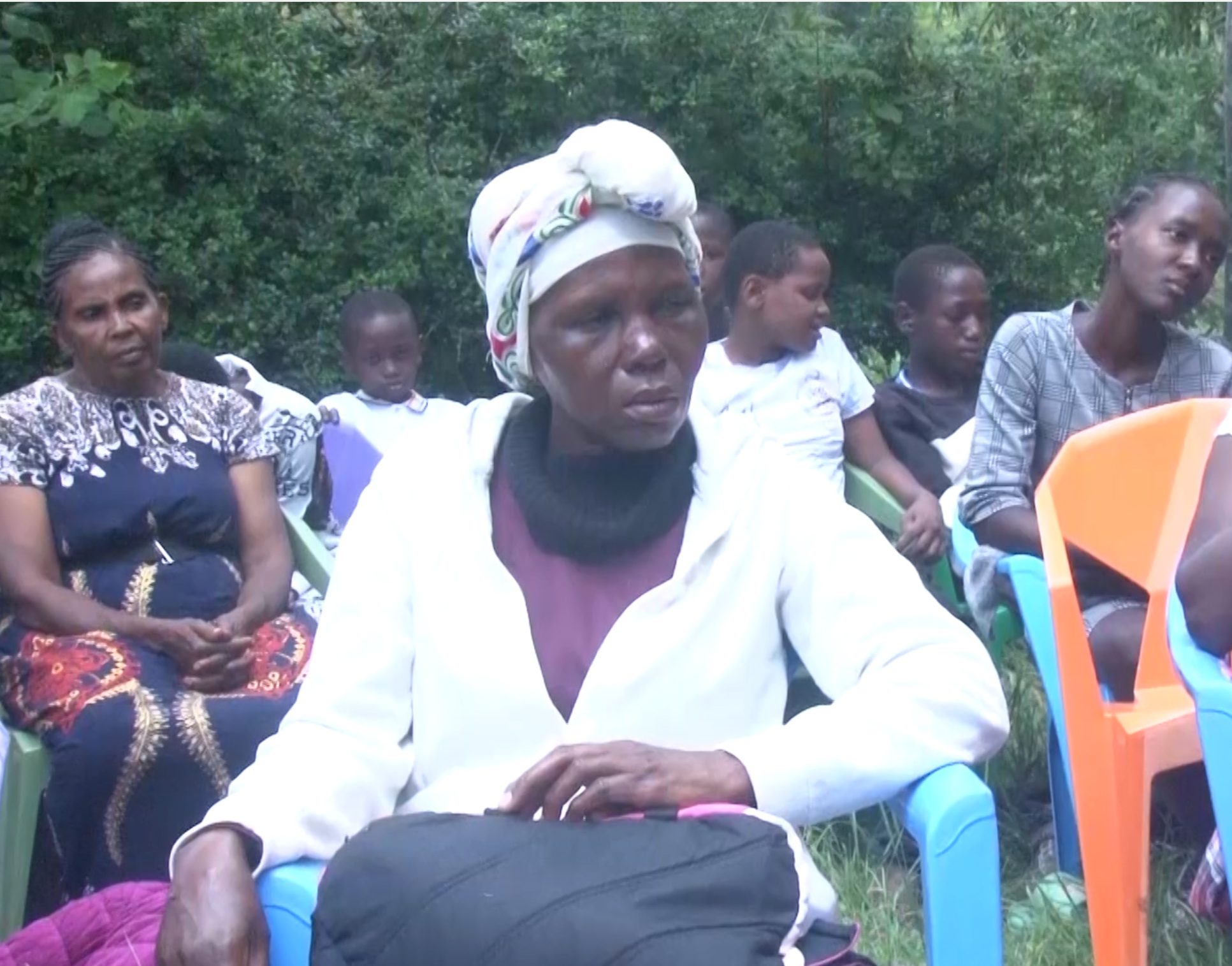
In some homes, children with disabilities are still hidden away, denied a chance to go to school or interact with others, Mwangi said.
Marceline Thoya from the office of registration of persons in Malindi said they continue to encounter shame, secrecy and concealing of PWDs by their families.
“We still have PWDs who are hidden from the public, hence, they miss out on opportunities and their rights are muzzled, but with an initiative like this one from Rise Malindi, many more PWDs will be reached,” she said.
Thoya said exclusion often starts at home.
“There are many PWDs who are not allowed outside their homes. There are many rights that these PWDs do not have. For example, the right to go to school. Some are not allowed to go to school despite the fact that our schools have special wings for special education,” she said.
Documentation, she said, is often the first step in changing that.
“Some do not have essential documents like birth certificates,” Thoya said. A birth certificate enables one to access so many government services. Therefore, we are here to assist parents get these essential documents for their children,”
However, beyond paperwork, a mindset needs to shift.
“It takes a long time for a parent to understand that their child has a right to live, a right to study and a right to get a job,” Thoya said. “So, there is a need for people to understand that a person with disability is a person who has all the rights as a normal person.”
“Most of the parents need to be enlightened that a child born with disability has a right to education, quality health, and also even to work in future,” she said.
Culture, she admitted, still plays a role.
“Some local cultures have also been a problem when it comes to PWDs as it views them as outcasts who should not mingle with other people,” she said.
Even so, change is happening, slowly but steadily.
At the policy level, Kenya has enacted laws that protect the rights of PWDs. However, on the ground, implementation remains a challenge.
Advocate Mathias Tsuma said more needs to be done to ensure inclusion is not just talked about, but practiced. He is the Kilifi coordinator of the National Council for People with Disability (NCPWD).
“We must have an inclusive society and not view PWDs as idle people and beggars,” he said. “From this initiative we have seen one way of including them in decision making.”
He added that PWDs need to be involved in governance and community matters.
“We should not have cases in which parents do not want their children, who have different disabilities, are not allowed outside. They all have the same rights like the other children,” he said.
In Kilifi, families are slowly opening up, more children are being brought into the light, and conversations around disability are beginning to change.
However, Rise Malindi Organization said the work is far from over.
Instant analysis
The Malindi initiative highlights a recurring gap between policy and practice in disability inclusion. While Kenya has progressive legal frameworks protecting PWD rights, access remains largely dependent on grassroots interventions like Rise Malindi. Documentation emerges as a critical entry point to inclusion, unlocking access to services, education, and civic participation.
Summary
PWDs in Kakoneni, Malindi Sub-County, are leading door-to-door campaigns to promote inclusion and secure essential documents for marginalized groups. Through Rise Malindi Organization, over 150 residents, many of them PWDs, have accessed IDs and birth certificates, enabling them to benefit from government services and register as voters. The initiative is also challenging stigma and cultural beliefs that have long kept PWDs hidden.
![Kemri acting director general and CEO Elijah Songok [standing] and Kenya Biovax Institute CEO Wesley Ronoh in Manila, Philippines on Tuesday.](https://cdn.radioafrica.digital/image/2026/04/f59b4e77-500d-4342-bf5d-ed6ef65fc5e4.jpg)
Comments 0
Sign in to join the conversation
Sign In Create AccountNo comments yet. Be the first to share your thoughts!