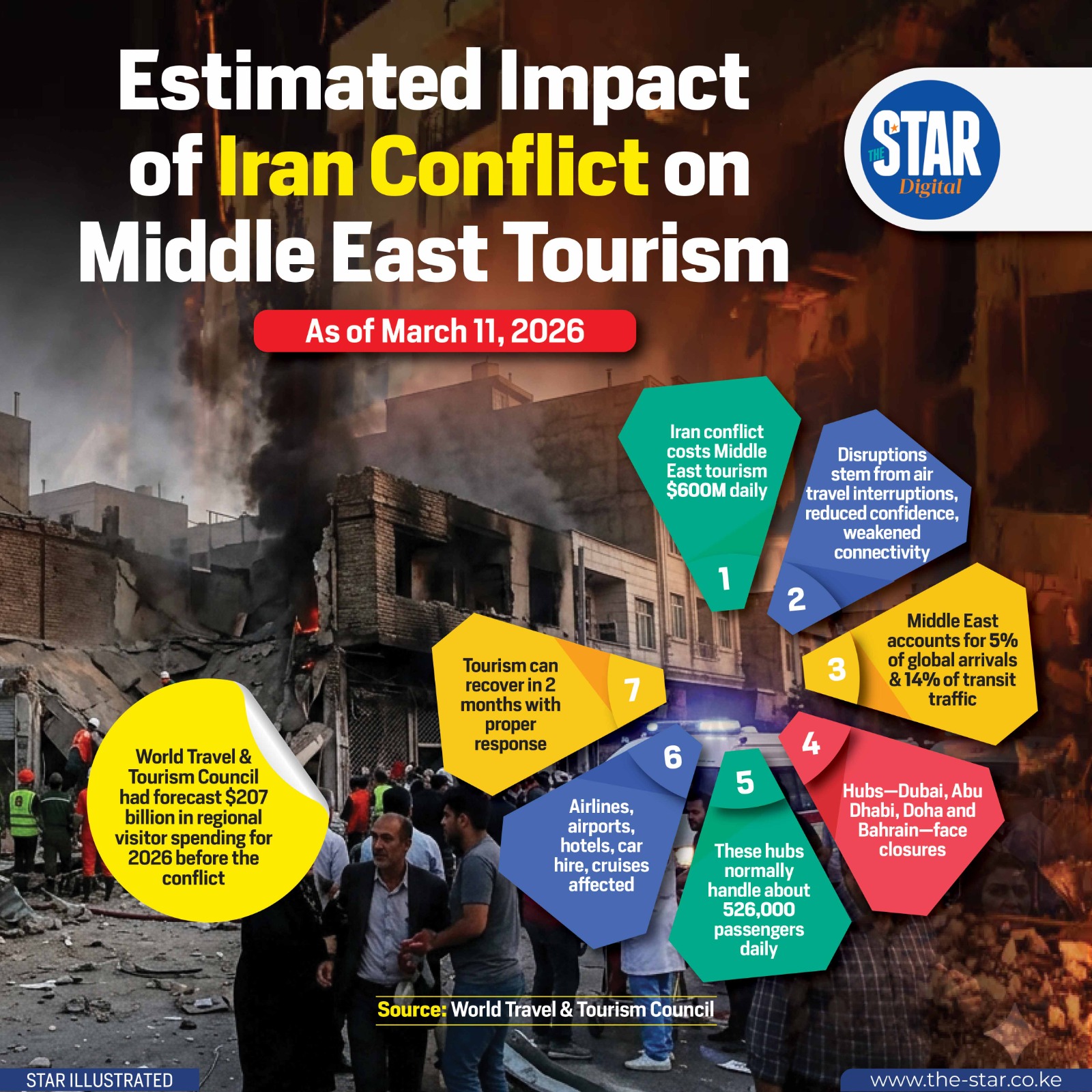
The Middle East tourism sector is grappling with a staggering financial haemorrhage as the Iran conflict drains $600 million from the regional economy every single day.
Before the outbreak of hostilities, the World Travel & Tourism Council had projected a robust year for the region, with visitor spending expected to reach $207 billion throughout 2026.
That momentum has now stalled under the weight of air travel interruptions, weakened connectivity, and a sharp decline in traveler confidence.
The regional impact is particularly acute because the Middle East serves as a vital global artery, accounting for 5% of all worldwide arrivals and 14% of global transit traffic.
Major international aviation hubs including Dubai, Abu Dhabi, Doha, and Bahrain are now facing closures, paralyzing a network that normally processes roughly 526,000 passengers daily. The ripple effects are felt across every tier of the industry, from airlines and airports to hotels, car hire services, and cruise lines.
While the current disruptions are severe, industry experts suggest that the path to stability remains open. Data indicates that with a proper, coordinated response, the tourism sector could recover within two months.
However, the immediate priority remains addressing the logistical bottlenecks and safety concerns that have sidelined one of the world’s most significant travel corridors.
For now, the region's $207 billion growth trajectory remains on hold as the industry monitors the escalating costs of the ongoing conflict.





Comments 0
Sign in to join the conversation
Sign In Create AccountNo comments yet. Be the first to share your thoughts!