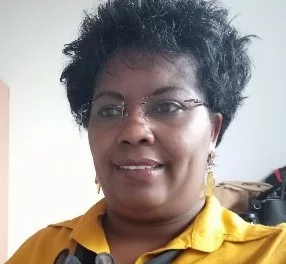
 Doris Omao, Advocacy and Communications Officer, APHRC (Left) and Alison Kaitesi, Capacity Building, Communication and Advocacy Lead, EAC Health Department/HANDOUT
In the
East African Community, borders are lines on a map, not barriers
From Ebola and Marburg to cholera, mpox and Covid-19, the region has learned a hard lesson: pandemics do not arrive with passports. They move along trade routes, through border towns and across shared ecosystems. Yet too often, our interventions are planned, funded and executed within country lines that pathogens ignore.
The
result has been a familiar cycle. An outbreak is detected in one country.
This
is why the EAC’s Regional Pandemic Prevention, Preparedness and Response
Policy Framework matters far beyond policy circles. Approved by the
At its heart is a simple idea: if disease spreads regionally, preparedness must be regional too.
The framework prioritises aligning early warning systems across borders to ensure timely detection of outbreaks. It aims to streamline medical supply chains, preventing competition among countries for scarce resources during crises.
Empowering communities is key, promoting stronger engagement that recognises the role of trust and local leadership in the success of public health measures. For ordinary citizens, this shift isn't abstract but deeply practical. A trader in Busia may face sudden, confusing restrictions when health measures differ on the other side of the border, resulting in lost time and revenue.
According to the World Health Organization (WHO), one health assessment, fragmented surveillance systems and limited cross-border data sharing have undermined early detection and response to zoonotic disease threats, particularly in regions with high population mobility. The new regional framework emphasises harmonised cross-border surveillance, risk communication, and early warning guidelines to prevent such disruptions.
For a pastoralist moving livestock across shared grazing lands, fragmented national surveillance systems and inconsistent animal health reporting often meant that emerging zoonotic threats went undetected or unreported across borders, putting livelihoods and nearby communities at risk. Under the framework, coordinated surveillance and shared alerts across partner states enable earlier detection of animal diseases and faster communication to communities, reducing the likelihood of outbreaks spilling over into human populations.
The Covid-19 pandemic exposed just how vulnerable the region is when coordination breaks down. Supply chains stalled. Health workers faced shortages of protective equipment. Vaccine access was uneven, with many countries lagging months behind wealthier regions. Schools closed, economies slowed and millions of learners fell behind. These were not just health failures; they were development setbacks that will be felt for years to come.
This
inaugural regional framework
It also emphasises equity. Women, informal workers, refugees and people living in poverty are often the most exposed during health crises, yet the least represented in decision-making. Risk communication that does not reach them, or policies that overlook their realities, can deepen inequalities and erode trust.
There are encouraging signs that the region is moving in the right direction. Investments in digital surveillance platforms, cross-border coordination mechanisms and regional procurement systems for medical supplies are beginning to take shape. Development partners have committed to supporting stronger regional epidemic intelligence and technical alignment. Research and policy institutions are working alongside governments to ensure that decisions are informed by evidence, not just urgency.
Still, the real challenge lies ahead.
Frameworks do not implement themselves. Regional preparedness requires sustained political will, domestic financing and partner states' willingness to share data, align policies and be accountable to one another. It means treating a vulnerability in one country as a risk to all, and acting accordingly.
The next pandemic may begin in a fishing community along Lake Victoria, a livestock market in the north or a crowded transport hub in a major city. When it does, East Africa will face a choice: respond as a collection of individual states or as a connected region.
Pandemics do not respect borders. Our preparedness should not be constrained by them either.
If the EAC can turn this regional framework into real, coordinated action, it will do more than protect lives. It will safeguard livelihoods, accelerate trade and enhance the trust between citizens and the systems meant to keep them safe. In a region built on movement and connection, health security must be built together, ensuring a future where collective action defines our resilience and shared progress.
Doris Omao, Advocacy and Communications Officer, APHRC and Alison Kaitesi, Capacity Building, Communication and Advocacy Lead, EAC Health Department