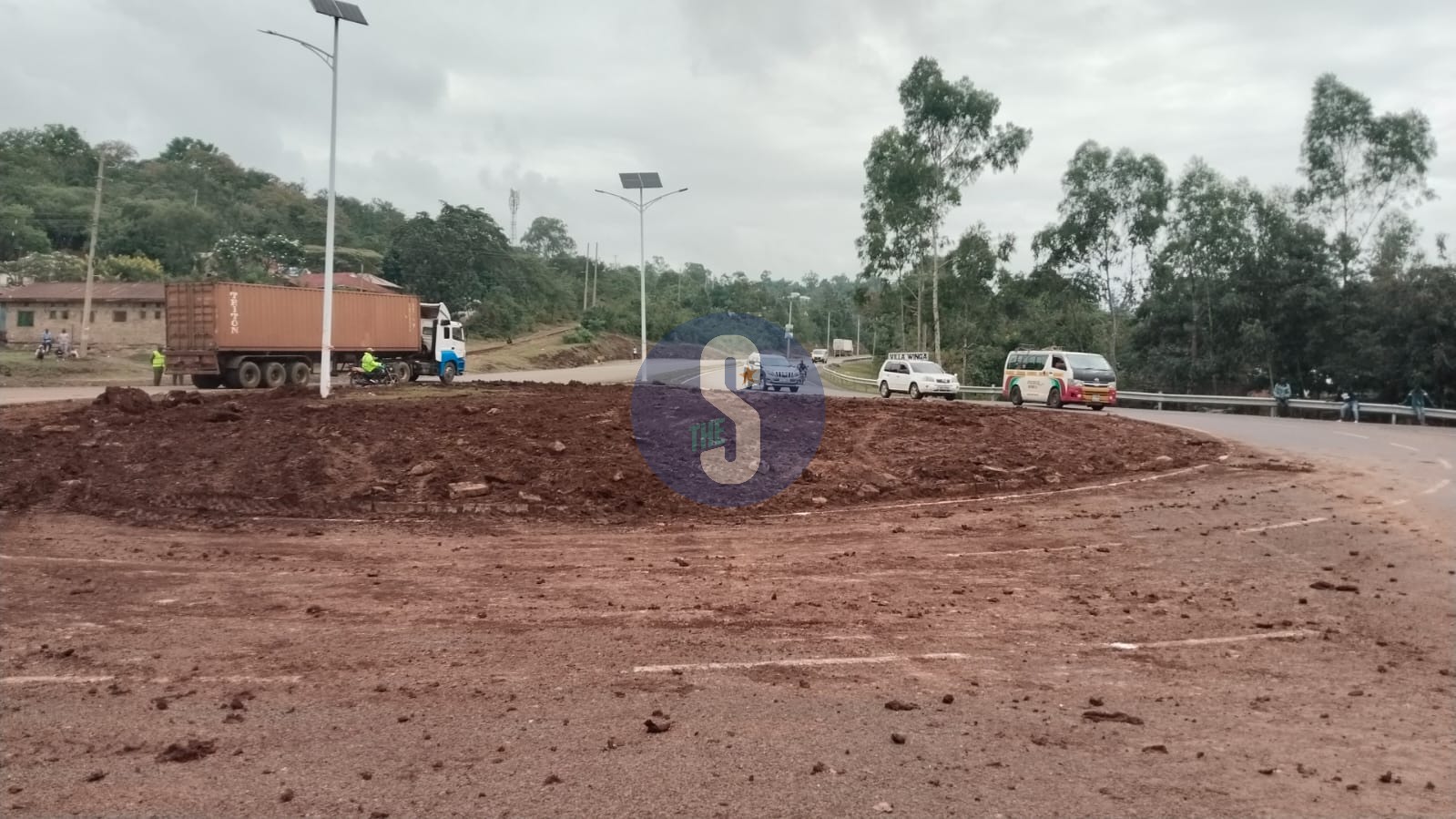
 The Coptic roundabout in Kisumu. /FILE
 Roads and Transport Cabinet Secretary Davis Chirchir/HANDOUT
The government has redesigned the Coptic roundabout along the busy Kisumu–Kakamega Highway following a tragic road accident in August 2025 that claimed 26 lives.
Responding to a question in the Senate raised by Kisumu Senator Tom Ojienda, Roads and Transport Cabinet Secretary Davis Chirchir said the Kenya National Highways Authority (KeNHA) moved swiftly after the accident to assess the situation and propose long-term safety interventions.
According to the CS, KeNHA conducted a site visit in August 2025, shortly after the fatal crash, and subsequently undertook a redesign of what he described as the “Coptic Area Crash Road Section.”
“The proposed works involve the reconstruction of the segment as a through-traffic road, complete with new pavement layers, improved drainage systems, and enhanced safety features to ensure safe and efficient traffic movement,” Chirchir told the Senate.
However, despite the urgency of the project, the CS disclosed that implementation has been delayed due to funding limitations.
“Works are yet to commence due to budgetary constraints,” he said, adding that the ministry is committed to prioritising the project in the next budget cycle as a long-term corrective measure.
In the meantime, the government has rolled out interim safety measures aimed at reducing the risk of further accidents at the notorious black spot.
Chirchir noted that the section has been temporarily secured using crash barriers, while certain traffic movements have been restricted.
“As an immediate measure, the section has been secured using crash barriers to mitigate risk while awaiting full intervention. Right-turning movements at the junction remain prohibited as part of the temporary closure measures currently in place,” he said.
Additional safety enhancements have also been introduced, including improved road markings and the installation of retro-reflective road studs, commonly known as cat-eyes, to boost visibility for motorists, especially at night.
The redesign and safety upgrades follow findings by the National Transport and Safety Authority (NTSA), which investigated the August 9 crash and identified a combination of mechanical, infrastructural and human factors as the probable causes.
According to Chirchir, the accident occurred after the driver of the bus involved lost control of the vehicle while approaching a speed hump at approximately 61 kilometres per hour on a steep downhill section.
“The probable cause of the crash was the inability of the driver to maintain control after striking the speed hump at high speed, compounded by an ineffective braking system due to insufficient compressed air pressure,” he said.
The CS added that investigators also pointed to possible mechanical failures, including brake inefficiency and the absence of anti-roll bars, which may have contributed to the vehicle’s instability and eventual roof collapse.
Infrastructure shortcomings at the site were also cited as contributing factors.
These included the ineffectiveness of speed humps in slowing heavy vehicles, lack of adequate physical containment such as guardrails or crash barriers, and insufficient road signage.
“There was a slowdown sign installed, but no speed limit signs to adequately guide motorists,” Chirchir noted.
The investigation further highlighted human factors, including possible delayed driver reaction and failure to take corrective action due to braking challenges.
The lack of seatbelt use among passengers was also blamed for the high number of fatalities, as several victims were reportedly ejected from the vehicle upon impact.