The Strait of Hormuz has long been the world’s most sensitive maritime chokepoint, and recent disruptions following regional military escalations have sent shockwaves through global energy markets.
As a vital artery for international trade, the strait facilitates the passage of a massive share of global commodities.
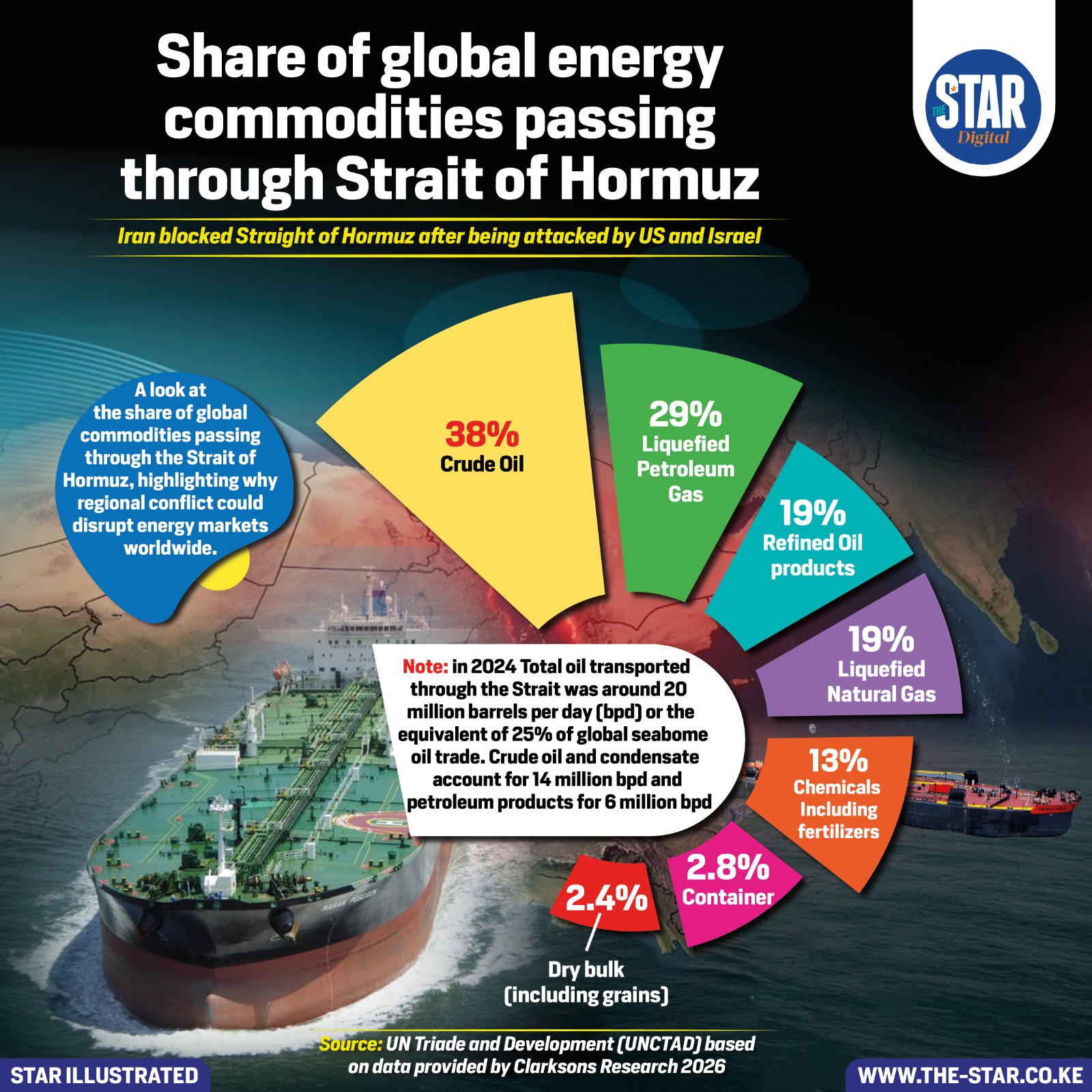
In 2024 alone, total oil transport through this narrow waterway reached 20 million barrels per day, accounting for roughly 25% of all global seaborne oil trade.
Of this, crude oil and condensate represent 14 million barrels, while refined petroleum products make up the remaining 6 million.
The breakdown of commodities passing through the strait underscores why any blockage is a global economic emergency. Crude oil leads the volume at 38%, followed closely by Liquefied Petroleum Gas at 29%.
Both Refined Oil products and Liquefied Natural Gas each claim a 19% share of the transit volume.
Beyond fuel, the strait is essential for the agricultural and manufacturing sectors, with 13% of the transit consisting of chemicals and fertilizers, while dry bulk—including essential grains—and container shipping account for 2.4% and 2.8% respectively.