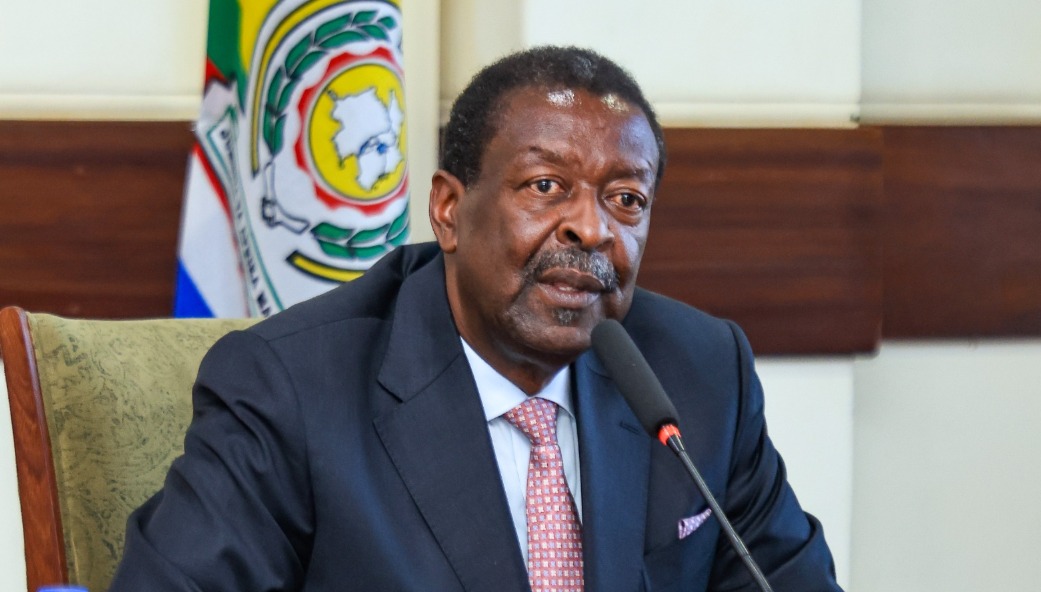
 Foreign and Diaspora Affairs Cabinet Secretary Musalia Mudavadi. /MUSALIA MUDAVADI/X
Kenyans will no longer be enlisted into military operations in Russia following an agreement between Nairobi and Moscow, Prime Cabinet Secretary Musalia Mudavadi has announced.
Speaking during a joint press briefing in Moscow on Monday, March 16, Mudavadi said the two governments had reached common ground after discussions that also touched on the welfare of Kenyans currently in Russia, including those linked to military activities.
“I want to make it clear that we have agreed that Kenyans will no longer be enlisted for special operations through the Ministry of Defence,” Mudavadi said, adding that future engagement would be conducted through official diplomatic channels in line with international law.
He noted that Kenya and Russia share a relationship spanning more than six decades, saying the decision reflects efforts to protect and strengthen that partnership.
According to the Prime CS, both countries also agreed to explore the signing of a labour cooperation framework aimed at preventing exploitation and improving oversight of Kenyans working in Russia.
The discussions reportedly included measures to curb labour abuse and to ensure that Kenyans seeking employment abroad do so through recognised and regulated channels.
Mudavadi emphasised that the new arrangement would help safeguard citizens from being drawn into arrangements that could expose them to harm.
The announcement comes amid concerns over reports that Kenyans were recruited into the Russia-Ukraine conflict through deceptive job offers.
The latest development follows a report presented to Parliament in February 2026 by the National Intelligence Service, which indicated that more than 1,000 Kenyan citizens may have been recruited into the Russian Army.
The report said some were allegedly lured by misleading job offers tied to civilian work opportunities.
It further revealed that at least 10 Kenyans had died, 28 were missing, 39 were hospitalised and 30 had been repatriated, while an estimated 89 to 200 remained active on the front lines.
Previous accounts indicated that some individuals were promised civilian employment opportunities before allegedly being coerced into signing military contracts.
Russia, however, maintained that foreign nationals who joined the Russian army did so voluntarily.
In a statement, they said those who wish to terminate their contracts may do so through the Russian Ministry of Defence, adding that foreign recruits are treated under the same framework as others who sign such agreements.
They further stated that Russia does not single out any nationality in its recruitment process, noting that nationals from several countries have enlisted in its armed forces.
Mudavadi said the new agreement marks an important step in addressing the issue through diplomatic engagement and formal cooperation mechanisms, adding that Kenya’s priority remains the safety and welfare of its citizens abroad.