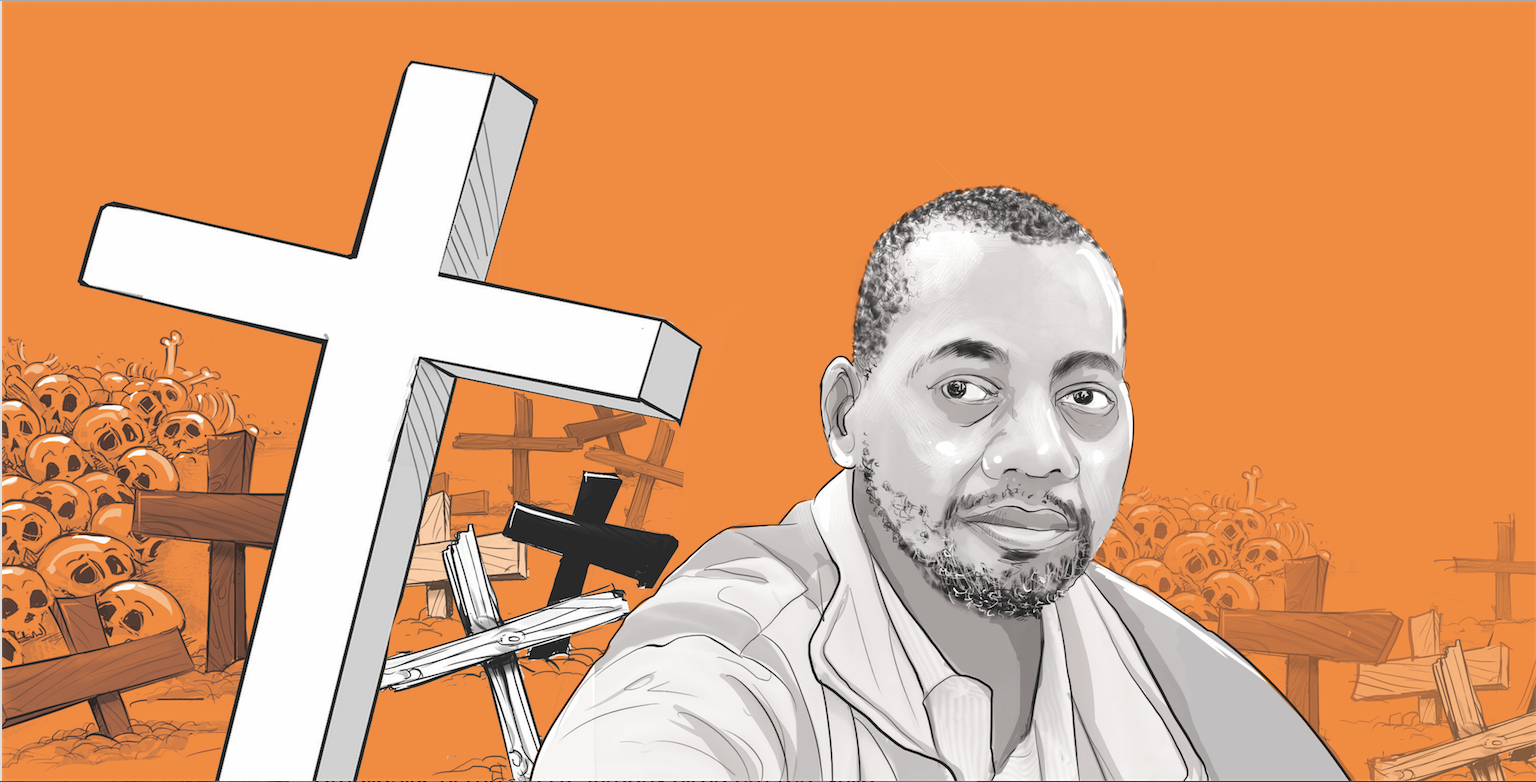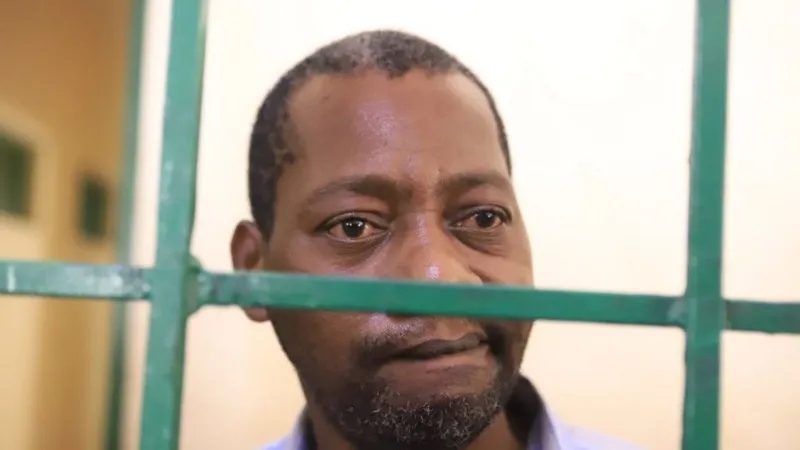
A man who was once sentenced to death before the penalty was reduced to a 25-year prison term, has opened up on how a second-hand phone he bought in 2005 landed him in jail.
Dr Clement Munyao Katiku, now serving his sentence at Kamiti Maximum Security Prison, has spent more than a decade behind bars.
Katiku says his life changed dramatically in the mid-2000s following what he describes as a simple decision to purchase a second-hand mobile phone.
"It was affordable, nothing fancy—just a functional handset I picked up from a mortuary attendant I knew at the hospital. I bought it for my daughter, a student at Moi University at the time. It was only for Sh2,000. She needed it for school, for staying in touch," he says.
Katiku, in his sworn statements, testified that he owned a bar in Kibera Estate and was also a casual labourer in one of the hospitals in Nairobi.
An employee at the hospital, in her testimony, however, told the court Katiku was not an employee at the facility since casual labourers were not given personal numbers.
"I handed it over without suspicion. Later, she passed it to her boyfriend. That was it. A chain of innocent hands," he adds.
What Katitu didn't know was that the phone had a dark history.
It once belonged to Moses Gituma, a senior official at the Central Bank of Kenya and brother to the then-Commissioner of Police, Mathew Iteere.
Moses had been brutally robbed and murdered. His killers took his belongings, including that phone, which somehow made its way through the underground market until it landed with the mortuary attendant who sold it to him.
"Police were tracking the stolen device as part of their investigation into the murder. When they traced it, they arrested my daughter's boyfriend. He pointed to her. She, in turn, led them to me in Nairobi."
He says he cooperated fully and told the detectives exactly what happened: that he had bought the phone second-hand from someone he trusted at the hospital and had no idea it was stolen, let alone connected to a killing.
He was charged with the murder of Gituma.
"The chain ended on me, until today, I don't know why. I told them about the mortician, but that didn't matter. The prosecution's case rested heavily on the phone—its possession, the chain leading back to me."
“I’ve been in Kamiti Maximum Security Prison ever since, serving time for a crime I maintain I had nothing to do with,” Katiku said in remarks from prison. “I lost my career, my freedom, my family time, everything. But I hold on to hope.”
Katiku’s conviction is linked to the murder of Gituma, a senior official at the Central Bank of Kenya. Gituma was brutally robbed and killed in 2009 in the Garden Estate area of Nairobi.
According to court records, Katiku and co-accused Anthony Muthie Mati were convicted of murder contrary to Section 203 as read with Section 204 of the Penal Code in Nairobi High Court Criminal Case No. 15 of 2010.
The prosecution argued that the two were part of a gang that attacked Gituma in his home on October 23, 2009, inflicting fatal injuries.
However, Katiku insists the events that led to his arrest began years earlier with the purchase of a mobile phone that investigators later linked to the slain Central Bank official.
Katiku explained that he had bought the phone for his daughter, who was then a student at Moi University, so she could stay in touch with family. The phone later passed through several hands, eventually reaching her boyfriend.
Unbeknownst to the family, investigators were tracking the device as part of their investigation into Gituma’s murder after it had been stolen during the attack.
Despite his cooperation, Katiku says he was eventually charged with the murder, with prosecutors relying heavily on the chain of possession of the phone as circumstantial evidence.
“The prosecution’s case rested heavily on that phone,” he said. “There were no eyewitnesses placing me at the scene. No fingerprints on any weapon. No confession. Yet the chain ended on me.”
Katiku also claims the person who originally sold him the phone was never prosecuted.
“The mortuary attendant who sold me the phone was never charged,” he said. “The real killers were never fully brought to justice.”
In 2009, the High Court convicted Katiku and sentenced him to 30 years in prison. He later appealed the decision, hoping the conviction would be overturned. Instead, the Court of Appeal of Kenya upheld the conviction and replaced the sentence with the death penalty.
Like many other inmates on death row, his sentence was later commuted to life imprisonment following presidential clemency and shifts in sentencing policy.
Katiku and his co-accused later petitioned the High Court for resentencing following legal developments that allowed courts to review mandatory death sentences.
In a ruling delivered on July 28, 2020, Justice Grace Wanjiru Ngenye-Macharia of the High Court in Nairobi set aside the death sentence and replaced it with a 25-year prison term starting from the dates of their arrest.
During the resentencing hearing, Katiku appeared in person and submitted written mitigation to the court. While expressing remorse, he maintained that he was not involved in the killing.
He told the court that his years in prison had taken a heavy toll on his personal life, including the loss of several close family members in a tragic accident.
Katiku also said he suffers from multiple health conditions, including high blood pressure, diabetes, chronic peptic ulcers and gum infection, for which he receives treatment while in custody. At the time of the hearing, he was 65 years old.
“I have tried to reform myself while in prison,” he told the court in his submissions. “If given a second chance, I will use the skills and knowledge I have gained during incarceration to serve the community.”
He also asked the court to consider that he had been a first offender and had already spent more than a decade in custody. Katiku said he hoped to reunite with his remaining children, whose education had been disrupted following his imprisonment.
However, in her ruling, Justice Ngenye-Macharia noted that although the applicants had demonstrated signs of rehabilitation, the gravity of the crime remained significant.
“The crime they committed was serious,” the judge said in the ruling. “They took five to six hours waiting for the deceased in his own house in order to undertake the heinous act without developing a change of mind.”
The court also observed that the victim suffered severe injuries and endured significant pain before his death.
While the judge found that the death penalty was not appropriate in the circumstances, she concluded that a lengthy custodial sentence was warranted due to the aggravating factors surrounding the crime.
As Katiku continues serving his sentence, he says he still hopes that one day the full truth about the case will emerge.
“Be careful with second-hand phones,” he said. “A small decision can change a life forever.”