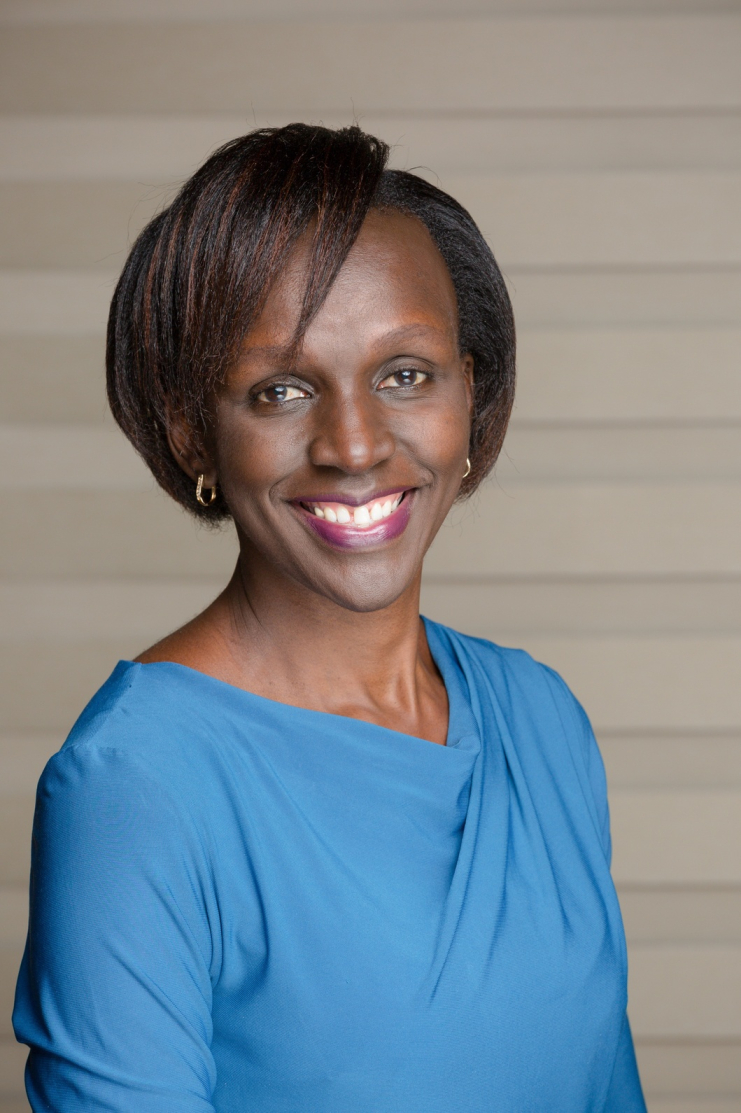
 AAR Healthcare General Manager ELizabeth Wasunna./COURTERSY
The first time Elizabeth Wasunna attended an executive meeting; she was not expected to lead the room.
She was in her mid-thirties, working in the petroleum industry, when her manager asked her to step in and represent him at senior-level engagements.
The meetings were filled with seasoned executives who had held leadership roles for much longer than she had envisioned for herself.
Although she was not the boss, she needed to speak like one.
“I was leading without authority,” she recalled.
That experience walking into rooms where she lacked formal authority but needed to command respect - became a defining moment in her leadership journey.
It forced her to prepare harder, understand her work deeper and speak with confidence.
“Sometimes leadership does not require authority,” she said. “It requires confidence and a good understanding of what you are talking about.”
Years later, Elizabeth now leads one of Kenya’s largest outpatient healthcare providers as the General Manager of AAR Healthcare.
However, her journey to the top of a healthcare organization began not in medicine, but in finance.
A CAREER THAT CROSSED INDUSTRIES
Elizabeth Wasunna began her professional journey with a background in finance, building her early career in sectors far removed from healthcare.
She gained experience in petroleum, transitioned into manufacturing, and later excelled in telecommunications industries driven by numbers, strategy, and commercial competition rather than clinical care.
At first glance, the leap from finance to healthcare leadership might seem unconventional. For Elizabeth, however, this transition underscored a key insight: the core principles of leadership remain constant across all industries.
“What I have learned is that the fundamentals of leadership are the same, irrespective of the sector,” she explained.
Those fundamentals, she said, revolve around people.
“You deliver through people. So, building strong teams, collaboration and mentoring become very important,” she said.
Across every role she has held, those principles remained central: delivering results, nurturing resilient teams, coaching employees and resolving workplace conflicts.
“If you have honed those principles and ingrained them in how you work, you can lead in any sector.”
Her move into healthcare came when she transitioned from managing regional operations in telecommunications to running an entire organisation, terming it as a "significant shift."
“In telecom, I was managing a region, but when I came to AAR, I was running a business end-to-end owning the mission, driving strategy, and building partnerships,” she explained. It was, she admitted, a stretch, but also the challenge she had spent her career preparing for.
LESSONS FROM FAILURES
Like many accomplished leaders, Elizabeth’s growth has been shaped not only by achievements but also by setbacks. She speaks candidly about the challenges and failures she encountered while advancing in her career, describing them as pivotal learning moments that have left a lasting impact on her leadership approach.
“One of the most defining moments for me was a project I led years ago. I had invested a tremendous amount of energy into an idea, I planned every detail, managed stakeholders, and thought I had considered everything. But despite all that effort, it didn’t scale the way I had hoped. It was still running, but not as I had envisioned," she recalled.
“It was a model where the company owned the infrastructure, but we had franchisees run the operations. The pilot worked but expanding it as I had planned proved challenging. Looking back, I realised I had underestimated some of the internal and external complexities."
Rather than being discouraged, Elizabeth took it as a learning opportunity.
"But the experience taught me how to navigate stakeholder expectations, manage risk and think more strategically. It taught me resilience,” she said adding that she understood that sometimes the plan doesn’t go exactly as intended, and that’s okay.
She noted that what matters is how you pivot, what you take forward, and how you grow.
That mindset, viewing failure as a stepping stone helped her navigate complex business environments where conditions change quickly.
“When things fail, you learn, you adjust, and you move forward,” she said.
Another habit that shaped her leadership, she says it is continuous learning.
“The environment is changing very fast, if you are not learning every day, you will struggle with new challenges.”
Mentors and coaches, she added, played a critical role in helping her make difficult decisions and avoid common pitfalls.
“They shorten the journey because they have already walked the path before you,” she said.
Navigating male-dominated spaces and the challenge of balancing family and leadership.
For much of her career, Elizabeth worked in sales, a field she described as “hardcore” and largely male-dominated at senior levels. Walking into those spaces as a woman meant she often had to prove herself more than others.
“You must work harder. Mediocrity is not an option,” she said.
Preparation became her strategy, as she ensured she understood her market, her role and the issues at hand better than anyone else in the room. “You must know your subject and have the confidence to articulate it so your voice is heard.”
Another challenge she faced, commonly shared by many women in demanding careers, was balancing family life with work responsibilities. Her roles often required frequent travel across the country, sometimes keeping her away from home for extended periods.
Initially, she tried to achieve what many people call work-life balance, but over time she realised that balance is rarely perfect.
“You will never get a true work-life balance,” she said.
Instead, she focuses on what she called work-life integration.
“When possible, I take my family along when I travel, they explore while I work and we reconnect later as the understand the work I do,” she said adding that her family’s support has been essential in navigating that balance.
LEADING AAR HEALTHCARE
Today, Elizabeth leads AAR Healthcare, an organisation that has provided primary healthcare services in Kenya for more than four decades.
The institution focuses primarily on outpatient services, offering general practitioner consultations, specialist care and diagnostic imaging.
Since she joined nearly three years ago, the organisation has expanded its footprint significantly.
“When I joined, we had just over 20 clinics,” she said. “Now we have 28.”
But expansion alone is not what excited her most, she is equally proud of innovations designed to improve patient access to healthcare.
Among them is telemedicine, a virtual consultation service that allows patients to speak with doctors remotely.
Through the platform, patients can consult doctors via video calls, if tests are needed, laboratory technicians travel to the patient’s location to collect samples.
“If medication is required, we can even deliver it,” she explained.
AAR Healthcare has also introduced a digital mental health platform that allows users to conduct self-assessments and connect privately with counsellors.
The goal is to reduce stigma while expanding access to mental health support.
“We wanted to create a safe and private space where people can seek help,” she said.
Despite the scale of the organisation she runs, Elizabeth said her greatest motivation comes from the simplest outcomes.
“When I see a patient walk out well, that brings me joy,” she says.
“When they call back and say they are feeling better, it gives me energy to keep going.”
Her team often follows up with patients after treatment saying that seeing employees grow professionally also gives her a sense of fulfilment.
“When a team member develops their career, that is something I am proud of.”
Speaking of challenges facing healthcare in Kenya
From her vantage point in the healthcare sector, Elizabeth sees several systemic challenges, one major issue she said is the unequal distribution of healthcare facilities.
Urban areas often have advanced equipment and specialists, while rural communities struggle with limited resources.
FUNDING HEALTHCARE IS ANOTHER CONCERN
“Too often we still see families raising money through WhatsApp groups for medical treatment,” she said.
She adviced that increasing insurance coverage and strengthening preventative care could significantly reduce those burdens.
She also noted the shortage of healthcare workers in rural areas is still a pending challenge in Kenya.
“In some countries, doctors are incentivised to work in rural areas. That is something we need to consider encouraging more medics to work in the rural area," she said.
A VISION FOR THE FUTURE
Looking ahead, Elizabeth Wasunna envisions a healthcare system increasingly driven by technology.
She hopes to see patients able to book appointments, consult doctors, receive diagnoses and access treatment through digital platforms.
“I see a fully digital healthcare delivery system,” she said adding that she hopes AAR Healthcare will expand beyond its current footprint.
The organisation currently operates in 11 counties, Kenya has 47. There is still so much more we can do.”
When Elizabeth eventually reflects on her time leading AAR Healthcare, she hopes her impact will be measured by more than growth figures.
Her greatest hope is that the organisation will remain deeply patient-centred.
“I want people to say it mattered that I was here,” she said.
That legacy would mean three things to her: a patient-focused organisation, employees who thrive professionally and communities that feel the impact of AAR’s work.
“It mattered that I was here,” she repeated.
A MESSAGE TO YOUNG WOMEN
For young women entering healthcare or leadership roles, Elizabeth Wasunna's message is that they have space at the table.
But occupying that space, she said requires preparation emphasising on building skill and being excellent at what you do.
She encourages young professionals to seek mentors, stay curious and continue learning and perhaps most importantly, she reminded them of something many women forget.
“You are enough,” she said.