Kenya currently consumes roughly 600,000 tonnes of edible oils each year, and more than 90–95 percent of that demand is met through imports according to the Agriculture and Food Authority.
In 2022 alone, the country spent more than Sh145 billion importing edible oils, a situation that experts say presents an opportunity for local farmers and agribusiness investors to expand domestic production.
According to the United States Department of Agriculture (USDA) Oilseeds Report and the Ministry of Agriculture, Kenya produces only a small fraction of the edible oil it consumes.
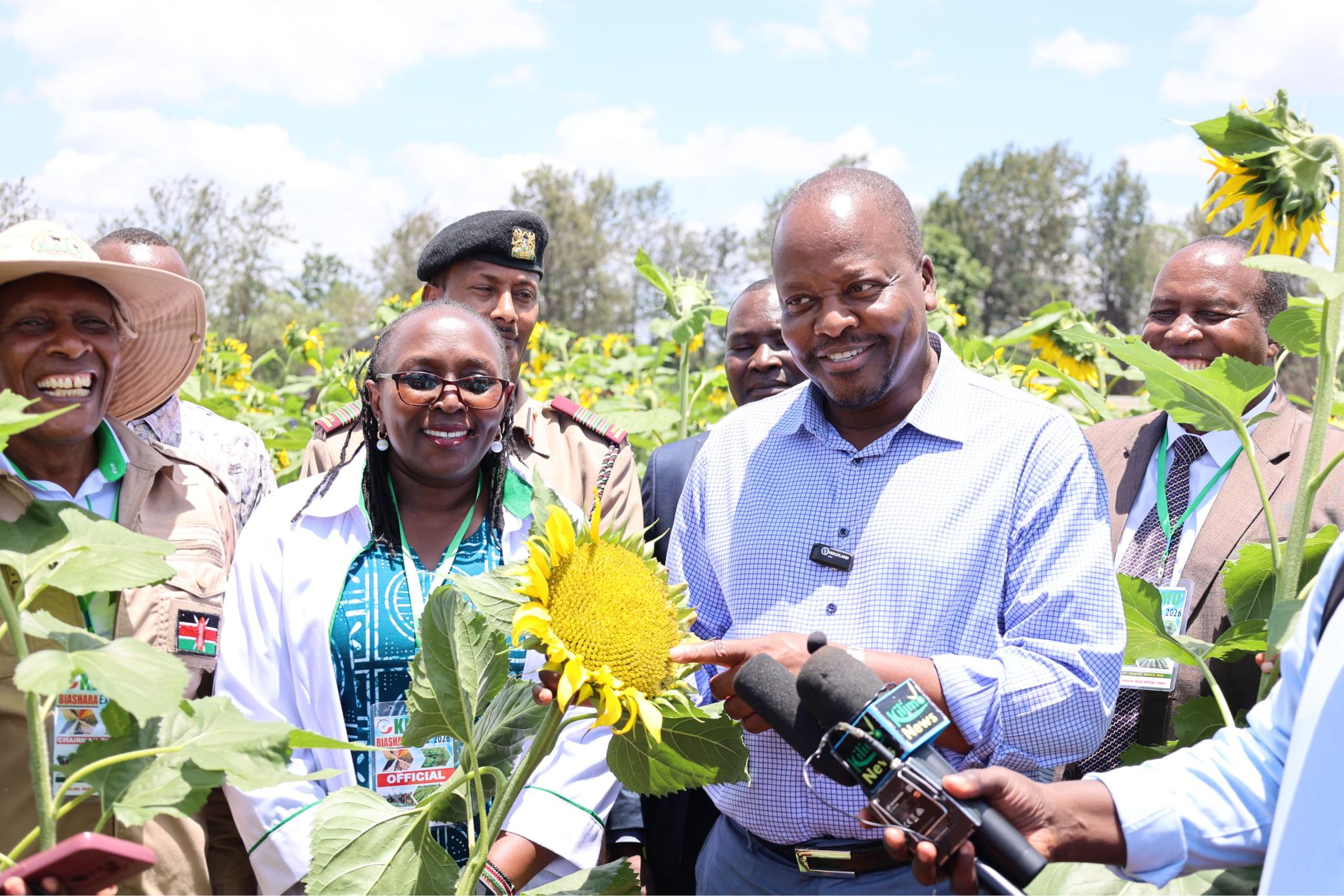
Agriculture Cabinet Secretary Mutahi Kagwe said the Ministry of Agriculture and Livestock Development has launched an initiative to fast-track sunflower, soybean and other oil-crop production.
He spoke during the opening of the Kilimo Biashara Expo 2026 at Kalro Seeds headquarters in Thika.
 Agriculture
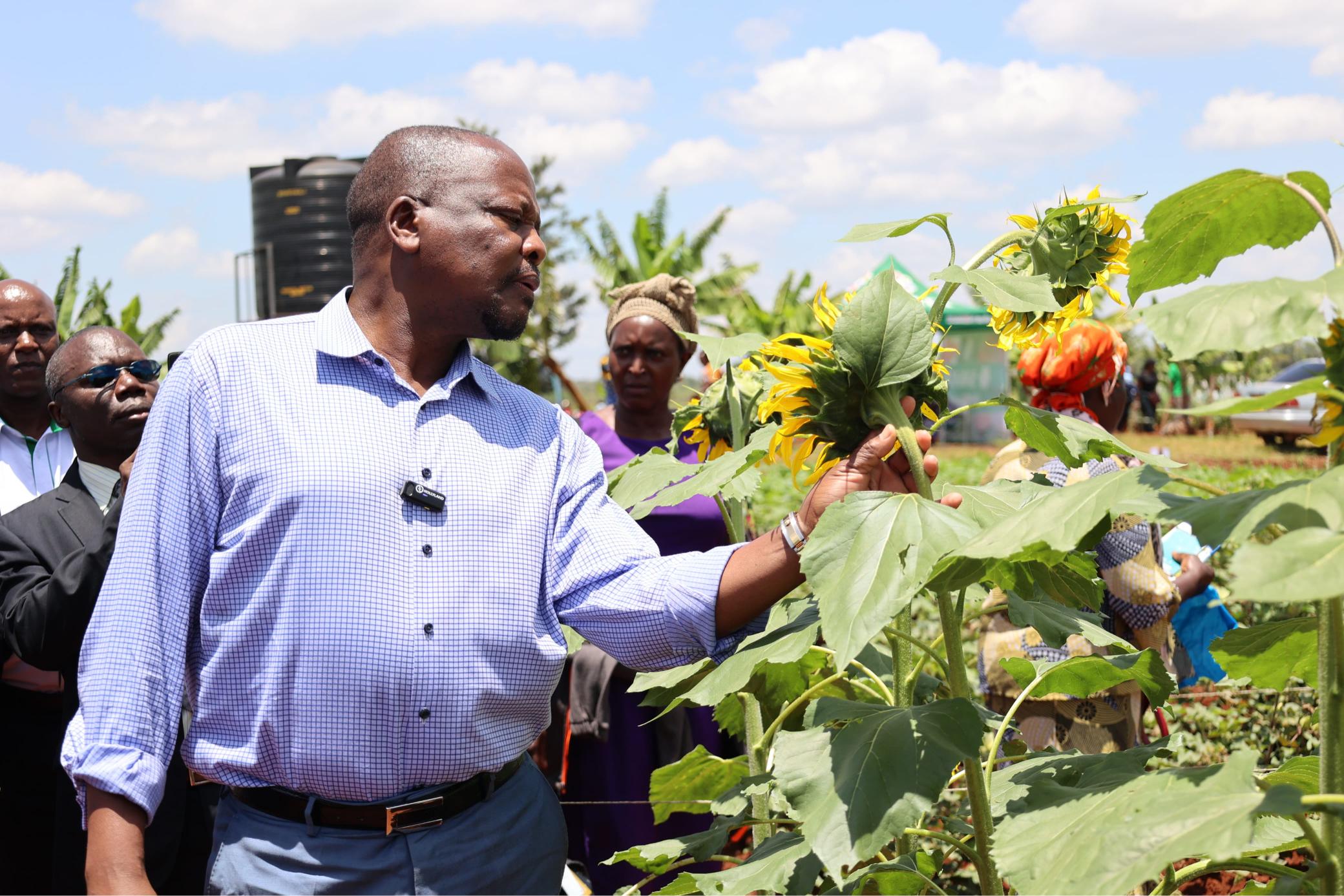
Cabinet Secretary Mutahi Kagwe launches an initiative to fast-track sunflower, soybean and other oil-crop production during the Kilimo Biashara Expo 2026 at KALRO Seeds headquarters in Thika./AGATHA NGOTHO.
Agriculture
Cabinet Secretary Mutahi Kagwe launches an initiative to fast-track sunflower, soybean and other oil-crop production during the Kilimo Biashara Expo 2026 at KALRO Seeds headquarters in Thika./AGATHA NGOTHO.
Kagwe told farmers, researchers and business partners that scaling up production of these crops can reduce imports, strengthen local agro-processing industries and increase farmers’ incomes.
He said the government is partnering with the Kenya Agricultural and Livestock Research Organisation (Kalro) and other stakeholders to develop and distribute high-yielding seed varieties, strengthen seed multiplication and dissemination systems, and support farmer groups and cooperatives.
“The initiative also seeks to encourage private investment in processing and value addition, while strengthening market links between farmers and processors,” he said.
The Kilimo Biashara Expo, held at Kalro Seeds in Thika, brought together farmers, researchers and agribusiness players to showcase improved seeds, mechanisation technologies and digital agriculture solutions aimed at transforming agriculture into a competitive agribusiness sector.
The CS noted that industrial crops such as sunflower and soybean are central to efforts to reduce the country’s heavy reliance on imported edible oils.
“With strong emphasis on technology, training and market connections, the initiative launched at Kalro is positioned as a significant step toward lowering the edible-oil import bill and expanding opportunities for farmers, youth, women and agribusiness entrepreneurs across Kenya,” he said.
Kagwe also noted that Kenya spends about half a trillion shillings every year importing key food commodities such as wheat, rice, edible oils and soy products, according to government estimates.
“You can imagine what it does to our exchange rates. The idea of import substitution is first to create security for ourselves, because in the changing circumstances in the world, if there is a war in an area where we import wheat from, then we will not have wheat. So we have to grow these crops ourselves,” he said.
“It is not just a question of food stability. It is food sustainability, but it is also food independence,” he added.
Dr Alice Murage, deputy director general in charge of Crops Research at Kalro, said the country’s heavy reliance on imported edible oil has prompted researchers to promote the cultivation of sunflower and soybean.
“These are some of the crops that farmers in Kenya can grow locally. If farmers embrace them and plant them on a large scale, we can increase productivity and produce edible oil locally, helping the government reduce imports,” she said.
Murage said Kalro is currently promoting four sunflower varieties and two soybean varieties suitable for different growing zones in the country.
James Njoroge, a scientist based at the Kalro Food Crops Research Centre in Njoro, Nakuru county, said oil crops such as sunflower and soybean play a dual role in the food and livestock sectors.
He explained that oil crops produce edible oil and a protein-rich meal when the grain is pressed.
The meal is widely used in the livestock industry to make feed for dairy cattle, pigs and fish. The oil extracted from soybean and sunflower is edible and can be used for cooking both in households and food processing industries.
“But these you get in different quantities. For example, soybean has more protein and less oil, while sunflower has more oil and less protein,” he said.
“But all of them give us the cake. So, depending on the nutritionist, the animal nutritionist will guide you on how to use them.”
According to the Food and Agriculture Organization, oilseed by-products such as soybean meal are key ingredients in livestock feed due to their high protein content.
Njoroge said sunflower and soybean can grow in many agro-ecological zones across the country.
There are varieties that can perform well from the coastal region to Western Kenya, where most of the crop is grown in the middle-altitude areas.
Soybean does not perform well in the highlands due to low temperatures.
“That is why we recommend that when you are growing soybean, you do it more in the middle and lower altitudes. That is where you can get the best out of it and the best quality of either the meal or the oil,” he said.
Sunflower, on the other hand, is more adaptable.
“It can grow from the Coast up to the highlands. It does not have many limitations in relation to altitude, although when grown in the highlands it takes longer because of the cold,” he said.
Njoroge noted that most products derived from oilseeds are currently imported, and expanding local production could help reduce the import bill.
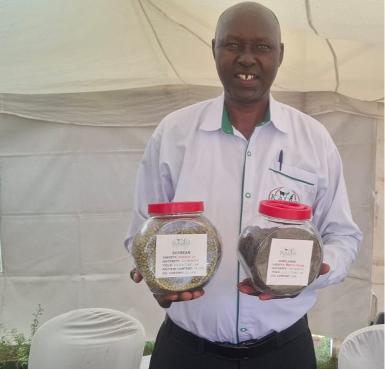
He said Kalro has developed about 10 soybean varieties, but uptake by farmers remains low.
“We have been maintaining the seeds but we do not have buyers. There is need for creating awareness among farmers about the availability of these seeds,” he said.
“I think there is a communication gap between the producers, researchers and the end-users on where to access this material.”
He also stressed the importance of ensuring farmers have access to reliable markets before they start production, noting that many processing factories are currently underutilised due to shortage of raw materials.
Sunflower and soybean are also relatively drought tolerant compared to many crops.
He said sunflower can survive with about 250 millimetres of rainfall annually, although it performs best in areas receiving between 750 and 1,000 millimetres of rainfall.
Farmers require between 20 and 30 kilograms of seed per acre, depending on seed size.
A kilogram of sunflower seed currently sells at about Sh310, while soybean seed costs around Sh320 per kilogram, and farmers can access them through Kalro's Mkulima shops.
Njoroge said soybean rust is one of the main diseases affecting soybean production.
The fungal disease occurs around the flowering stage and can continue up to crop maturity, potentially causing significant yield losses.
“We encourage farmers to protect their crop at that particular stage so that it doesn't get soybean rust. We already have recommendations of the chemicals they can use for that particular disease,” he said.
Researchers also advise farmers in areas where extension services are active to plant sentinel plots early in the season to help detect disease outbreaks.
“If the sentinel plot becomes diseased, farmers know the disease is coming and they can protect the main crop planted later,” he said.
For sunflower, the main challenge is bird damage, particularly when farmers grow the crop off-season.
He encouraged farmers to plant sunflower in larger areas and coordinate planting with neighbours to spread the risk.
“Sometimes there is bird migration, so farmers need to get information and avoid planting when bird populations are high in that environment,” he said.
Njoroge urged farmers not to fear growing oil crops, noting that processors are already looking for raw materials.
“The market is there because the processors are waiting for this crop, and we are ready to provide seed for production in whatever quantities farmers require,” he said. “All they need to do is plan early so that we can produce enough seed for their needs.