
Every year, on the eighth of March, Kenya joins the world in a ritual of recognition. Newspapers run photographs of women in power. Corporates post-purple-filtered graphics on social media. Event halls fill with speeches that move audiences and then, more often than not, leave little trace by the time the week is out.
I have attended enough International Women's Day events to know the genre well. And I say this not with cynicism — I say it with the particular urgency of someone who has watched meaningful moments dissolve into good intentions. The celebrations are important. The visibility matters.
But celebrations alone do not close pay gaps. They do not rewrite the unspoken rules that govern whose voice carries weight in a meeting room. They do not reach the girl in Turkana County who will not sit her Form Four examinations because her family decided, quietly and without malice, that her brother's school fees came first.
True gender equality — the kind that endures beyond the month of March — is not a number. It is not a ratio or a percentage point or a seat on a board. It is a condition of lived experience, and we are still, by almost every honest measure, far from achieving it in Kenya.
This is what I want us to sit with as we celebrate International Women's Day. Not the progress — though there has been real progress, and it deserves acknowledgement. But the fuller, more demanding picture of what genuine equality actually requires.
"Celebrations, by themselves, do not close pay gaps. They do not rewrite the unspoken rules that govern whose voice carries weight in a meeting room."
THE PROGRESS IS REAL — AND IT IS NOT ENOUGH
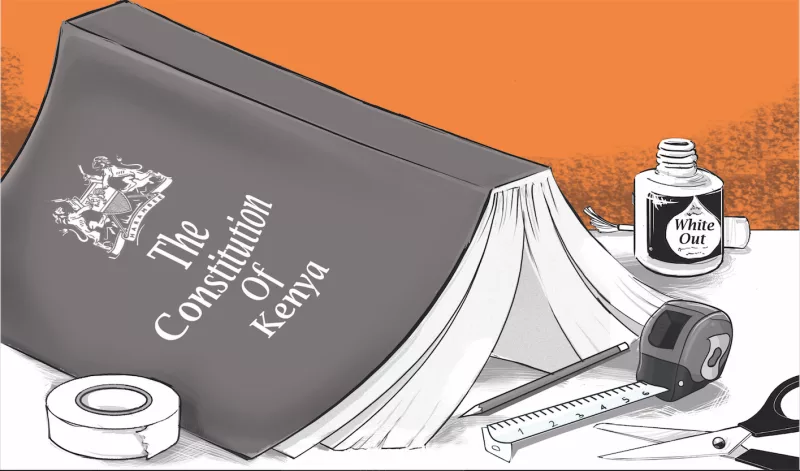
Let us begin with what Kenya has achieved, because intellectual honesty demands it. The Constitution of Kenya, 2010, enshrined gender equality in terms that few constitutions on the continent match.
The two-thirds gender principle — however unevenly enforced — established a constitutional floor beneath representation that simply did not exist a generation ago. Women today lead Cabinet ministries, anchor prime-time television, run listed companies, and head some of the country's most respected institutions.
In the workplace, the proportion of women in professional and managerial roles has grown meaningfully over the past two decades. Tertiary education enrolment among women has risen steadily. Kenya has, at various points, ranked among the most gender-progressive nations in sub-Saharan Africa by international indices.
These are not small things. They represent the accumulation of advocacy, legislation, and the quiet daily courage of women who entered spaces that were not designed to receive them and stayed long enough to reshape those spaces from within. That story deserves to be told with pride.
And yet. The median earnings of Kenyan women remain significantly below those of their male counterparts across virtually every sector. Women perform the overwhelming majority of unpaid domestic and caregiving labour — work that sustains families and communities but registers nowhere in the national accounts. In county governments, the two-thirds gender principle has never been met. In technology, in engineering, in finance — the pipeline of women exists, and it leaks at every stage.
Progress has been real. It has also been uneven, fragile, and frequently reversible under economic pressure. We are not where we were. We are not where we need to be.
THE NUMBERS TRAP: WHEN REPRESENTATION BECOMES THE DESTINATION
There is a particular failure mode in gender equality work that I encounter regularly in organisational settings, and it deserves a name. I call it the numbers trap.
An organisation sets a gender diversity target — say, thirty per cent women in senior leadership by a given year. The target is met. The press release goes out. The gender committee is quietly wound down. And then, three years later, someone notices that the women who reached senior leadership positions are leaving at twice the rate of their male peers. The pipeline dried up at the middle management level.
The women who stayed report feeling perpetually required to prove themselves in ways their colleagues are not. The target was achieved. The transformation never happened.
This is the gap between representation and equity. Representation asks: Are women in the room? Equity asks: once there, do they have equal access to influence, sponsorship, development, and advancement? The first question is answerable with a headcount. The second requires a far more honest interrogation of culture, systems, and — most uncomfortably — the behaviour of those who already hold power.
I have sat in boardrooms where the gender diversity statistics look exemplary, and the lived experience of women in those organisations is one of exhausting performance, double standards, and the constant management of other people's discomfort with their authority. The numbers did not lie. They just did not tell the full truth.
"Representation asks: are women in the room? Equity asks: once in the room, do they have equal access to influence, sponsorship, and advancement?"
THE INVISIBLE LOAD: WHAT WE DO NOT MEASURE
If I were to identify the single most significant structural barrier to gender equality in Kenya — in workplaces, in families, in communities — it would not be discriminatory hiring. It would not even be the pay gap, significant as it is. It would be the unequal distribution of unpaid care and domestic work.
Across Kenya, women and girls spend an estimated three to four times more hours per day on unpaid domestic labour than men and boys. Cooking, cleaning, fetching water, caring for children and elderly relatives, managing the emotional and logistical infrastructure of family life — this work is essential, constant, and economically invisible. It is also the single biggest constraint on women's ability to participate fully in the paid economy, pursue education, engage in civic life, or simply rest.
The COVID-19 pandemic made this visible in painful new ways, as school closures and healthcare pressures dramatically increased the domestic burden — a burden that fell, overwhelmingly and predictably, on women. Many Kenyan women effectively worked two full-time jobs throughout that period, one of which appeared on no payslip and generated no pension contribution.
Changing this requires more than awareness campaigns. It requires a fundamental shift in how families negotiate domestic roles, how schools teach children about shared responsibility, and how employers design work — through flexible working arrangements, quality affordable childcare provisions, and parental leave policies that genuinely encourage fathers to take time away from work to care for their families.
The organisations that understand this — that see the unpaid care burden as a workforce policy issue, not merely a social one — are the ones that will attract, retain, and advance the best women. The rest will keep wondering why their diversity initiatives are not sticking.
STEREOTYPES DO NOT ANNOUNCE THEMSELVES
One of the more uncomfortable truths about gender inequality is that much of it is maintained not by people with bad intentions, but by people with unexamined assumptions. The manager who consistently assigns high-visibility projects to men, not because he dislikes women, but because he assumes they would prefer not to travel.
The recruiter who reads 'assertive' in a male candidate's application as leadership potential and in a female candidate's as a warning sign. The colleague who talks over the women in the room without realising he does it, because the room has always worked that way.
These are not dramatic acts of discrimination. They are the texture of everyday organisational life in most Kenyan workplaces, and they compound, over time, into careers that stall, contributions that go unrecognised, and talent that eventually walks out of the door.
Challenging these patterns requires a particular kind of courage — the courage to look at our own behaviour rather than someone else's. It requires organisations to invest in training that goes beyond awareness and into the harder work of behavioural change. It requires leaders, especially senior male leaders, to actively model the behaviours they claim to espouse: listening as attentively to women as to men, crediting ideas to the person who originated them, calling out interruptions in real time.
And it requires us to extend the conversation. Gender equality is not only about the barriers women face. The rigid expectations of masculinity — the pressure on boys and men to suppress vulnerability, avoid caregiving roles, and compete rather than collaborate — diminish men too. A boy who wants to be a nurse should not have to fight the same cultural headwinds as a girl who wants to be an engineer. The liberation of gender from its prescribed scripts benefits everyone.
"Much of gender inequality is maintained not by people with bad intentions, but by people with unexamined assumptions. That is what makes it so persistent — and so addressable."
WHAT GENUINE CHANGE ACTUALLY REQUIRES
I am frequently asked, in my capacity as an HR professional, what organisations should do to advance gender equality. My answer is usually less popular than the question expects, because it begins not with programmes or policies but with honesty.
Genuine change requires organisations to first conduct a rigorous diagnosis of their own reality. Not the reality in the annual report — the reality in the exit interview data, in the promotion patterns by gender, in the pay gap analysis that no one has officially run because no one wants to see the results. You cannot design an effective intervention for a problem you have not honestly defined.
From that honest foundation, the work proceeds on several fronts simultaneously. Policy reform — equitable parental leave, pay transparency, flexible working provisions, clear and enforceable anti-harassment frameworks — establishes the structural conditions for equality.
But policy without culture is a document. Culture change requires sustained investment in education, in leadership behaviour, and in the visible, consistent accountability of those who hold power.
Inclusive workplaces do not emerge from diversity pledges. They are built through hundreds of small daily decisions: who is invited to which meeting, whose idea is credited at the next stage, who is sponsored for the stretch assignment, who is given feedback that enables growth rather than feedback designed to manage out.
HR can establish the systems and frameworks. But it is line managers and senior leaders who make or break the culture those systems are trying to build.
Community and grassroots engagement matters too, and here I would push organisations to look beyond their own walls. The gender norms that constrain women in the workplace were formed long before those women arrived at the interview.
Schools, families, faith communities, and media — including, I would note as an employee of a media group, the stories we choose to tell and the voices we choose to amplify — all shape the expectations that follow individuals into professional life. Organisations that genuinely care about gender equality find ways to engage in that wider conversation.
THE DAY AFTER INTERNATIONAL WOMEN'S DAY
The most important day in the gender equality calendar is not the eighth of March. It is the ninth.
It is the day after the speeches, after the purple ribbons, after the social media tributes to pioneering women. It is the unremarkable Wednesday when a manager makes a promotion decision, or a father decides whether to collect his child from school, or a recruiter shortlists a candidate for a role that has historically been held by men.
Those moments, accumulated across millions of lives and thousands of organisations, are where gender equality is either advanced or quietly retreated from.
Kenya is a country of extraordinary women — women who have led political movements, won Olympic medals, built businesses across the continent, and held families together through conditions that would break most institutions. They deserve a society, and a labour market, equal to their ambition.
As HR practitioners, as managers, as employers, as colleagues and as citizens, we have both the capacity and the responsibility to build it. Not once a year. Not in a policy document. But daily, in the texture of every decision we make about how we treat each other.
That is the commitment that International Women's Day asks of us. Not celebration — action. Not awareness — accountability. Not a better ratio — a better world.
Jemima Ngode is a Certified Human Resource Professional – Kenya (CHRP-K) and Group HR Manager at Radio Africa Group, Kenya's leading multi-platform media organisation. She writes in her personal capacity on gender equity, organisational leadership, and workplace culture. She can be reached at [email protected] or 0711 046 654.
Jemima Ngode, click here to subscribe to her YouTube channel, Acing life with Jemmie To learn more about CHRPK