Billions of shillings invested in stadium construction across the country have been flagged in a new audit, raising concerns about procurement procedures, stalled projects and value for money.
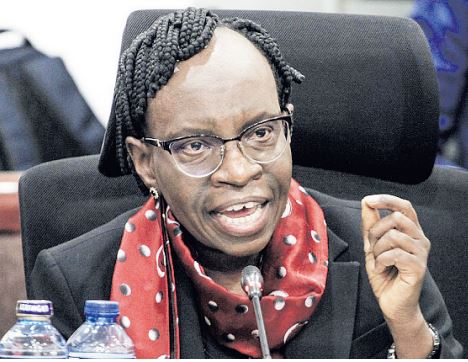
In her report on Sports Kenya for the year ending June 2025, Nancy Gathungu said several sports infrastructure projects exhibited procurement irregularities, weak planning and implementation challenges.
The audit singled out the flagship Talanta Stadium project, whose design, construction and equipping is valued at Sh45.8 billion.
According to the report, the project was awarded through direct procurement, a method the Auditor General said did not meet the required legal threshold.
“The contract did not meet competitive procurement and direct procurement criteria,” the report states.
Auditors also identified a funding gap of about Sh11 billion.
The National Treasury approved Sh35 billion for the project against a contract value of Sh45.8 billion, creating what the report describes as an unsupported price variation.
The audit further noted that by June 1, 2025, the stadium was 44.54 per cent complete while only Sh2 billion — about 4.5 per cent of the contract value — had been paid.
According to the report, delayed payments could expose the government to additional costs, as the contract provides for interest on overdue payments at three per cent above the prevailing base lending rate set by the Central Bank of Kenya.
Auditors also questioned whether the project had been properly planned before procurement.
“There was no evidence that the works were budgeted for and included in the approved procurement plan,” the report states.
The audit further raised concerns about land ownership for the stadium site, noting that management did not provide documentation confirming ownership of the land where the facility is being constructed.
Beyond Talanta Stadium, the audit flagged contracts worth Sh2.16 billion awarded to a single contractor for works at several facilities including Raila Odinga Stadium and Kamariny Stadium.
Auditors said Sports Kenya did not provide sufficient evidence that the contracts were competitively awarded and that key documentation such as tender opening minutes and evaluation reports was missing.
Inspections also revealed incomplete works in several projects.
At Jaramogi Oginga Odinga Stadium, floodlights valued at Sh30.6 million could not be verified because the facility had not yet been connected to electricity.
An additional 16 floodlights worth Sh4.07 million were found stored in boxes.
At Wote Stadium in Makueni county, construction remained incomplete more than eight years after the expected completion date, with key facilities such as a tartan track and borehole still unfinished.
In Kirubia Stadium, a tartan athletics track installed in 2021 at a cost of Sh41.55 million had already deteriorated, with sections peeling off beyond repair.
Meanwhile, part of the terraces at Kipchoge Keino Stadium built at an estimated Sh150 million had to be demolished to meet standards set by Confederation of African Football and FIFA ahead of the 2027 Africa Cup of Nations, which Kenya will co-host with Uganda and Tanzania.
The audit also highlighted stalled works at Kamariny Stadium, where the initial contractor completed only about 30 per cent of the project before the contract was terminated. Efforts to recover Sh24 million paid as advance payment had not succeeded by the time of the audit.
Across several projects, the Auditor General said it was difficult to confirm whether public funds had been properly utilised.
“In the circumstances, the propriety of the expenditure and value for money could not be confirmed,” the report states.