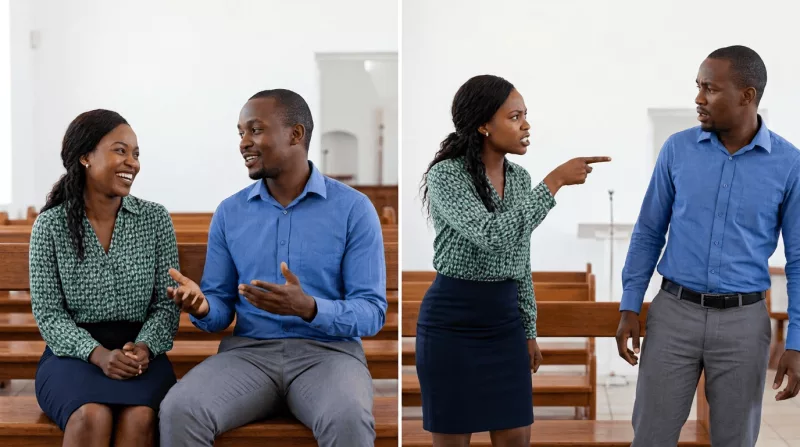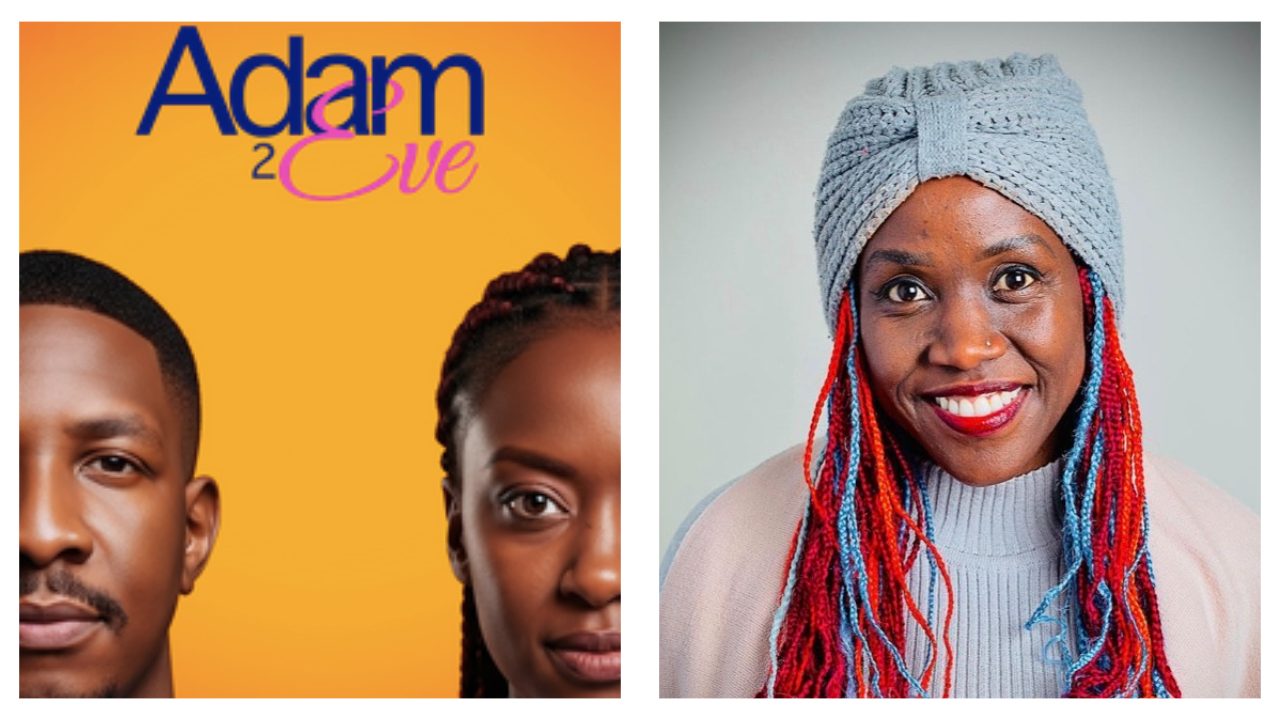
Imagine the horror of waking up one morning, looking in the mirror and realising that the face staring back is not yours.
Blessing Lung’aho’s Adam, the epitome of a smooth-talking, consequence-free, Nairobi-influenced playboy, experiences the depicted situation when a mysterious curse flips his world on its head.
Overnight, the charmer becomes Eve, played by Ellah Maina, finding himself in the very realities he once dismissed with a charismatic wink and disarming grin.
The weight of unspoken expectations and casual disregard that he dished out karmically circles back as the life Adam (as Eve) now has to live.
To break the spell, as is the objective of all fairy tales, he is forced to team up with the one person he consistently overlooks, and who serves as his polar opposite: his quiet, introverted twin brother Makori.
What ensues is chaos, heartfelt and hard-won lessons in a Showmax Original dramedy that’s equally as funny as it is unwavering.
SHOW’S CONCEPTION
Co-director Aggie Salt — credited as Aggie Nyagari in some sources — a UK-based Kenyan filmmaker, explains the origin story of Adam to Eve.
The idea came from creators Alex Konstantaras and Lizz Njagah at Historia Films, who posed a deceptively harmless question: “What if Nairobi’s most charming, most unapologetic playboy woke up one morning in a woman’s body? What then?”
Aggie came on board as co-director because she saw beyond the fantasy.
“Underneath the fantasy and the comedy, the show is asking something genuinely serious: Do we truly understand experiences that are not our own?” she says. “And can laughter be the thing that opens us up enough to find out?”
However, the show had to be unapologetically funny first.
Not as a disguise for a message but because “joy and absurdity are their own kind of truth”.
Yet every comedic tune carries an introspective conversation about identity, equality and the actual cost of moving through the world as a woman in contemporary Kenyan society.
Humour lowers defences and opens doors that earnest lectures might keep shut.
Adam to Eve plays into it to challenge patriarchal assumptions gently but deliberately, inviting audiences into deeper empathy.
CELEBRATED BAD BOY
The central message is clear and radical: Impactful change doesn’t come from being instructed to do better; it comes from living it, while simultaneously learning from it.
Adam isn’t lectured into understanding women’s experiences; he’s forced to inhabit them.
“The curse doesn’t punish a villain, it awakens an ordinary man,” Aggie notes.
Adam’s misogyny isn’t portrayed as monstrous. It’s casual, socially rewarded and largely invisible to him, which poses unconscious danger.
Diving deeper, that’s the most honest and challenging part of the premise.
The show holds a mirror to a recognisable type of man who exists in every city, every culture, and asks: What would it take for someone like this to truly change?
The answer: Nothing short of literally walking in the shoes of those he’s wronged and taken for granted.
The twin brother adds another layer, suggesting growth rarely happens alone, and that the people we underestimate are often the ones we need most.
For Kenyans, especially, this isn’t just entertaining television; it’s a paramount conversation the country needs to have with itself.
“Adam isn’t a stranger,” Aggie says.
“He’s the guy at the rooftop bar in Westlands. Charming, well-dressed and completely unchecked.”
Kenyan society has long given men like him a free pass. The “player” archetype is not only tolerated but also quietly celebrated.
The series refuses to let him off the hook, blending humour, absurdity and heart to make audiences recognise behaviours they might otherwise disregard or defend.
What makes it land so deeply is how authentically Kenyan it feels.
It speaks directly to Kenyan masculinity: obvious stoicism, dominance and social advantages that are invisible — until Adam loses them overnight.
Adam and Eve particularly invites men to sit with that discomfort, not as an attack but as an opportunity for reflection.
At its heart, the show is the bold, unapologetic, authentically Kenyan representation audiences have been waiting for.
CULTURAL BRIDGE
Aggie Salt recognises the challenges of telling these stories from afar.
As a UK-based Kenyan filmmaker, she lives in that “in-between” space, where she is regarded as Kenyan enough for African stories, albeit questioned for authenticity back home, while British institutions still view her as an outsider.
Distance adds logistical hurdles: staying culturally current when slang and social dynamics shift, and maintaining genuine relationships with cast and crew on the ground.
On the other hand, there are wins.
The UK offers world-class training, networks, festivals and mentorship — like her 2024 selection for the Women In Film and Television-UK scheme.
Ultimately, it positions her as a cultural bridge: bringing Kenyan stories to international audiences, while importing global techniques and standards back home.
“Shows like Adam to Eve are a perfect example — a story that is deeply Kenyan in its soul but crafted with an awareness of international audiences and standards.”
The timing of the series’ release feels bittersweet with Showmax’s recent challenges and closures in certain markets.
“Showmax had backed edgy, bold titles that supported authentic local storytelling… that kind of space, where a show like Adam to Eve could exist and breathe, is extraordinarily rare, and it just got rarer,” Aggie painfully quips.
It underscores a harsh truth for African filmmakers: depending on foreign-owned platforms is fragile. Boardroom decisions elsewhere can erase years of work.
Looking ahead, Aggie is taking a pragmatic approach.“The story is the asset. Protect it accordingly.”
Platforms come and go, she says, but owned stories can be relicensed, redistributed and built upon.
She hopes to tell African and global stories that stand the test of time: accessible, with few gatekeepers and limitless reach.
Adam to Eve draws us to realise that maybe the real curse isn’t on Adam.
Maybe it’s on all of us. And until we’re willing to step into someone else’s body (or at least watch eight episodes of someone doing it), then maybe we’ll see what we’ve been missing.