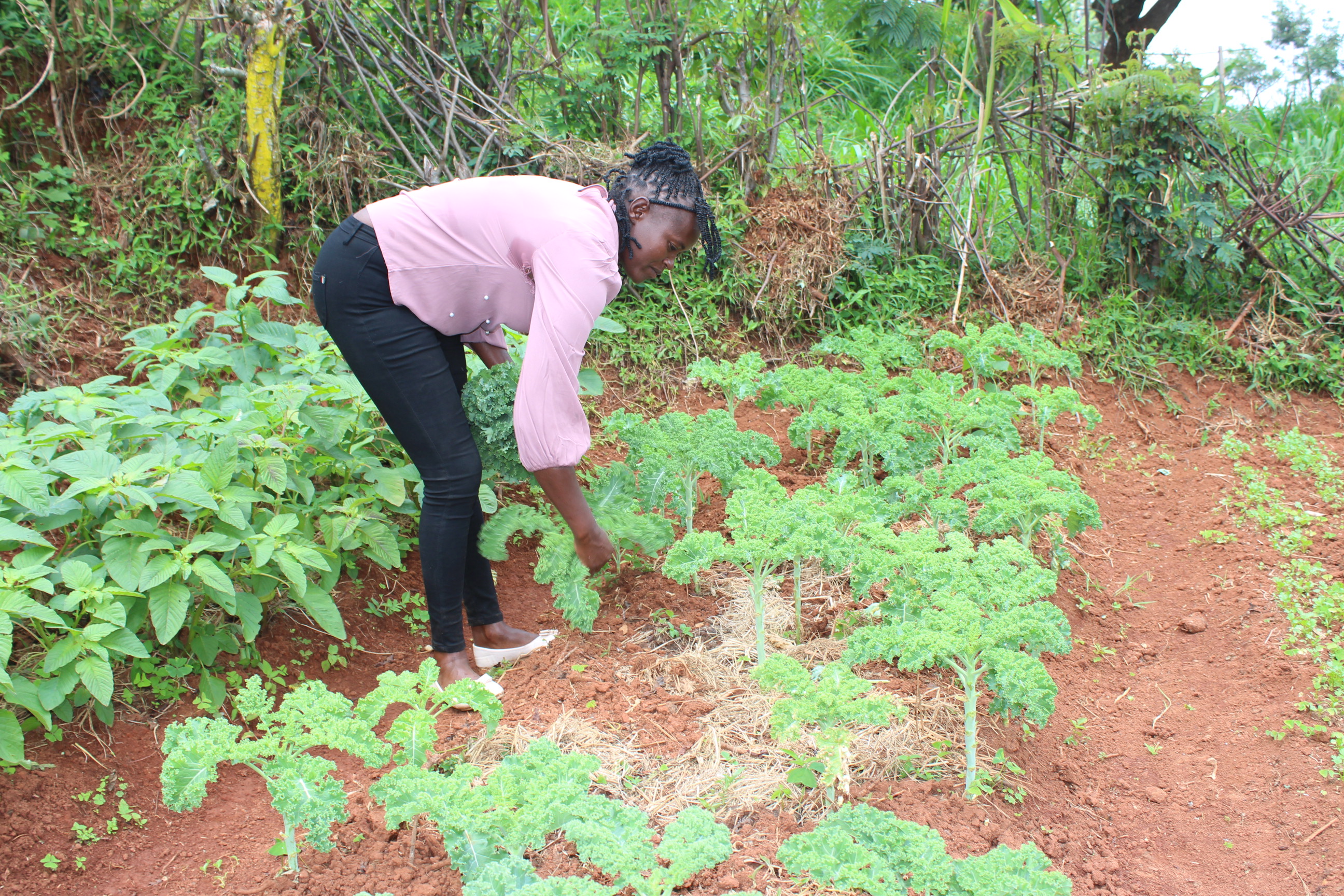
 Joyce Wanjiku Maina, a vegetables farmer harvests kales on her farm in Ikumbi, Kigumo /ALICE WAITHERA
Kenya’s agrochemicals sector players have stepped up efforts to protect farmers and consumers from the dangers of chemicals, amid rising concerns over health risks and environmental contamination.
The move follows the signing of a memorandum of understanding (MoU) between Mazao na Afya and the Agrochemicals Association of Kenya to promote responsible use of agrochemicals and strengthen farmer training.
The agreement aims to raise awareness on the safe handling of pesticides and other farm inputs, encourage the use of protective gear, and ensure proper disposal of chemical containers.
Mazao na Afya CEO Peter Karanja said many farmers continue to expose themselves to dangerous chemicals due to lack of adequate training and protective equipment.
“Agrochemicals are toxic substances designed to kill pests and diseases, which means they can also harm humans if used improperly. Many farmers apply them without protective clothing and the chemicals end up on their skin,” he said during the signing.
Karanja said the partnership will focus on educating farmers on safe storage, correct dosage and proper disposal of used containers.
Improper disposal of pesticide containers has been identified as a major environmental challenge in many farming regions, with some farmers dumping them in rivers, water sources, or farms, leading to contamination of soil and water systems.
Stakeholders warned that such practices endanger human health, threaten biodiversity and compromise the safety of food for local and international markets.
The initiative came as Kenya faces increased scrutiny over pesticide residues in agricultural produce, particularly horticultural exports.
Agriculture remains one of the country’s key economic sectors, with horticultural exports contributing significantly to foreign exchange earnings.
Agrochemicals Association of Kenya chairman Wachira Muriithi said Kenya’s position as a major agricultural exporter makes it essential for farmers to follow strict pesticide use guidelines.
“Kenya is one of the biggest agricultural exporters in the region, especially in horticulture. When pesticides are not used properly, produce can be rejected in international markets,” he said.
Muriithi warned that such rejections can have far-reaching implications for the economy and the livelihoods of farmers who depend on export markets.
He said while awareness about safe pesticide use has improved, many farmers still do not consistently use appropriate personal protective equipment.
The new partnership aims to scale up farmer training programmes to ensure chemicals are used safely and according to recommended guidelines.
Beyond safety concerns, stakeholders raised alarm over the growing circulation of illegal and counterfeit pest control products.
During a sensitisation campaign in Makutano, agrochemical companies and regulatory agencies called for stronger enforcement measures to curb the distribution of illegal pesticides.
Muriithi said counterfeit or unregistered pesticides not only reduce crop yields but also pose serious risks to human health and the environment.
The association is working closely with regulators, including the Pest Control Products Board, and regional partners to combat the spread of illegal products.
“These illegal pest control products harm crops, reduce yields and endanger human health,” he said.
Concerns over harmful agrochemicals have grown in recent years due to their potential link to chronic illnesses.
Prolonged exposure to certain pesticides has been associated with respiratory diseases, hormonal disruption, reproductive complications and some cancers.
Farm workers and small-scale farmers are particularly vulnerable because they often handle chemicals directly without adequate protective gear.
Communities living near heavily farmed areas may also be exposed through contaminated water or pesticide residues in food.
Public health experts have noted increasing cases of chronic illnesses, including kidney disease and some cancers, in agricultural regions, with agrochemical exposure cited as a possible contributing factor.
A 2023 report by the Root to Food Initiative, a programme run by the Heinrich Böll Stiftung, found that local farmers used 3,068 tonnes of pesticides on at least 26 crops, with 63 per cent classified as Highly Hazardous Pesticides (HHPs).
Farmers spent about $72.7 million (about Sh9 billion) on pesticides, with $26.4 million (about Sh3 billion) going to herbicides, including glyphosate and paraquat, both banned in the European Union.