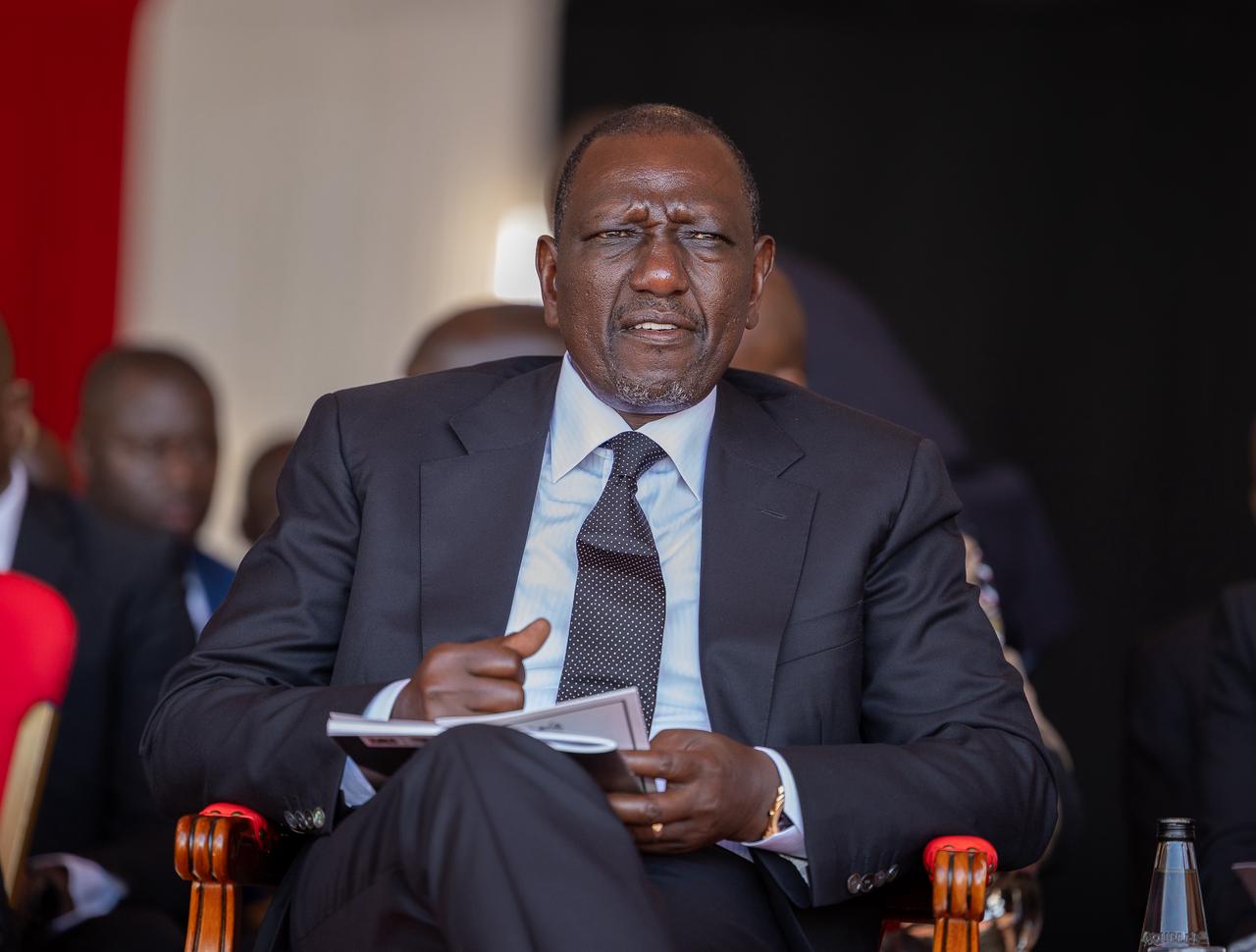
Despite months of talks and understandings with ODM, internal developments within the opposition party threaten to complicate the arrangement that President William Ruto had hoped would secure his 2027 re-election strategy.
Ruto had initially viewed cooperation with ODM as a strategic fallback—one that could shield his administration from an increasingly restless political environment, especially after losing influence in the vote-rich Mt Kenya region.
However, the plan is now facing uncertainty after a breakaway faction within ODM began pushing for an aggressive internal reorganisation that could reshape the party’s leadership and political direction.
The faction, mobilising grassroots leaders and supporters across several counties, is reportedly plotting a takeover of the party in the coming months.
The move threatens to weaken the influence of leaders perceived as sympathetic to cooperation with Ruto’s government.
Siaya Governor James Orengo, a veteran politician, on Wednesday urged party supporters to reclaim ODM from what he described as state capture by Oburu Oginga’s team.
“I plead with you, in the first phase we must recapture the party called ODM,” Orengo said during a function by ODM rebels, unveiling their parallel report on the implementation of the 10-point agenda.
“This is the first phase of the struggle; after reclaiming our party, the second stage is to begin organising. The ceasefire is over.”
Saboti MP Caleb Amisi, backing Orengo, vouched for him to replace Oburu as party leader.
“If we take over ODM, it is war. Whoever wins, wins, and in war there are casualties,” the legislator said.
Amisi suggested that Secretary General Edwin Sifuna could remain as deputy or secretary general under Orengo’s leadership.
Despite the rebels’ push, Sifuna and deputy party leader Godfrey Osotsi have maintained they are not leaving the party, signalling that the internal contest will be fought from within.
Political insiders say the emerging Orengo–Sifuna wave unsettles Ruto, whose team had quietly counted on a predictable relationship with ODM’s established leadership.
Analysts now argue this faction could significantly weaken Oburu’s bargaining power in pre-2027 political negotiations, denying Ruto a unified partner crucial for his campaign.
Political analyst Martin Andati told the Star that Ruto’s camp could offer a reduced deal, calculating that a divided partner lacks the cohesion to demand premium terms.
“Oburu will go to the negotiations weakened. Ruto will give them whatever he likes. It will be a matter of take or leave,” he said.
If the rebellious faction succeeds in reshaping party leadership, it could collapse the fragile political détente that has characterised recent government-opposition engagements.
In a parallel submission on the 10-point agenda, the Linda Mwananchi team criticised the official report released on Tuesday, calling it a “study of falsehoods” and a “monumental joke”.
The report, they argued, fell short of the expectations outlined in the MoU that established it.
“It is our firm conviction that on the 10-point agenda, the highest progress score would be one out of 10. On some items, regression would amount to a negative score,” the report states.
The rebels cited interference with multiparty democracy and the independence of political parties as areas of regression.
They also claimed the committee tasked with reviewing implementation failed to provide regular progress reports, instead cobbling together unrelated parliamentary bills and events as “progress.”
Sifuna’s camp further argued that claims of the government hiring 100,000 teachers were misleading, noting the Teachers Service Commission letters were distributed through leaders aligned with the regime, allegedly to stifle growth in other regions.
Homa Bay Town MP Peter Kaluma dismissed the rebels, describing them as individuals who had long exited the party despite still claiming association.
The MP accused them of waging needless political battles while lacking legitimacy within the party’s current structures.
“Babu Owino and Sifuna left ODM long before Baba passed on,” Kaluma said, underscoring the faction’s marginalisation from mainstream party operations.
INSTANT ANALYSIS
With internal contestations intensifying, the stability of the informal understanding between Ruto and ODM now appears far from guaranteed, leaving the President monitoring opposition developments with growing concern.