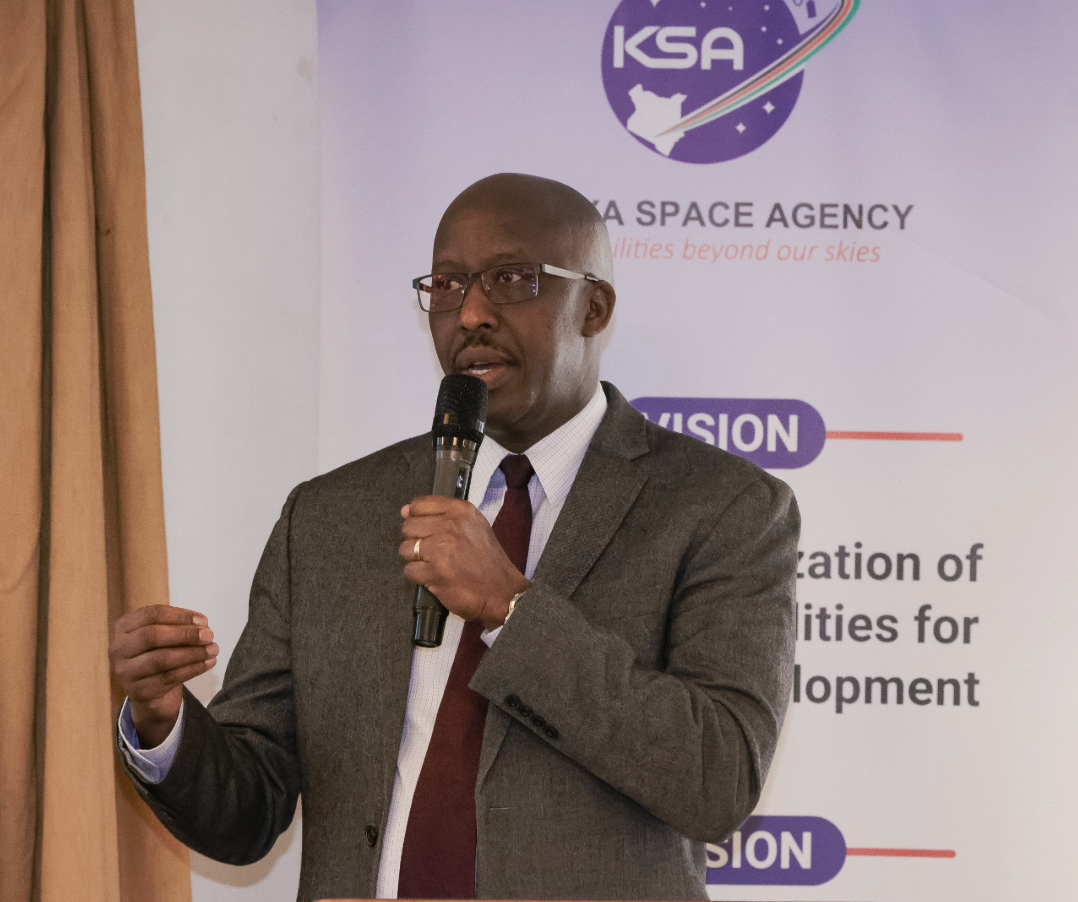
 Kenya Space Agency Director General Brigadier Hillary Kipkosgei speaks during a media engagement meeting at Heron Hotel in Nairobi on March 10, 2026./HANDOUT
Kenya will host a major international gathering on data, technology, and space innovation in June, bringing together global experts, policymakers, and innovators to discuss how data and emerging technologies can help tackle some of the world’s most pressing challenges.
The four-day event, which combines the Global Data Festival and the Kenya Space Expo and Conference 2026, will take place in Nairobi from June 2 to June 5.
It is being organised by the Kenya Space Agency in partnership with the Kenya National Bureau of Statistics and the Global Partnership for Sustainable Development Data.
The joint conference comes at a time when countries across the world are grappling with climate shocks, disasters, disease risks and rising food insecurity, even as technologies such as artificial intelligence and satellite systems advance rapidly.
Organisers say the event aims to bring together decision makers and experts to align priorities, mobilise investment and deploy data and space technologies where they can deliver the greatest impact.
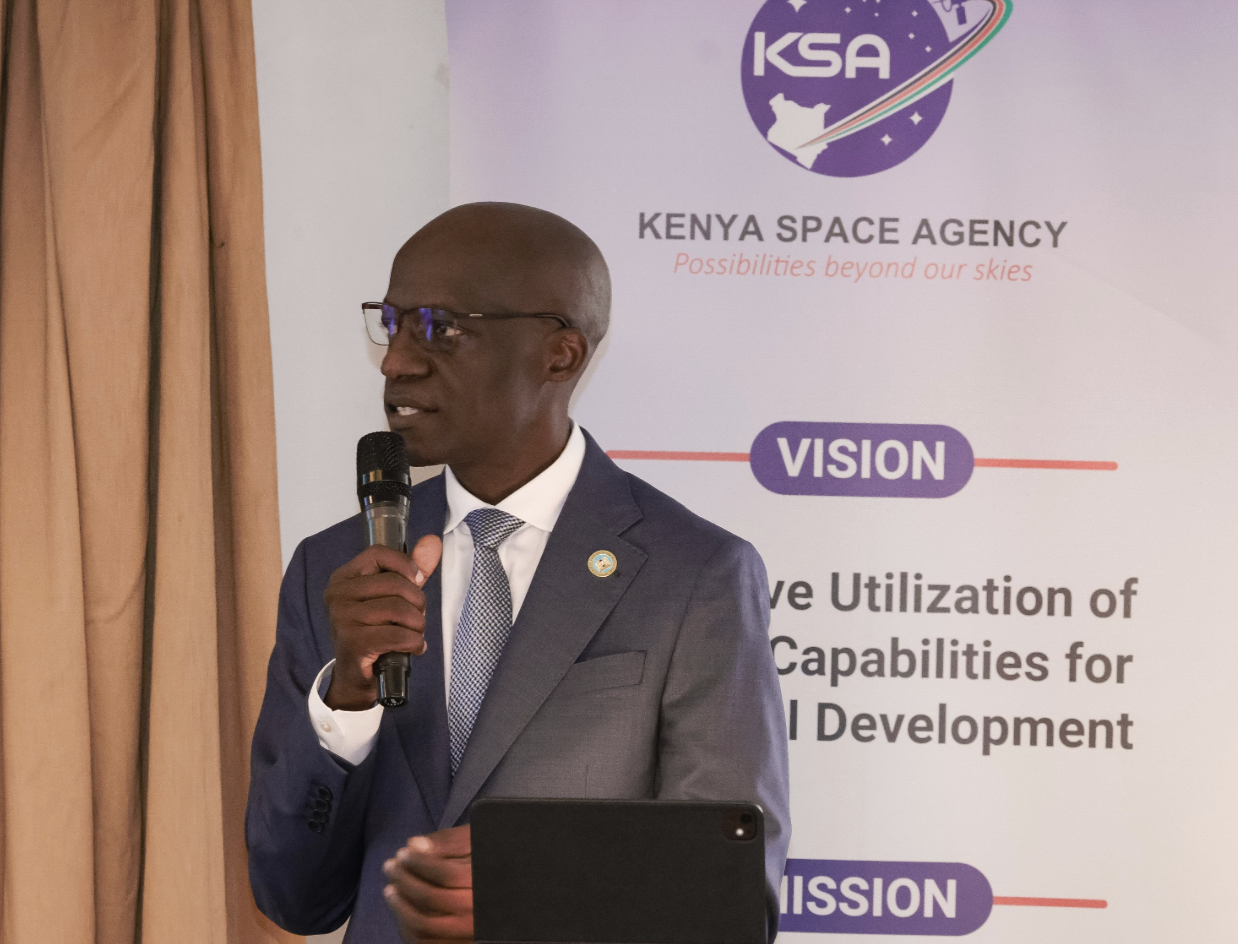 Kenya’s Special Envoy on Technology, Phillip Thigo speaks during a media engagement meeting at Heron Hotel in Nairobi on March 10, 2026./HANDOUT
Kipkosgey explained that the Kenya Space Expo and Conference has already been held twice before, in 2022 and 2024, and the upcoming edition will be the third.
He noted that the decision to merge the space conference with the Global Data Festival emerged after discussions among partners who recognised the strong link between space technologies and the broader data ecosystem.
Kipkosgey said the space agency created the expo primarily to address limited awareness about the value of space technologies in Kenya.
“Now, when we came up with the concept of Kenya Space Expo and Conference, our thinking and motivation was that in our country there is still little appreciation and awareness about the utility and value of space, and particularly space technologies and space-derived data,” he said.
He explained that satellites generate critical data that can help governments and institutions monitor environmental changes, track disasters, and improve planning.
“For example, how you can use that data to do continuous monitoring and predictive analytics on disasters, for example. So you use historical data, likely from satellites, to understand the trends and therefore from that make predictions of what is likely to happen,” he said.
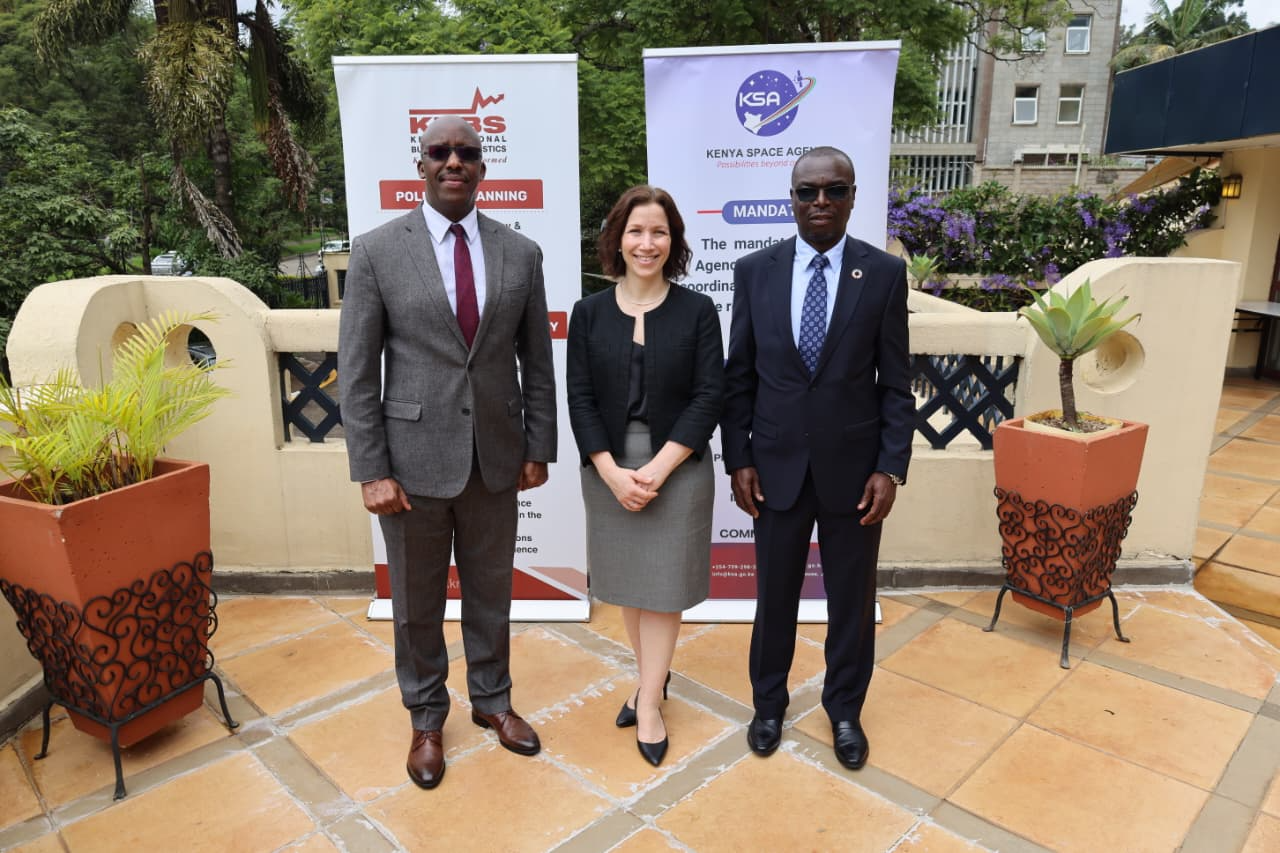 Director General , Kenya Space Agency (KSA) , Brigadier General Hillary Kipkosgey ,Ms Jenna Slotin,Chief Executive Officer, Global Partnership for Sustainable Development Data and KNBS; and Director General Dr Macdonald Obudho./HANDOUT
Using the example of forest conservation, he noted that satellites can provide frequent imagery that helps detect changes across vast landscapes.
“And yet there is this satellite that is constantly up in orbit, that is constantly every day. Every 95 minutes, ideally, you can actually have a refresh, a new revisit of high-resolution satellite imagery, over any resource,” he said.
Kipkosgey said such capabilities can improve early warning systems and help governments respond faster to disasters such as floods or drought.
He also recalled public criticism when Kenya launched its first satellite in 2023, saying the reaction highlighted the need for greater public understanding.
“I know the last time in 2023 when we launched a small satellite, there was a backlash from the whole nation. Social media was abuzz with misplaced priorities. Why Kenya when we are hungry? Why are we sending a satellite? What are these people even thinking?” he said.
“That very satellite gives you information that would make better decisions around how you do food security and many other things.”
Kipkosgey emphasised that space data is a public resource and urged media houses to help communicate its value to citizens.
“We deal with data that is digital public goods. It is not something that we are making money out of as a space agency,” he said.
From a global perspective, the Chief Executive Officer of the Global Partnership for Sustainable Development Data, Jenna Slotin, said hosting the event in Nairobi reflects Kenya’s strong leadership in digital innovation and data governance.
Slotin noted that Kenya was one of the founding partners of the global data initiative.
"Now from our very humble beginnings with founders like Kenya, the Global Partnership has now grown to a network of over 700 organisations globally that are coming from government, from the private sector, from civil society, from international organisations, from media, and from academia,” she said.
According to Slotin, the festival will bring together about 1,500 participants from around 90 countries.
She said the joint event reflects the growing link between space data and other digital systems used to deliver services and guide policy.
“The work we all do in climate, health, food security, agriculture, AI and tech development all depend on Earth observation and space-derived data,” she said.
Slotin added that global cooperation is increasingly important as technological change accelerates.
“The moment demands joining together. It demands partnerships. There are more pressures today with geopolitical changes and technological advancement at rapid speed, faster, frankly, than governance frameworks can keep up,” she said.
She described the festival format as a platform for collaboration and practical problem-solving.
“It’s because it's designed for people who want to find, share, and co-create actionable ideas, practical coalitions, commitments, and tools to take home and drive real change,” she said.
The director general of the Kenya National Bureau of Statistics, Macdonald George Obudho, said Kenya bid to host the event soon after the first global edition was held and was confident the country would be selected.
Obudho noted that the conference is only the third global edition and the first to be held in
The KNBS chief said the meeting will help strengthen collaboration between statisticians, technologists, and space experts.
“The merger that we are having here will reflect the growing convergence between the statistics, geospatial information, satellite data, and emerging technologies such as AI in addressing the development challenges and improving the lives of the citizen,” he said.
He added that the discussions will also support future national planning efforts such as the census.
“In the last census, we collected coordinates for every single household that we visited. We collected coordinates of all the key services, the water points, the schools, and the institutions,” he said.
“We collected that information. And so it was not just the population numbers alone, but it included the physical location of each and every entity that we are dealing with.”
Obudho also highlighted the potential economic benefits of hosting the conference, noting that thousands of international visitors could boost tourism and local businesses.
“When we are expected to host about 1,500 people across the world, then you'll also be sure that our economy will be boosted for that period of time,” he said.
Kenya’s Special Envoy on Technology, Phillip Thigo, said the event comes at a critical moment as the world transitions into what he described as the “age of intelligence."
“We are living in this profound structural shift, where the previous age that we were in, many of us talked about a knowledge economy,” he said.
“But then I think in the last four or five years we've seen this big transition into what we are increasingly calling the age of intelligence.”
He explained that data is the foundation of this new era.
“You cannot be intelligent without data,” Thigo said.
The envoy said accurate and timely data is essential for planning infrastructure, improving healthcare systems, and strengthening disaster response.
“Development today, we can agree, depends on accuracy of data, timeliness of data, and how we trust that data,” he said.
He also highlighted the growing role of satellite data in everyday life.
“If you took an Uber today, you used space data. Literally. If your phone is on today, it's giving location, so you're using space data,” he said.
Thigo said the conference will help demonstrate how data can be used to solve real-world problems in sectors such as agriculture, health, and education.
“Data for data's sake is just data. But if data is deployed in a use case that then begins to understand context, it can deliver very specific outcomes for specific populations,” he said.
He added that strong data governance and public trust will be critical as data becomes more central to decision-making.
“We live in an era of diminished trust,” he said.
“But also, as data becomes more central to political power, I think we need more trusted data systems.”
According to organisers, the combined conference will feature policy discussions, technical workshops, exhibitions, innovation labs and networking sessions. The aim is to showcase practical solutions that use data, space technologies, and artificial intelligence to address development challenges.
As the world approaches the 2030 deadline for the Sustainable Development Goals, leaders say the event in Nairobi will provide an important platform to accelerate collaboration and innovation in the global data and technology ecosystem.