 Innovator Elly Okello. STEPHEN ASTARIKO
A second-year university student is turning heads with a simple but powerful idea that could reshape how Kenya manages waste — by rewarding people to do the right thing.
Okello Elly, a student at Zetech University, is the founder of SmartWaste, a system that blends technology and human behaviour to tackle one of the country’s growing urban challenges.
The concept is straightforward. A user approaches a bin fitted with a SmartWaste QR code, scans it, selects the type of waste, and disposes it. In return, they earn points that can be accumulated and redeemed — creating a cycle designed to encourage proper waste disposal.
But beneath that simplicity lies a powerful engine. The system captures real-time data on how bins are used — from fill levels to disposal patterns by time and location — offering insights that could help waste collection shift from fixed schedules to demand-driven operations.
For Okello, however, the real breakthrough is not the data.
“What makes SmartWaste different is that it focuses on changing behaviour, not just managing waste,” he says. “SmartWaste introduces a reward system that actively encourages proper waste disposal, making it something people want to do rather than something they feel forced to do.”
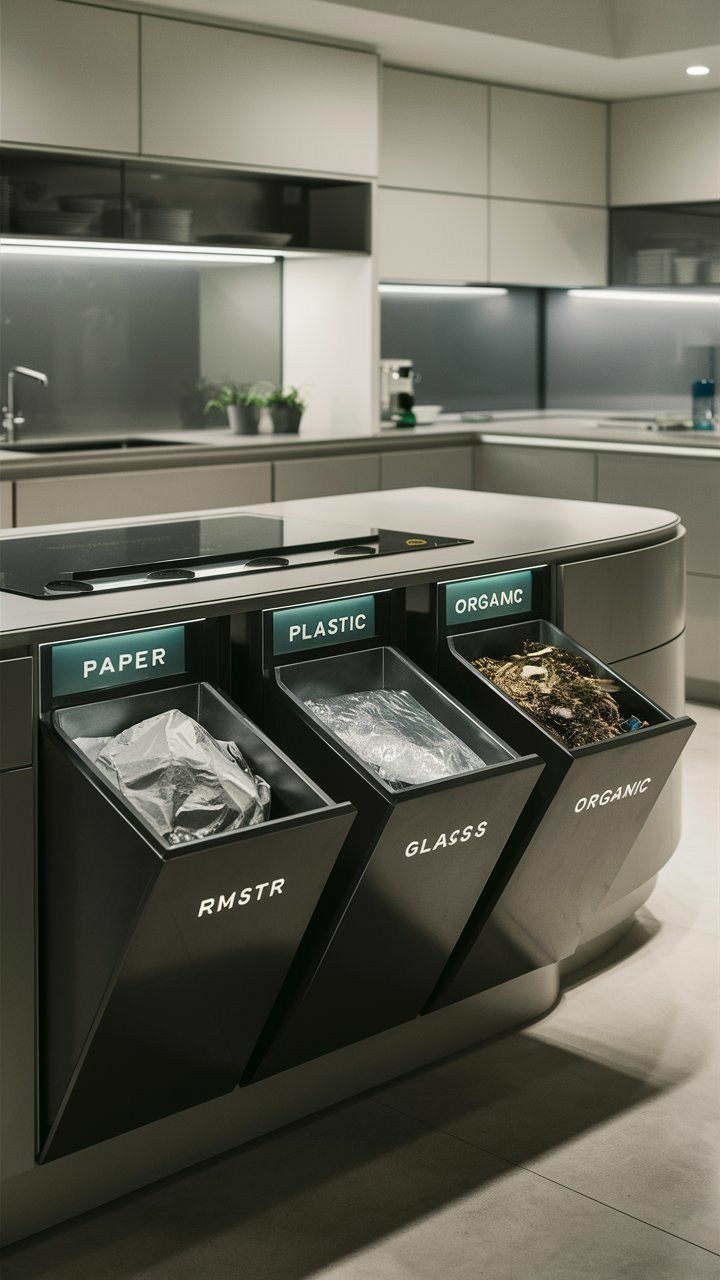 A next-generation, private smart waste-sorting bin tailored for kitchen spaces. /courtesy
The current version is being piloted at campus level, with QR codes placed on selected bins and a simple interface accessible via smartphone. The goal is to test whether small incentives can drive large-scale behaviour change.
“People don't always act based on what's correct or expected — they act based on what's convenient or rewarding,” he explains, noting that traditional systems often assume infrastructure alone will shape behaviour.
“Bins do not change habits. Apps do not change habits. Systems that understand and work with human behaviour do,” he adds.
The innovation comes at a time when Kenya’s urban population is rapidly expanding, stretching waste management systems beyond their limits. Cities are grappling with pollution, lost recycling opportunities and mounting pressure on local authorities.
SmartWaste targets the human element of the problem — a gap infrastructure alone has struggled to bridge — with a model that requires no public spending or policy overhaul.
“By focusing on behaviour as well as infrastructure, it offers a more sustainable approach to managing waste in Kenyan cities,” Okello says.
His immediate goal is to validate the concept within the campus environment. In the long term, he envisions a network of smart bins, incentivised users and real-time data working together across urban centres.
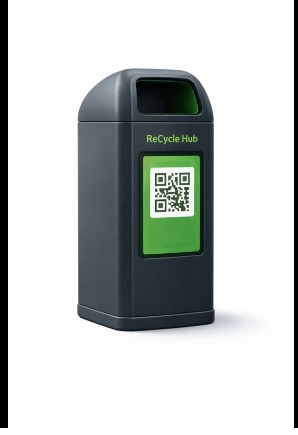 Concept bin design with embedded QR technology enabling smart user interaction./courtesy
Beyond the innovation, Okello’s journey stands out. Still in his second year, he has already identified a real-world problem, tested solutions and refined his idea — steps many only take after graduation.
“Building SmartWaste as a student shows me that real-world solutions don't have to wait until after graduation,” he says.
He now has a message for other young innovators: start where you are.
“You don’t need everything figured out to start. What matters is taking the first step and being willing to learn from real situations, not just theory.”