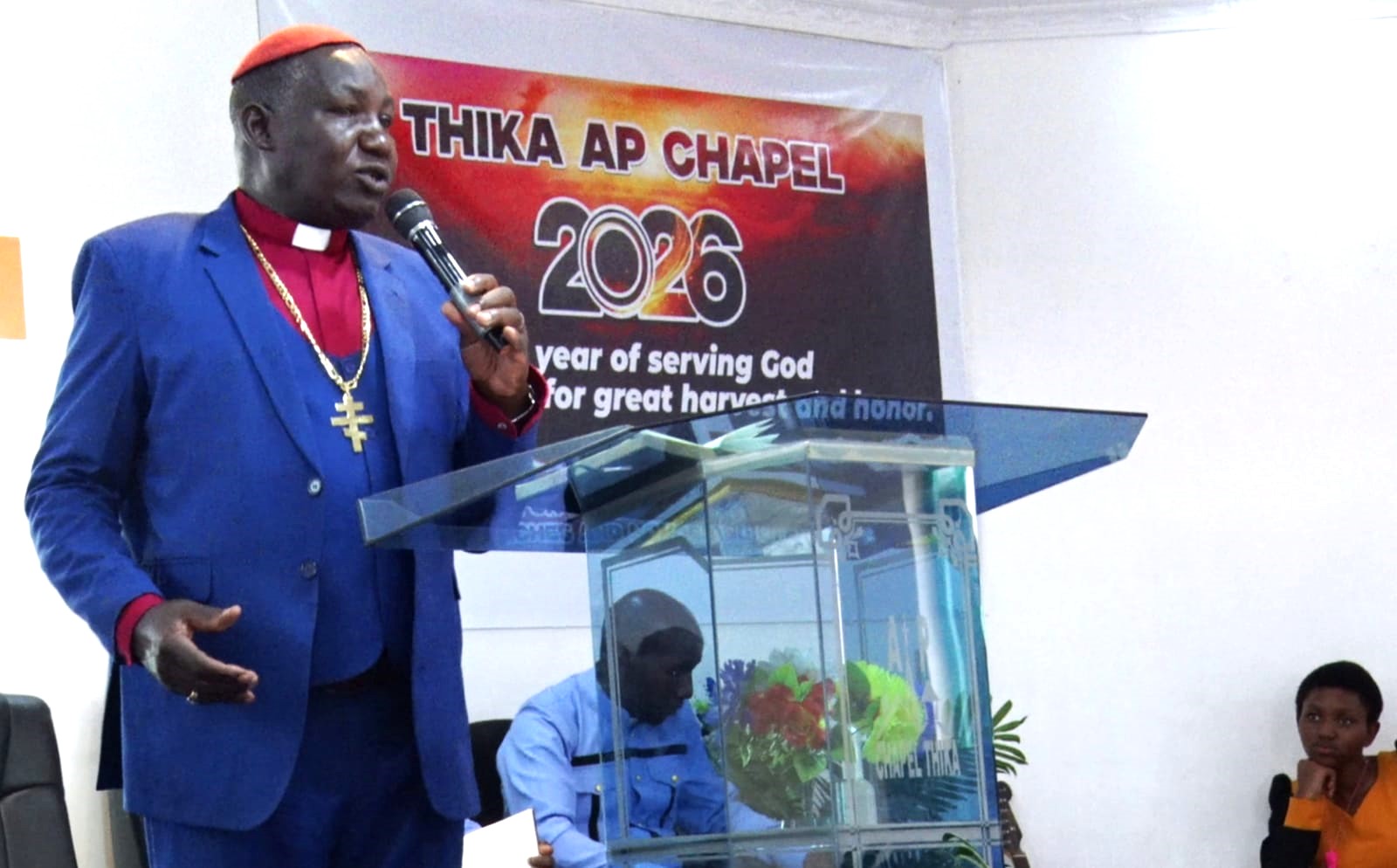
 Archbishop David Gatimu addressing faithfuls at Thika AP Chapel during a thanksgiving ceremony on March 9, 2026 / ALICE WAITHERA
Church leaders have raised concerns about what they say is a growing openness among young people towards same-gender relationships.
They are urging families, schools and community institutions to strengthen guidance and mentorship for the youth.
The clergy, led by Archbishop David Gatimu, said they have increasingly encountered young people who openly identify with or engage in same-gender relationships, a situation they believe reflects broader social and cultural changes affecting the younger generation.
They spoke during a Thanksgiving service at Thika AP Chapel.
Gatimu, a retired Administration Police chaplain, told congregants that church leaders have recently observed more instances where young people publicly express affection towards partners of the same gender.
He said the issue appears particularly noticeable within learning institutions where young people interact closely with peers and are exposed to various ideas and lifestyles through social media and the internet.
“Many young people today are navigating a complex environment shaped by global cultures, digital platforms and peer influence,” Gatimu said.
“As leaders and parents, we must continue guiding them so they make choices that support stable families and responsible futures,” he added.
Archbishop Gatimu expressed concerns that some young people may be making relationship decisions without fully considering their long-term impact on their education, family life and personal development.
The issue is especially prevalent during secondary school years and becomes more pronounced when students join colleges or universities, where they often experience greater independence.
“Education should remain the primary priority for students at this stage of their lives. When young people become deeply absorbed in relationships and social pressures, their studies and future opportunities may suffer,” he said.
The clergy also expressed concern that intense relationships among students, regardless of their nature, can sometimes lead to emotional stress, disputes between peers and reduced concentration in academic work.
“Our responsibility is to walk with the youth as they grow and make life choices. When society works together to guide them, we help build a generation that is confident, responsible and prepared for the future,” he said.
Church elder Esther Wanjiku linked some of the challenges facing young people to difficulties within family environments, saying children who grow up in homes marked by frequent conflict or limited parental guidance sometimes struggle to find a sense of belonging.
Such situations, she said, can make some youths more susceptible to peer pressure and external influence, particularly when they seek acceptance and emotional support from friends.
Wanjiku also warned that the rapid expansion of digital technology has created new challenges for parents trying to guide their children.
According to her, unrestricted access to online platforms exposes young people to content and social movements that shape their attitudes and lifestyle choices at an early age.
“Parents must remain actively involved in their children’s lives, including their online activities,” she said.
“Open conversations within families can help young people make thoughtful decisions.”
The church leaders further urged school administrators to strengthen mentorship initiatives and counselling programmes to support students navigating adolescence and early adulthood.
They emphasised that guidance from teachers, religious leaders and parents can help young people remain focused on their studies and long-term goals.