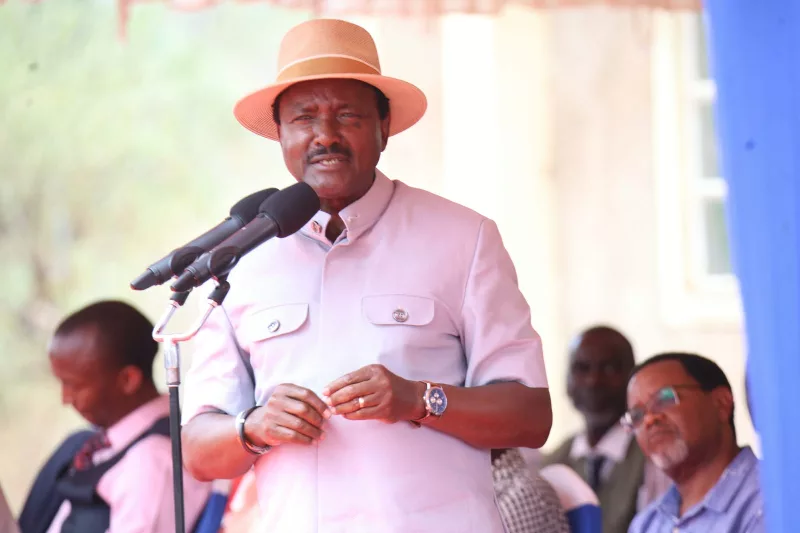
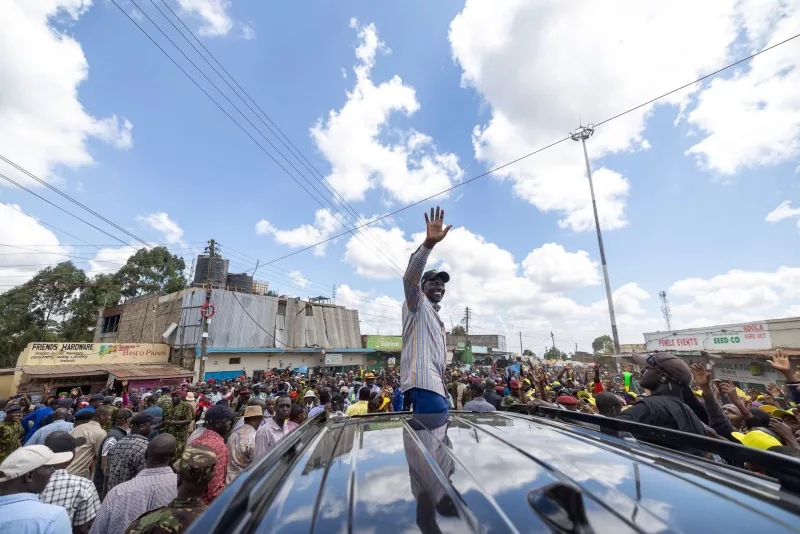
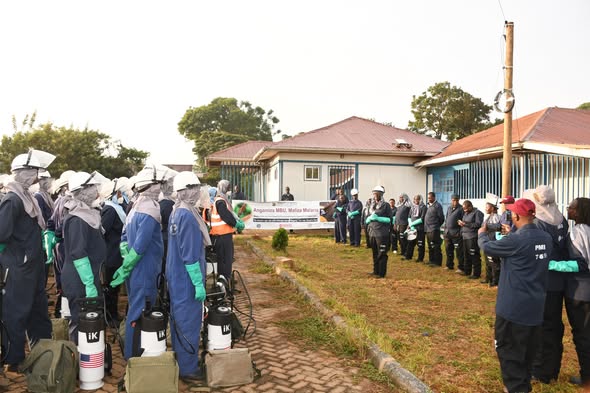
 Launch of the indoor residual spraying campaign to combat Malaria in
Siaya County on February 2, 2026/HANDOUT
Launch of the indoor residual spraying campaign to combat Malaria in
Siaya County on February 2, 2026/HANDOUTAn indoor residual spraying campaign supported by the US has been completed across all six subcounties of Siaya in a major effort to curb malaria transmission.
The US Embassy said the 21-day campaign was conducted in partnership with the national government.
“The campaign reached an estimated 1,161,843 residents and involved spraying 255,556 structures marking the first time the intervention has been implemented countywide in Siaya,” the Embassy said.
Health CS Aden Duale welcomed the support and said the campaign aligns with Kenya’s broader strategy to reduce malaria through prevention and locally driven solutions.
“The campaign aligns with Kenya’s broader health strategy by focusing on prevention, cost-effective interventions and country-led solutions that reduce long-term dependency on external support,” he said.
Malaria remains a major public health challenge in western Kenya, with Siaya among the hardest-hit counties.
According to health data, the county recorded a malaria incidence rate of 561 cases per 1,000 people last year, significantly higher than the national average of 70 per 1,000.
Acting US Ambassador to Kenya Susan Burns said the campaign reflects efforts to strengthen health systems while supporting communities to reduce dependence on external aid over time.
“I am excited that this was a successful campaign in Siaya county. The fact that we provided targeted support to reduce malaria transmission in Siaya is a testament of our intention to help communities become healthier, more productive and less dependent on foreign assistance over time,” Burns said.
For residents such as Margaret Odongo, the spraying campaign offered hope of relief from a disease that has affected families for years.
“I want to thank you all for coming to my home and doing me the favour of spraying my house. Mosquitoes have troubled me for a long time,” Odongo said.
“I have spent a lot of money seeking treatment for malaria for myself and my children. I am very grateful for what has been done to me. I thank the government for this noble support that they have accorded to us and for remembering us.”
Community health promoters involved in malaria control efforts said the intervention could significantly reduce infections in the county.
Francisca Aluoch Lunda said previous measures such as mosquito net distribution had helped reduce cases but the new spraying campaign could further suppress malaria transmission.
“Malaria has been rising over the years, we would find a lot of positive cases. However, with the net distribution it went down slightly but now we believe that with IRS the prevalence will now go down,” Lunda told the organiser.
The US has supported Kenya’s malaria response with more than $500 million since 2007, funding prevention programmes, treatment and public health campaigns.
Previous US-supported spraying campaigns in neighbouring counties such as Homa Bay, Migori and Busia counties have recorded reductions in malaria cases and related hospitalisations.
The spraying programme was implemented with logistical support from the Siaya government, which mobilised communities, recruited seasonal spray operators and supported operations through local health facilities.
Meanwhile, a third round of the U.S.-funded indoor residual spraying campaign began in Busia county on Monday as part of broader efforts to reduce malaria transmission in western Kenya.