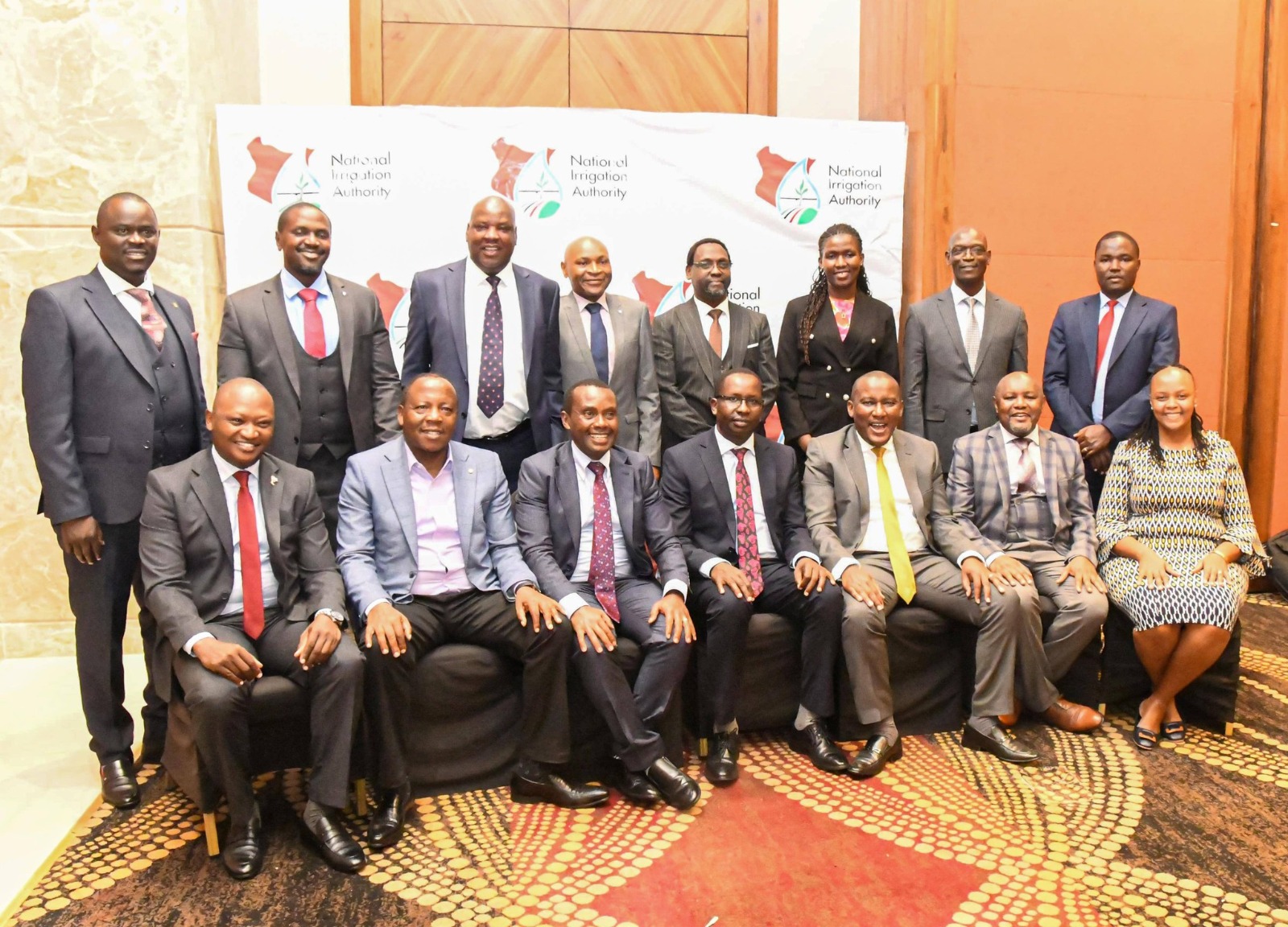
The government has put about 763,000 acres under irrigation as part of efforts to boost food production and reduce reliance on rain-fed farming, the State Department for Irrigation has said.
Speaking before the National Assembly Departmental Committee on Blue Economy, Water and Irrigation, Principal Secretary for Irrigation Ephantus Kimotho said the government is accelerating investments to expand irrigated agriculture and unlock the country’s farming potential.
The committee, chaired by Kangongo Bowen, received updates on the progress of irrigation projects, use of allocated funds, and the sector’s contribution to national food security.
Kimotho said the government is implementing the National Irrigation Sector Investment Plan, which aims to expand irrigated land to over one million acres, with a long-term goal of utilising more than three million acres suitable for irrigation across the country.
“Irrigation remains central to achieving food security and building resilience against climate change. Through strategic investments in dams, smallholder schemes and farmer-led irrigation, we are working to expand irrigated land and increase agricultural productivity,” he said.
The PS noted that the government is prioritising completion of projects that are more than 70 per cent complete to bring thousands of acres quickly into production.
He added that expansion and rehabilitation of key irrigation schemes would significantly boost rice output.
“We are targeting an increase in paddy rice production from about 305,000 metric tonnes to 700,000 metric tonnes through the revitalisation of schemes such as Mwea Irrigation Scheme, Ahero Irrigation Scheme, Lower Kuja Irrigation Scheme and South West Kano Irrigation Scheme,” Kimotho said.
He also updated MPs on major national projects, including the Galana Kulalu Food Security Project, Bura Irrigation Scheme, and Turkana Irrigation Development Project, alongside smallholder and community-based programmes aimed at strengthening climate resilience.
According to Kimotho, investments in irrigation have already expanded irrigated acreage by more than 100,000 acres and increased rice production by over 110,000 metric tonnes, alongside construction of water harvesting and storage infrastructure.
Bowen commended the State Department for the progress made and pledged Parliament’s support for continued irrigation investments.
“We must ensure that ongoing projects are completed on time and deliver value for money. At the same time, we should explore innovative financing models to accelerate irrigation development beyond government funding,” he said.
The irrigation expansion programme forms part of the government’s broader food security strategy under the Bottom-Up Economic Transformation Agenda.