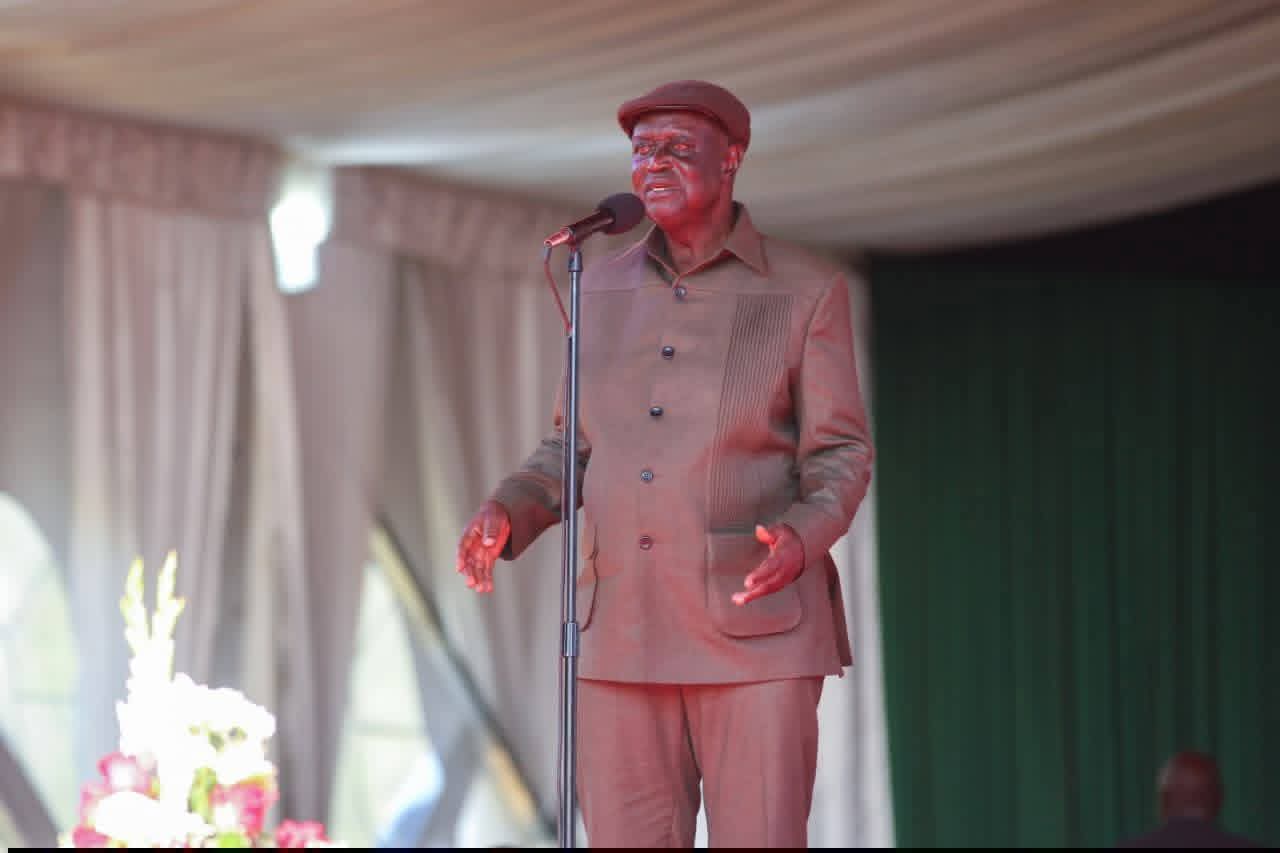
 ODM party leader Oburu Oginga in Bondo, Siaya county
A subtle but intensifying contest is unfolding within the
ODM over the possibility of securing the deputy president slot in next year’s
General Election.
The move could redefine the party’s alliance with the administration of William Ruto.
Several senior figures in the party are positioning
themselves for the coveted seat.
This is even as ODM’s leadership navigates a delicate
balancing act between asserting influence and maintaining internal cohesion.
Party chairperson Gladys Wanga has maintained that ODM will
approach negotiations with the ruling UDA from a position of strength,
advocating a 50–50 power-sharing arrangement.
Party leader Oburu Oginga has been more pointed, signalling
that the deputy presidency should be part of the negotiation package.
“As ODM we are clear that Oburu Oginga will negotiate with
the President and agree that whatever it is, let it be shared equally. ODM
should take one half while UDA takes the remaining half,” Wanga said last week
during a rally in Migori.
“We are not negotiating from a point of weakness. Those who
thought we would not demand the deputy president’s post are mistaken,” added
Oburu.
Publicly, Wanga and Mining Cabinet Secretary Hassan Joho
have emerged as potential candidates.
Behind the scenes, figures such as cabinet secretaries John
Mbadi (Treasury), Wycliffe Oparanya (Cooperatives), Opiyo Wandayi (Energy) and
Oburu are also being floated.
The jockeying has heightened tensions within ODM, which is
already grappling with divisions over its cooperation with the Kenya Kwanza
administration.
ODM deputy leader and Mombasa Governor Abdulswamad Nassir is
leading the Coast faction in demanding that Joho be fronted for the number two
slot.
“By 2027, the deputy president should come from ODM and
specifically from the Coast,” Nassir said.
“Our preferred candidate is Hassan Joho. This is not just
about politics; it is about ensuring the Coast’s interests are protected in
government,” he said.
Kilifi Woman Representative Getrude Mbeyu added; “If our
parties continue to collaborate, the deputy president should be Joho. We are
committed to ensuring the Coast’s voice is heard in national leadership.”
Joho, a former Mombasa governor, enjoys strong support for
his ability to consolidate votes in the Coast region and his close working
relationship with Ruto since joining Cabinet.
Analysts say these
factors could make him an attractive running mate should the President seek to
broaden his electoral base.
Other contenders bring different strengths.
Wanga, whose name had been floated even before the passing
of ODM leader Raila Odinga, commands influence in vote-rich Nyanza and is seen
as appealing to women voters, making her a potential choice for a
gender-balanced ticket.
Wycliffe Oparanya, a former Kakamega governor and former
chair of the Council of Governors, brings administrative experience and
networks across Western Kenya.
Supporters argue that his managerial skills and regional
connections could help secure a battleground region.
Loyalists Mbadi and Wandayi add weight with their national
clout and demonstrated support for the coalition arrangement.
Yet analysts caution that securing the deputy presidency is
not simply a matter of ambition.
Gitile Naituli notes that Ruto will likely prioritise
candidates who can deliver votes across regions, not just in their strongholds.
“With the progressives under Edwin Sifuna controlling nearly
90 per cent of ODM, the other aspirants become irrelevant. You deputise someone
who can deliver votes — which votes are they going to deliver?” Naituli asked.
Political analyst Martin Andati concurs.
“None of these leaders can deliver votes nationally on their
own. Ruto wants somebody who can bring numbers,” he said.
“Oparanya cannot deliver outside Western; Wanga cannot
deliver outside Homa Bay; Joho cannot deliver outside the Coast. Their impact
is limited.”
Meanwhile, leaders allied to incumbent Deputy President
Kithure Kindiki insist the post is not negotiable.
Mbeere North MP Njeru Wamuthende dismissed ODM’s requests,
noting that the position is already filled and functioning effectively.
“On the side of UDA, we have a deputy president who is
supporting the President. It is okay for ODM to have that wish, but they should
focus on vacant positions or opportunities that are easier to secure,” he said.
The scramble highlights a growing fault line within ODM. As
factions push competing strategies, the party risks deepening divisions at a
time when unity is crucial.
ODM has declared it will not field a presidential candidate
in 2027, yet the battle over the deputy presidency is emerging as a critical
test of the party’s influence and strategic foresight.
For President Ruto, the calculus will ultimately be simple:
the deputy president slot is a tool to expand his electoral base.
For ODM, the challenge is more delicate — managing ambition,
maintaining cohesion and negotiating from a position of credibility. The
party’s next steps could define its role in the ruling coalition for years to
come.
INSTANT ANALYSIS
The emerging scramble within ODM for the deputy president slot highlights both the party’s ambitions and its internal fragility. While leaders from the Coast, Nyanza and Western regions jockey for position, analysts caution that none can deliver votes nationally, limiting their appeal to President Ruto. The contest underscores a delicate balancing act: rewarding allies without alienating core constituencies such as Mt Kenya, whose support remains central to Ruto’s re-election. ODM risks deepening internal divisions if personal ambitions override strategic cohesion. Ultimately, the party must manage expectations carefully to protect its influence within Kenya Kwanza while maintaining unity ahead of 2027.