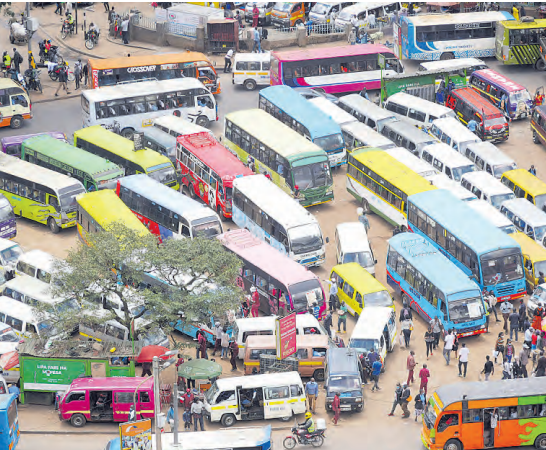
 Matatu operators at Khoja, Nairobi /FILE
The Federation of Public Transport Sector has raised concerns over the implementation of the newly launched National Transport and Safety Authority’s (NTSA) Instant Fines Traffic Management System.
While it praises the move as a step forward towards improving driver discipline and reducing corruption, it says there are areas that still need clarification on a number of issues to ensure smooth adoption.
“The use of technology will help improve driver discipline and reduce corruption, which can lead to fewer road accidents in Kenya,” the federation said.
It said drivers and passengers need clear information on offences covered under the system and the corresponding penalties.
“Publishing this information will help road users understand the rules and comply,” it said.
It also highlighted the visibility of enforcement cameras.
According to the federation, in many countries, traffic cameras are clearly marked to encourage drivers to slow down and follow traffic regulations.
Clear signage, it said, will support compliance and reduce disputes.
The federation also called for clarification on driver and vehicle owner responsibility, noting that public transport often involves vehicles managed by Saccos with different drivers operating them.
“Clarification will be helpful on how violations will be handled where the driver is not the registered vehicle owner,” the release stated.
Other concerns included the need to strengthen transparency in enforcement, possibly through body cameras for traffic officers and guidance on vehicles transiting through Kenya, particularly foreign-registered vehicles.
The federation expressed support for technology in traffic enforcement but called for an urgent consultative meeting with NTSA, the Judiciary, the National Police Service and other partners to address the issues.
On Monday, NTSA officially launched the Instant Fines system, following a March 2 directive from President William Ruto instructing the ministry to implement digital enforcement within a month.
The system, which uses road surveillance cameras in major urban centres, is designed to issue instant SMS notifications to offenders, detailing the offence and fine payable.
Motorists are required to pay fines within seven days, with unpaid fines accruing interest and restrictions placed on accessing NTSA services.
While public transport operators have welcomed the system’s potential to improve compliance, the federation says their concerns highlight the challenges of applying automated enforcement in a sector where vehicles, drivers, and owners are not always the same.