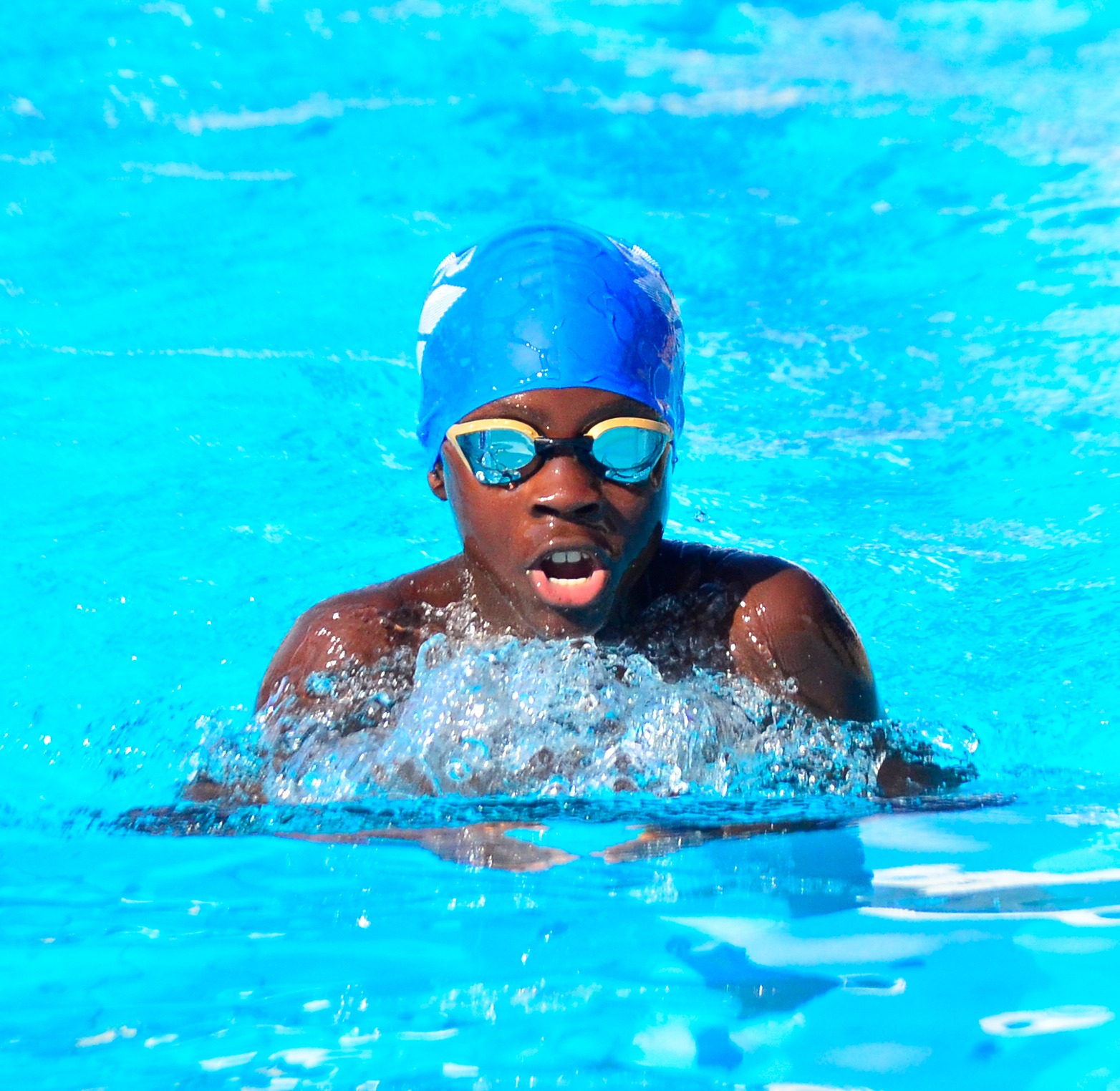
 Myles Baraka in action during the recent national championships held at Kasarani/ FILE
 Kenya Aquatics has announced plans to roll out Talent Identification and High-Performance Training Centres across the country, aiming to turn raw potential into podium-ready champions and create a clear pathway for young swimmers to reach the elite level.
Federation’s technical director, Omar Omari, said the programme will help identify promising swimmers early and provide them with the right environment, coaching, and support to develop into national and international competitors.
“The centres will form the backbone of our talent development system. They will help us identify swimmers early, support them through structured training, and prepare them for higher levels of competition,” Omari said.
He explained that the programme will be implemented through partnerships between KA and selected schools and swimming clubs that already run structured training programmes.
The federation’s technical committee, alongside the coaching commission, governance, finance and other stakeholders, will coordinate the initiative by signing Memoranda of Understanding with institutions that meet Kenya Aquatics’ standards.
Schools and clubs that qualify will receive a certificate of recognition and be officially designated as Talent Identification Training Centres.
The long-term vision is to establish recognised centres in every region, creating a strong national network feeding talent into national programmes and teams. Omari also highlighted the importance of raising coaching standards within the national programme.
“This is about raising the bar. We want qualified coaches who understand athlete development and high-performance training to guide our swimmers,” he said.
Only certified coaches will accompany national teams to international competitions, ensuring professional technical support at all times.
According to the federation, the initiative is expected to improve training standards, professionalise coaching, and strengthen collaboration between schools, clubs, and the federation.
It will also widen the talent pool and ensure swimmers are nurtured through a structured, competitive system. “We must start building the system now if we want to compete strongly in the future. Talent identification and proper training structures are the foundation of success,” Omari said.