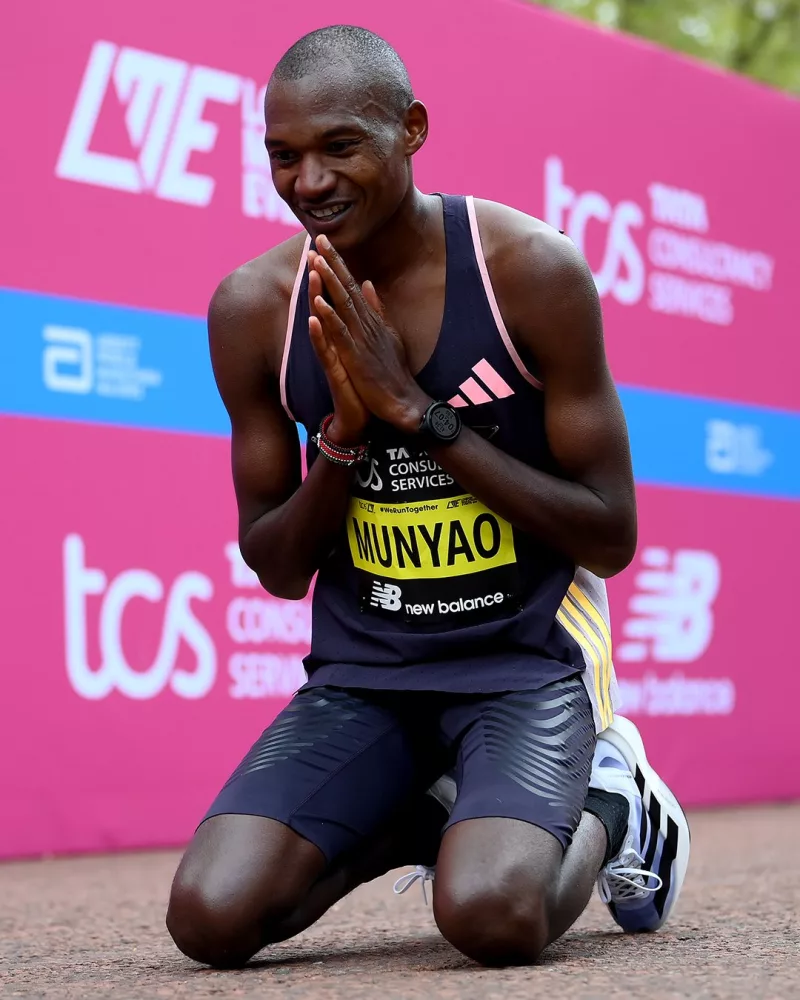
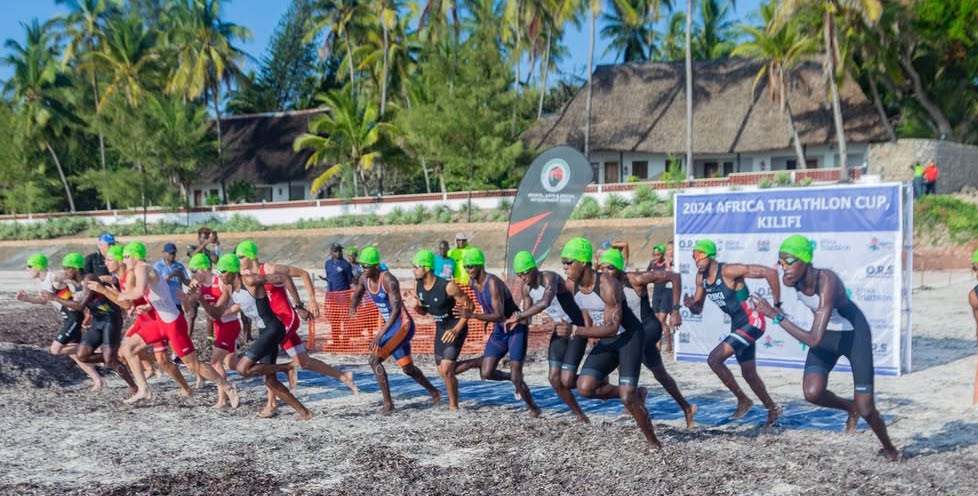
 Athletes compete in a previous triathlon event/KENYA TRIATHLON
Triathlon is one of the most demanding endurance sports in the world, combining swimming, cycling and running in one continuous race without a break.
Athletes race against the clock for the fastest overall time, with crucial seconds often won or lost during transitions between the three disciplines. Governed internationally by World Triathlon, the sport ranges from short, explosive races for beginners to punishing Ironman contests reserved for elite endurance specialists.
There are several race categories designed to test varying levels of fitness, speed and stamina. The Super Sprint serves as the gateway for beginners, featuring a 400m swim, 10km bike ride and 2.5km run.
The Sprint distance, the most popular globally, is considered the standard entry-level format, comprising a 750m swim, 20km bike and 5km run. The Olympic, or Standard distance—used at the Olympic Games since the Sydney 2000 Olympic Games—is regarded as the benchmark for elite competition.
It includes a 1.5km swim, 40km bike and 10km run. A newer format, the T100, blends speed with endurance for both professionals and amateurs, covering a 2km swim, 80km bike and 18km run.
The Half Ironman, also known as 70.3, is a middle-distance challenge named after its total mileage: a 1.9km swim, 90km bike and 21.1km run. At the pinnacle sits the Full Ironman, one of the toughest tests in global sport, comprising a 3.8km swim, 180km bike ride and a full 42.2km marathon.
Triathlon rules emphasise safety, discipline and self-sufficiency. Athletes must strictly follow the swim-bike-run sequence, and helmets must be securely fastened before handling the bicycle.
Drafting is prohibited in non-draft races, with competitors required to maintain a gap of 10 to 12 metres between bikes. Athletes must keep their torsos covered and are not allowed to receive outside assistance, including food or drinks from spectators.
Littering outside designated aid stations also attracts penalties. Infractions are enforced through a card system. A blue card is issued for offences such as drafting or blocking and results in a time penalty.
A yellow card applies to minor violations and carries a stop-start penalty, while a red card leads to immediate disqualification. Modern triathlon traces its origins to September 25, 1974, at Mission Bay in San Diego. Organised by the San Diego Track & Field Club, the event was conceived as a fun alternative to track training, featuring a 600-yard swim, five-mile bike ride and 5.3-mile run.
The race was pioneered by Jack Johnstone and Don Shanahan. The first Ironman Triathlon was staged in Oahu in 1978, when Judy Collins and John Collins combined three existing endurance races into one formidable challenge. The sport expanded rapidly, leading to the formation of the International Triathlon Union in 1989, with the first official World Championships held the same year.
Triathlon made its Olympic debut at the Sydney 2000 Olympic Games. In Kenya, the sport was introduced in 1998 by Kevin Schwieger, who organised a development camp in Nairobi to help local runners transition into triathlon.
The Kenya Triathlon Federation now oversees its growth and development. While early efforts focused on Olympic qualification, structured programmes have gained momentum in recent years, with Kenya now targeting the 2026 Youth Olympic Games and the 2028 Summer Olympics as key milestones.