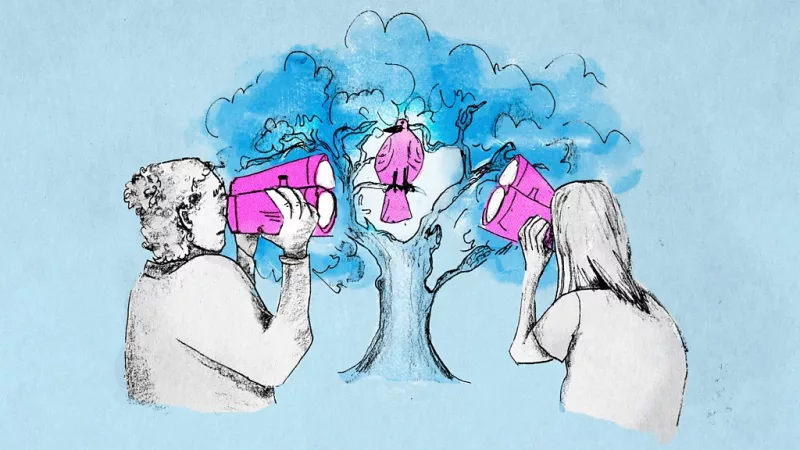
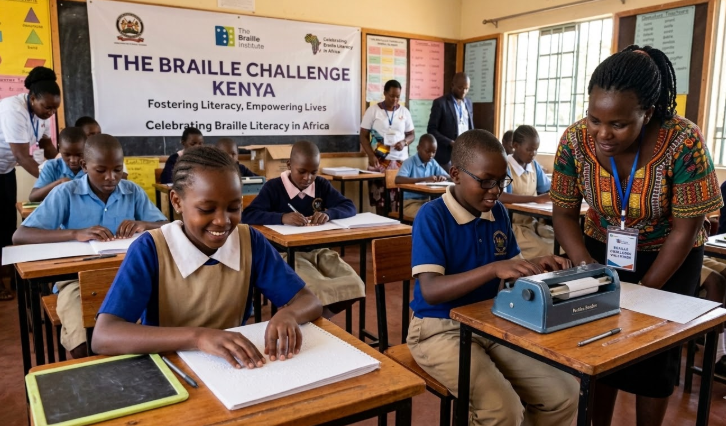
 AI illustration of visually impaired students in a class
In Kenya, 670,000 visually impaired children and youth could benefit from a new international braille literacy competition aimed at strengthening reading and learning skills for blind and low-vision learners.
The initiative introduces the globally recognised Braille Challenge to Kenya, marking the first time the competition has been held on the African continent.
The programme seeks to motivate learners who are blind or visually impaired to build strong braille reading and writing skills while raising awareness about the importance of braille literacy in education.
“The country has only a small number of schools dedicated to learners with visual impairments, and just a few provide secondary education. As a result, many visually impaired students struggle to access quality literacy instruction,” Education data stated.
Although many children live with vision loss, the country has only a handful of schools dedicated to learners with visual impairments, and just a few offer secondary education. Access to specialised learning resources and schools has remained limited.
Braille literacy remains a key tool for academic success among blind learners. Studies show that students who develop strong braille reading skills are more likely to progress in school, access higher education and gain employment later in life.
“Braille literacy is a critical foundation for academic success, independence and employment for people who are blind or visually impaired,” said Senior Director of International Programs at Braille Institute, Rachel Antoine.
She said bringing the competition to Kenya is intended to go beyond the contest itself by encouraging students to strengthen literacy skills while also supporting teachers who work with visually impaired learners.
“Bringing the Braille Challenge to Kenya is about expanding access, inspiring students and supporting educators as they work to unlock the full potential of blind and visually impaired youth,” Antoine said in the statement.
The Kenya National Examinations Council (KNEC) classifies visually impaired candidates as learners who require either braille examination papers or enlarged print materials depending on the level of vision loss.
However, educators say braille resources remain scarce in many schools, limiting opportunities for students to practice reading and writing regularly.
The new braille competition aims to change that by encouraging students to improve their literacy through academic contests that test skills such as reading comprehension, spelling, speed and accuracy in braille.
“Approximately 700 learners from four schools in Kenya are expected to participate in the initial regional competitions, supported by teachers and volunteers who will oversee the programme,” the organisers said.
For many participants, the event will introduce new learning experiences and academic challenges that teachers hope will strengthen classroom instruction.
“Such initiatives can also inspire confidence among learners with visual impairments, who often face social and educational barriers,” the organisers stated in a press release.
Beyond the competition itself, the programme is expected to increase awareness among teachers, parents and communities about the importance of braille literacy as a foundation for education.
Globally, the Braille Challenge has reached thousands of students over the past 25 years through regional competitions held in countries across North America, Europe and Australia.
The expansion to Kenya signals a growing recognition that braille education remains essential in improving learning outcomes for visually impaired children.
For Kenya, where many children live with visual impairments, experts say the initiative represents more than just a competition.
Instead, it could help open new academic opportunities for learners who have long struggled with limited access to specialised educational support.