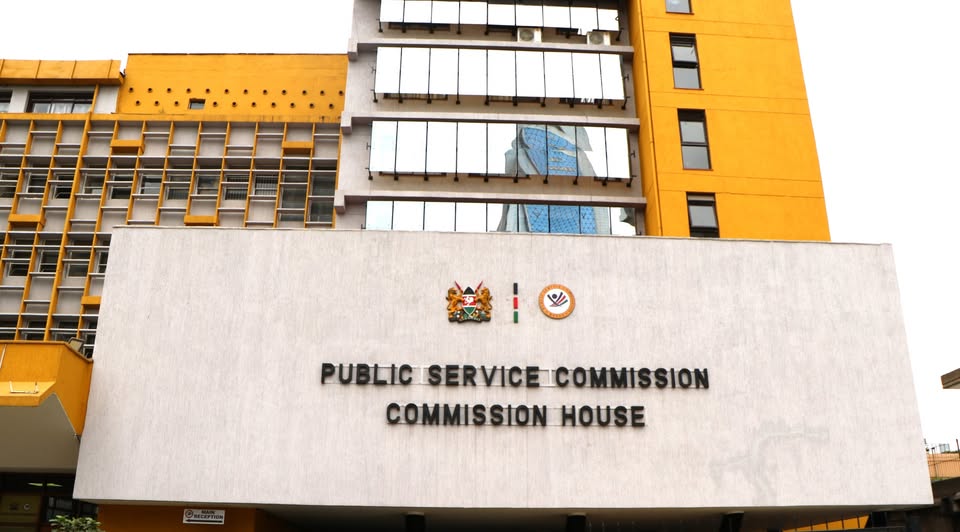
A new Public Service Commission (PSC) dossier reveals that of 511 public institutions investigated, 544 officers possessed 561 sham certificates, including KCSE exam results, diplomas and degrees.
Nearly half of the fakes — 267 certificates — were bogus KCSE certificates, the minimum qualification for a large number of entry-level government jobs.
State corporations topped the list of the institutions that have decided to tolerate breaches of integrity, but ministries and state departments decided not to authenticate thousands of certificates.
Ministries alone did not verify 24,850 papers while 41,184 public officers’ diplomas and degrees were never verified to weed out forgeries.
The PSC report indicates that despite identifying the employees who submitted fictitious papers, most institutions chose to sit on their hands and do nothing.
The institutions that decided to look the other way include some of the most prominent and well regarded public agencies.
They include the Kenya Revenue Authority (141 officers), the Kenya Medical Supplies Authority, the Social Health Authority, the Kenyatta University Teaching and Referral Hospital, the Moi Teaching and Referral Hospital, the Kenya Meat Commission and the Kenya Bureau of Standards.
The log also cites Bukura Agricultural College, the Geothermal Development Company, the Kenya Law Reform Commission, the Rural Electrification Authority, Bondo and Mandera Technical Training Institutes, ICT Authority, Maasai Mara University and the National Government Constituencies Development Fund Board.
The report paints a worrying pattern: unqualified officers continue making decisions affecting public services while receiving taxpayer-funded salaries.
In some cases, the staff were even promoted even when their bosses had been informed about the integrity challenges or updated about unverifiable credentials.
PSC chairman Francis Meja said the problem is driven partly by high unemployment, which motivates unscrupulous applicants to present forged documents in the hope of beating stiff competition.
Verification remains a challenge, but the commission is testing a digital authentication system that will enable instant online vetting of academic papers to lock out dishonest job applicants in the hiring process.
Despite PSC sending out directives to agencies to sack the offenders and forward names to the Ethics and Anti-Corruption Commission (EACC) for prosecution, compliance has been patchy.
Of the identified culprits only 210 have been dismissed, 146 referred for prosecution, 70 resigned voluntarily and 68 are facing disciplinary proceedings while 35 employees are still being investigated.
Experts warn the cover-ups and reluctance to act undermines public trust and encourages the deplorable culture to thrive providing more influence to employees notorious for cutting corners and susceptible to corruption after landing the jobs.
Every employ with a fake certificate unjustly takes up the slot that would have been taken up by a competent and qualified individual and sends a demoralising message to youths about the futility of working hard in school.
Verification failures appear systemic. Government recruitment requires original certificates at interviews, yet only 99 institutions have a system to authenticate credentials and have as a result of their diligence unearthed 561 fakes.
With forgeries getting endemic, its anyones guess as to how many more frauds hide in the 412 agencies that have decided not to upset the apple cart.
The PSC has instructed certification agencies to fast-track systems of authentication and demanded that officials who ignored or decided not to take action that would have led to weeding out corruption must do so by the end of March.
The consequences of inaction are far-reaching.
Unqualified officers hold positions of authority and their decisions or actions can lead to revenue losses and endanger the lives of patients who might have to rely on the dangerous opinions of a quack.
KRA, the national tax collector, tops the list, illustrating the scale of risk when unqualified personnel take up decision-making roles.
Past PSC reports reveal a recurring problem: previous recommendations are often ignored.
The 2024 report indicated more than 1,000 civil servants with fake papers, and the 2023 review uncovered 2,000 cases. Yet only a handful were prosecuted, laying bare the attitudes sweeping through the entire system of weak enforcement and even silent encouragement.
Even as the PSC gives agencies until end of March to take action, history suggests compliance may again fall short.
President William Ruto has directed that employees with forged certificates be kicked out of the system, which is a clear sign that every civil servant should fall in line.
However, the yawning gap between policy and enforcement refuse to go away with taxpayers funding the lifestyles of unqualified personnel.
The scale of the problem also raises ethical questions: how did these officers secure employment in the first place? Verification at the Kenya National Examinations Council, the Kenya Accountants and Secretaries National Examinations Board (Kasneb) and universities must happen before appointment letters are sent out.
Yet hundreds of fakes were discovered despite compliance by select institutions which proves loopholes have infiltrated hiring and oversight systems.
For ordinary Kenyans, the impact is tangible.
Fraudulent recruitment denies employment to qualified applicants, erodes trust in public institutions and risks public services being managed by undeserving charlatans.
As PSC data suggests, this is not a one-off issue but a systemic challenge across multiple sectors.
With more than 500 civil servants identified and dozens of institutions failing to act, the report sends a stark warning: unless accountability is enforced, fraud in the public service will persist, undermining meritocracy and public confidence.
The PSC’s March deadline will be a litmus test of whether institutions are willing to confront entrenched practices or continue shielding felons.
As taxpayers watch salaries continue to fund unqualified officers, the urgent question remains: Will government agencies finally enforce accountability, or will fraud flourish unchecked?
Instant analysis
Every fake certificate holder who kept their job is a qualified Kenyan who didn't get that job. Every fraudster who remained on payroll is a message to every young person preparing for exams that the results don't matter, and that only connections do. If these 28 institutions face no consequences, every other agency will know they can cover up fraud, too. The Public Service Commission has given them until March 2026 to act. But previous recommendations have been ignored.