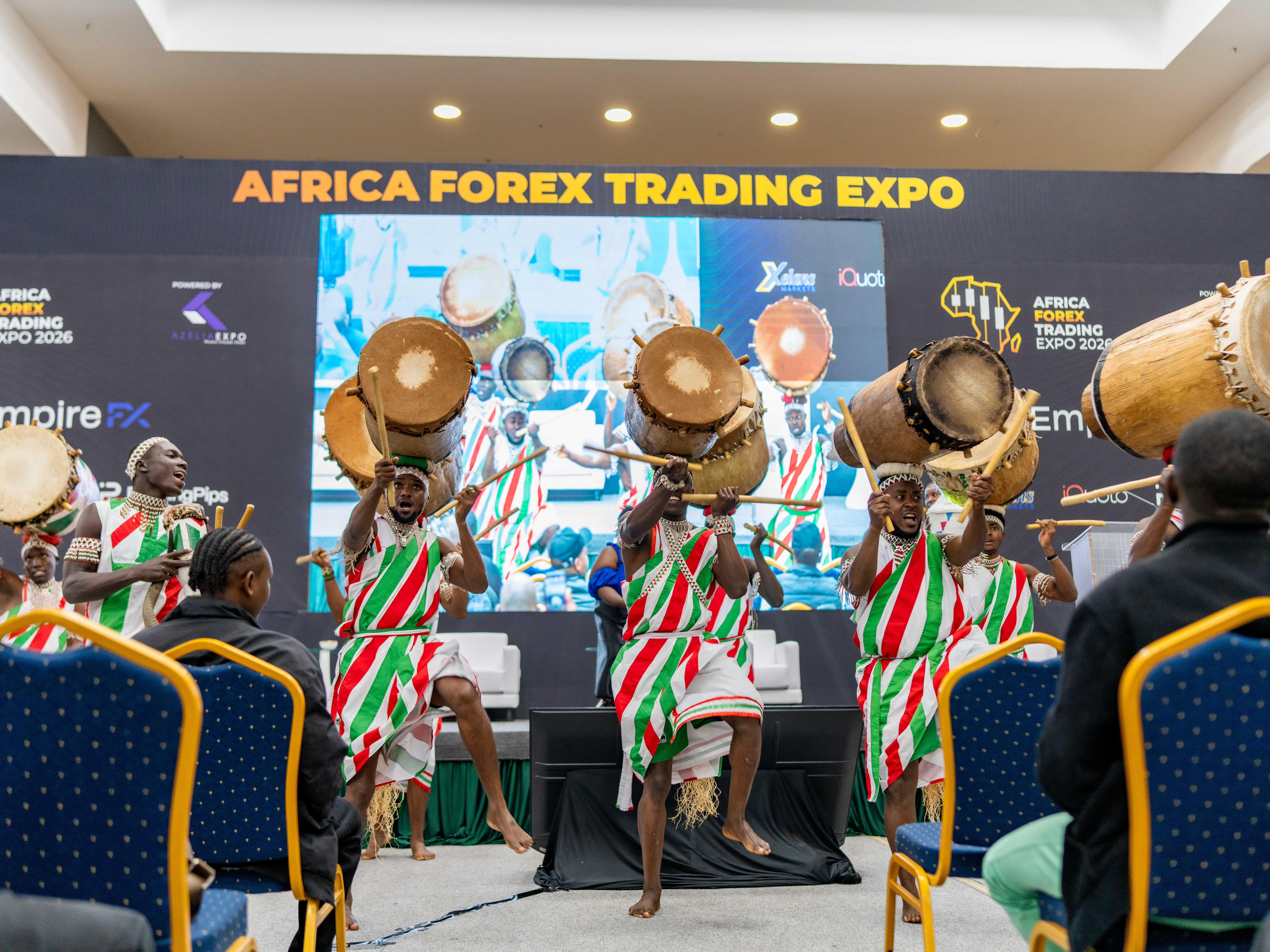
Africa has been challenged to play a larger role in shaping the future of global financial markets as industry leaders gathered in Nairobi for the inaugural Africa Forex Trading Expo 2026.
Hundreds of traders, brokers and fintech innovators attended the opening day of the two-day event at the Sarit Expo Centre, which brought together forex traders, payment service providers, financial educators and technology experts to discuss emerging trends in digital trading across the continent.
The expo is being held under the theme “Smart Money, Smart Africa; The Future of Forex & Digital Trading.” Opening the conference, Azelia Expo Ltd Director CPA Zack Kiratu said Africa was increasingly becoming an important force in global finance as more young people embrace digital trading and fintech innovations.
“We are opening a gateway to the future of finance in Africa,” Kiratu said.
“Across this continent, something extraordinary is happening. Millions of young, tech-savvy Africans are entering the global financial markets. Fintech innovation is accelerating. Digital payments are transforming economies, and a new generation of traders, entrepreneurs and builders is stepping forward to shape the financial systems of tomorrow.”
Kiratu added that the continent should no longer be viewed only as a potential market. “Africa is no longer just a market to watch. Africa is a market to build with. Africa is a market to invest in, and Africa is a market that will help define the future of global finance,” he said.
One of the central discussions on the first day focused on the role of mobile technology in expanding access to global financial markets. During a panel on mobile trading, speakers noted that the growth of smartphones has made it easier for Africans to participate in forex trading.
“The most amazing thing about trading is that we all have equal opportunities and you can do it from anywhere,” said panelist Ali. Kiratu echoed the view, telling participants that “The future is in mobile trading.”
However, experts cautioned that reliable payment systems remain critical to the success of digital trading platforms. Sheila, who spoke on mobile payments infrastructure, said payment systems must work smoothly for traders to fully benefit from online trading.
“You can build the best trading app in the whole world. But if your users are having a challenge to access their money or make deposits or refund their wallets, then it is of no use,” she said.
The conference also explored how design influences trader behaviour. Joao Campos of Empire FX delivered a keynote presentation titled “Designing Trading for Real Behaviour,” where he discussed lessons from developing the EFX Lite trading platform. “People don't make decisions rationally. They respond to design,” Campos told the audience, noting that “systems are designed to stay ahead.”
Another session examined how global monetary policy shifts affect currency markets. Christine explained the relationship between interest rates and capital flows.
“When interest rates increase, it usually means that there's higher returns. And normally when there's higher returns, money tends to flow where there's higher returns. So this movement is what is one of the main drivers of the currency markets,” she said.
Nick added: “The key thing is higher returns and safer yields, and as well as something we call carry trade.” Discussions also turned to the growing links between traditional forex trading and cryptocurrency markets. During a panel on crypto, forex and stablecoins, speakers said the future of financial markets could lie in integration rather than competition between the two systems. “You'll find that everyone has a stable token, and it is integrated in all trade aspects.
So then the inflation will go lower, because you're no longer now operating locally. It's already standardized and global,” said Vincent. Joseph said users are more interested in efficiency than the technology behind financial systems.
“In 10 years, or even right now, users don't care about the technology that is being under it. What they care is, if I'm sending money to Nigeria, this money is sent instantly,” he said.
Seth added that blockchain technology could complement existing forex systems.
“We don't want to say that Forex will leave what they're doing currently to come to crypto, to come to blockchain, but their systems should be working on chain. Our systems in the FX space can be done on chain, in the blockchain. Because that is the new innovation that is happening.”
Day One also featured masterclasses and workshops on topics including copy trading, scaling forex businesses and the growing role of artificial intelligence in trading strategies.
The expo continues on Wednesday with more sessions focusing on trading strategies, fintech infrastructure and the role of women in the forex, crypto and fintech industries.