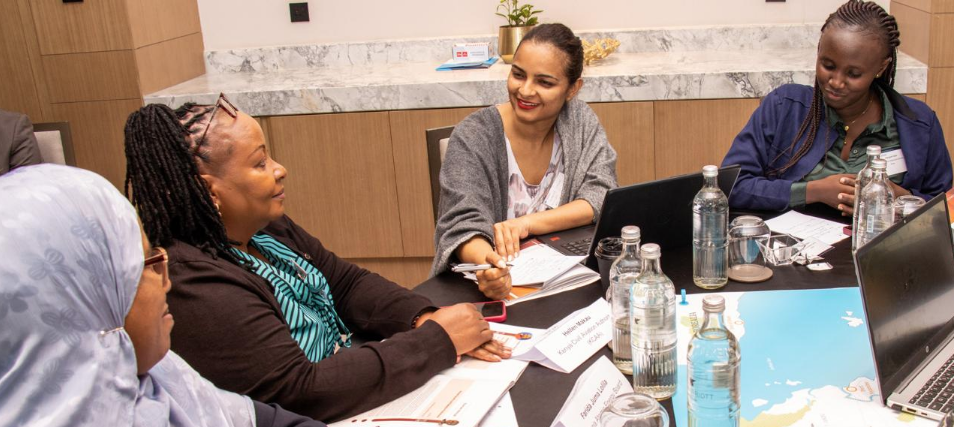
Women professionals are meeting in Nairobi for an engagement seeking to enhance nuclear security in Sub-Saharan Africa.
The forum, organised by the World Institute for Nuclear Security (WINS) and the Kenya Nuclear Regulatory Authority (KNRA), brings together regulators, security professionals and emergency responders.
On Monday, the experts concurred that stronger legal frameworks, better-trained personnel, improved infrastructure and tighter controls during transportation are key to ensuring nuclear materials remain secure.
The forum’s attendees are women specialists from Kenya, Nigeria, Ghana, Austria, Tanzania, Rwanda and South Africa, among others, who hope to strengthen participation in areas where they remain underrepresented.
The three-day event, themed “Theft of a fully fuelled microreactor: Encouraging and strengthening diversity in response to a nuclear security incident,” features a tabletop exercise examining how institutions would respond to crises. Institutions represented from Kenya include the Kenya Nuclear Regulatory Authority, Kenya Civil Aviation Authority, Directorate of Criminal Investigations and the Kenya Police Service, among others.
KNRA director general James Keter said the agency is keen on working with industry leaders to build the country’s capacity to safely harness nuclear technology. He said the regulator values knowledge-sharing as a key component of excellence and safety.
“We are glad to work with WINS in this important training. Women’s contribution in this all-important field is not something we take for granted. This engagement, and many others in the future, will empower female professionals in our region in ways never seen before,” Keter said.
KNRA director for Nuclear Safety and Security, Isaac Mundia, challenged the women participants to take advantage of the exercise to enhance their individual and institutional capacity. Mundia said the engagement provides an opportunity for institutions to assess their readiness and strengthen cooperation across borders in the event of a real-world nuclear security threat.
“The strength of our nuclear security architecture depends not only on our national capacities, but also on the networks we build,” he said.
Suzanne Calson, representing WINS, reaffirmed the organisation’s commitment to inspiring, supporting and connecting professionals working to strengthen nuclear security at the national, regional and global levels.
Calson said her organisation seeks to create opportunities for female professionals to interact with colleagues and experts from around the region, thus facilitating knowledge exchange and regional collaboration. WINS currently has a memorandum of understanding with KNRA aimed at supporting collaboration in nuclear security capacity building.