
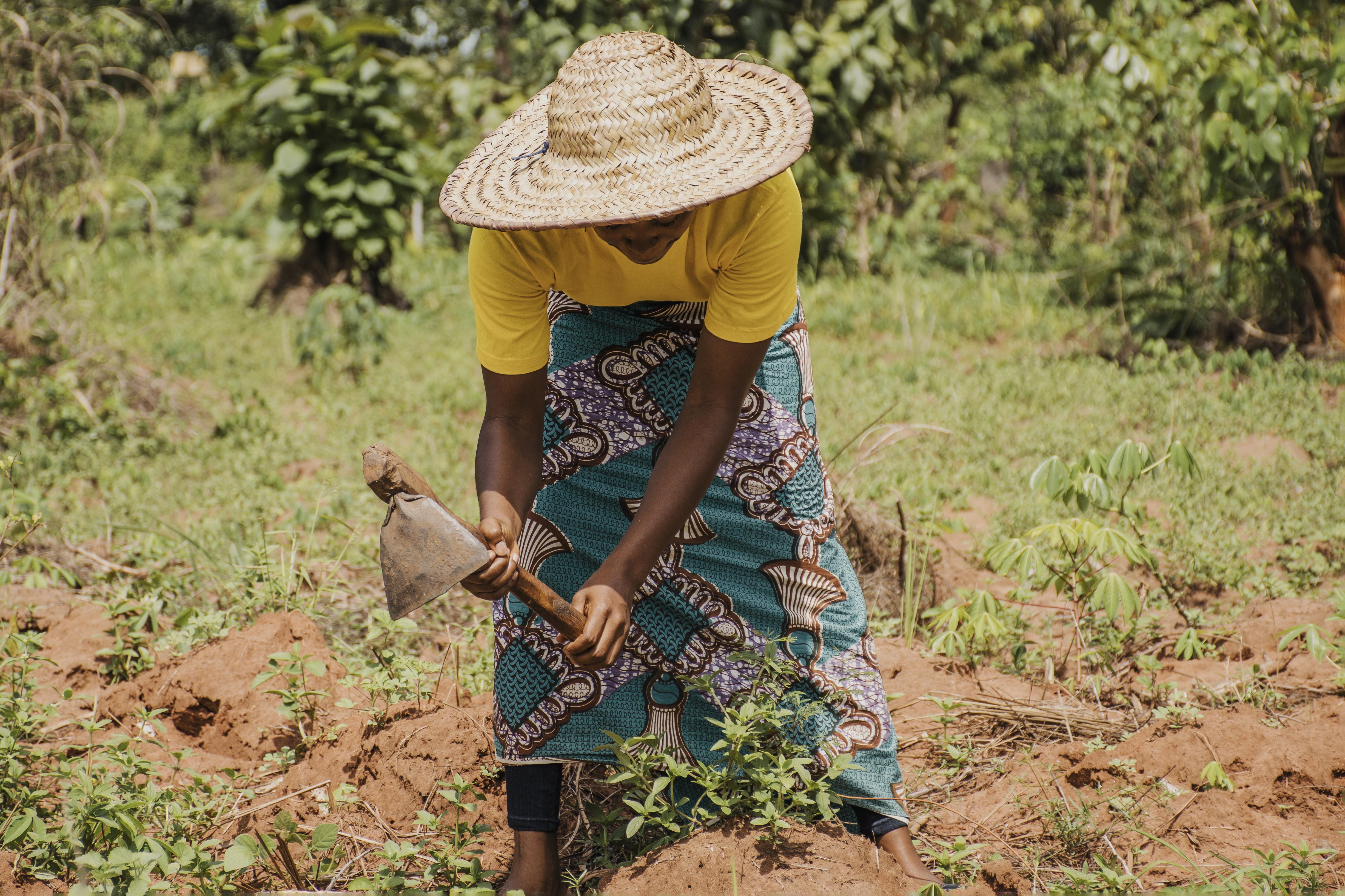
 A woman digging her piece of land ahead of expected rains in March.
African women and girls are increasingly bearing the hidden costs of climate change, rising debt and fossil fuel extraction.
This is according to a new report released by the African Forum and Network on Debt and Development (AFRODAD) and the Fossil Fuel Treaty Initiative.
The report, 'Gender, Debt and Fossil Fuels: A Mapping of Key Insights from the African Continent,' reveals that these overlapping crises are deepening gender inequality across the continent, with women often forced to absorb the economic and social impacts through unpaid labour and reduced access to public services.
Released ahead of the Seventieth Session of the Commission on the Status of Women (CSW70), the study highlights how Africa is at the frontline of what researchers describe as a global “polycrisis” involving climate change, debt burdens and fossil fuel dependency.
According to the report, African nations are increasingly prioritising debt repayment over essential services such as health care and education.
Africa’s public debt has more than doubled since 2020 to over $1 trillion, while interest payments have risen to more than $163 billion in the past 15 years.
These financial pressures, driven by structural adjustment programmes and austerity measures often tied to international lending institutions, have forced governments to reduce spending on social services that many women depend on.
As public services shrink, unpaid care responsibilities expand. Globally, women perform nearly three times more unpaid care work than men, leaving millions excluded from formal employment.
In sub-Saharan Africa alone, women and girls spend an estimated 40 billion hours every year collecting water labour equivalent to a full year of work by South Africa’s entire workforce.
The report also shows that while African women produce between 40 and 50 per cent of the continent’s agricultural labour, they own less than 20 per cent of the land.
This disparity makes them especially vulnerable to environmental degradation and land dispossession linked to fossil fuel extraction.
In several African countries, including Mozambique, Nigeria, Uganda and Tanzania, the expansion of oil and gas projects has led to the displacement of communities and heightened security operations around extraction sites.
Researchers say these conditions have exposed women to greater risks of violence, surveillance and loss of livelihoods.
Environmental damage from fossil fuel extraction has also intensified food insecurity, water contamination and health risks in affected communities, further increasing the burden on women who often manage household resources and caregiving.
Bemnet Agata, a communications specialist at the Tax Justice Network and co-author of the report, said women effectively become the “shock absorbers” of the current global economic model.
“When governments cut health, education and social protection to reassure creditors, the strain does not disappear, it is displaced into women’s unpaid labour, dispossession and the violence through which fossil fuel extraction is enforced,” she said.
The report also warns that climate change is worsening these inequalities. Although Africa holds about 40 per cent of the world’s renewable energy potential, the continent receives less than two per cent of global renewable energy investment.
Limited climate financing, researchers say, makes it difficult for African countries to transition to sustainable energy systems while protecting vulnerable communities.
Dr Amiera Sawas, Director of Research at the Fossil Fuel Treaty Initiative and co-author of the study, said African feminist scholars have long highlighted how debt, fossil fuel extraction and climate change intersect to undermine women’s rights.
“Despite facing disproportionate risk, women and Indigenous leaders have been at the forefront of calling for a just energy and economic transition rooted in feminist and decolonial principles,” she said.
The report calls for stronger international cooperation, including the creation of a Fossil Fuel Treaty that would support African nations in renegotiating or cancelling some external debts while investing in renewable energy systems.
It also insists that such measures are critical to building resilient economies that reduce dependence on oil, gas and coal while advancing gender equality across the continent.







