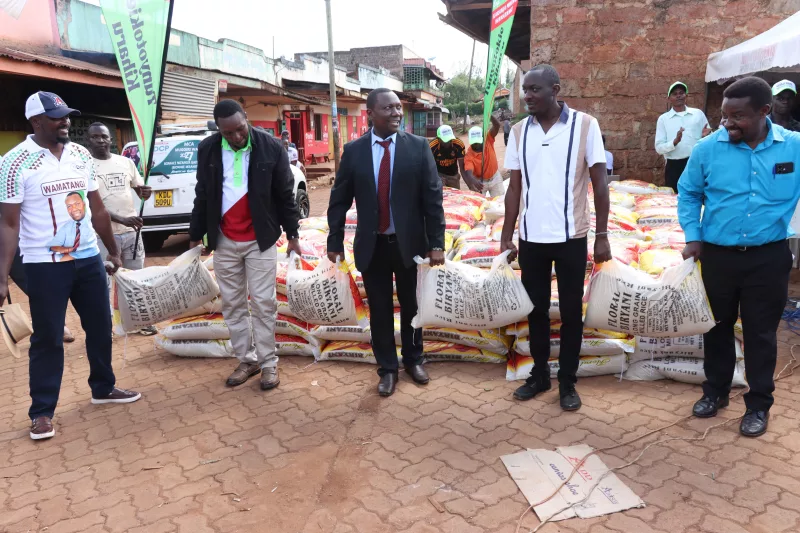
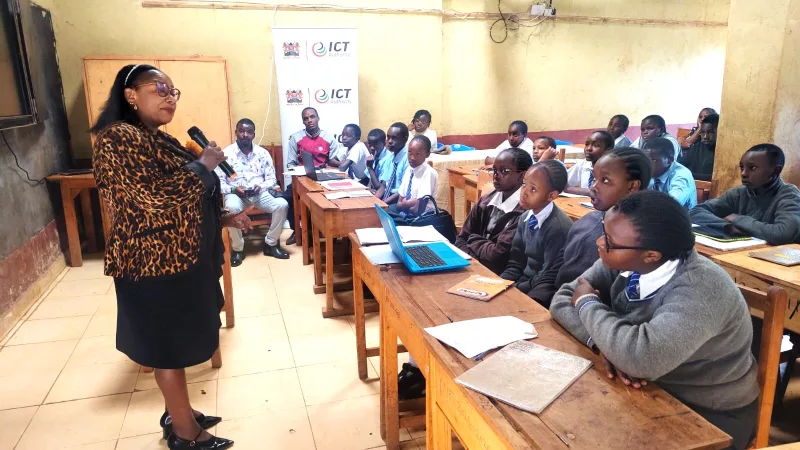
Dr. Robert Musyoki, Director of Seeds at the Kenya Agricultural and Livestock Research Organization (KALRO) says the Kilimo Biashara Expo is a demand-driven initiative, born out of farmers’ requests for a platform to access practical solutions./HANDOUT.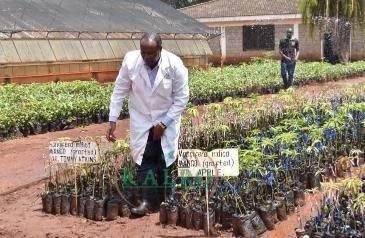 Dr. Robert Musyoki, Director of Seeds at the Kenya Agricultural and Livestock Research Organization (KALRO) says the Kilimo Biashara Expo is a demand-driven initiative, born out of farmers’ requests for a platform to access practical solutions./HANDOUT.
When Joseph Muturi, a farmer in Kandara, Murang’a county,
switched to certified bean seeds, the change on his farm was almost immediate.
“The yield is much higher than before when I planted
ordinary seeds,” he said.
Muturi is among hundreds of farmers who say improved seeds
and new crop technologies are transforming productivity on their farms.
Across Murang’a, more farmers are turning to improved crop
varieties as they seek to increase yields and cope with changing weather
patterns.
Muturi says access to certified seeds and farmer training
has helped him improve both production and farm income.
Robert Musyoki, Kenya Agricultural and Livestock Research Organization
(Kalro) director of seeds is encouraging farmers from Kandara, Murang’a and
neighbouring counties to attend the Kilimo Biashara Expo.
The expo is scheduled for March 12 and 13. Farmers will
learn about improved seeds and modern farming practices.
Now in its fifth year, the Kilimo Biashara Expo will bring
together farmers, researchers, financial institutions and agribusiness
companies to showcase new agricultural technologies.
Last year, the event attracted about 4,500 farmers and 70
exhibitors, according to organisers. This year, more than 5,000 farmers and
nearly 100 exhibitors are expected to attend.
Musyoki said the expo aims to bridge the gap between
scientific research and farmers.
“Kalro develops technologies that improve productivity,
including high-yielding, drought-tolerant and disease-resistant crop
varieties,” he said.
“Through its Kalro Seeds unit, the institution produces and
distributes certified seeds to farmers to support the adoption of improved crop
varieties.”
He added that the organisation also develops livestock
breeds, animal feeds and soil nutrient recommendations tailored to different
regions.
“When farmers come here, they will see the new technologies,
interact with experts and learn how to manage their crops for maximum
productivity,” Musyoki said.
The expo will also create direct links between farmers and
service providers, including financial institutions and agribusiness companies.
Farmers will tour demonstration fields where researchers
will showcase crops ranging from cereals to vegetables and industrial crops.
The plots include maize, sorghum, wheat and rice, as well as
vegetables such as tomatoes, cabbage, spinach and kale, which are increasingly
grown commercially in the region.
Musyoki said experts will also demonstrate good agronomic
practices such as proper planting, fertiliser use and pest management.
Another key focus of the expo is the promotion of industrial
crops such as sunflower, soybean, safflower and cotton.
He said these crops are being promoted to reduce Kenya’s
heavy reliance on imported edible oils.
Kenya imports more than 90 per cent of its edible oil,
according to data from the Agriculture and Food Authority (AFA) and the
Ministry of Agriculture.
Sunflower and soybean could help reduce the import gap if
more farmers adopt them, researchers say.
“Why should we import oil when farmers here can produce
sunflower?” Musyoki said.
Processors are also expected to attend the expo to link
directly with farmers and strengthen the value chain from seed to market.
The event will also highlight opportunities for young people
in agribusiness.
Director of iTrade Events Timothy Muchiri Dembu, which is
co-organising the expo, said post-harvest management will also be showcased,
noting that post-harvest losses remain a major challenge but also present
business opportunities.
“We lose up to 40 per cent of what is produced on farms
because of poor handling and storage,” he said.
The estimate aligns with figures from the Food and
Agriculture Organization, which reports that sub-Saharan Africa loses between
30 and 40 per cent of food after harvest due to inadequate storage, transport
and processing.
“These losses also represent opportunities for young entrepreneurs in storage, logistics and processing,” Muchiri said.