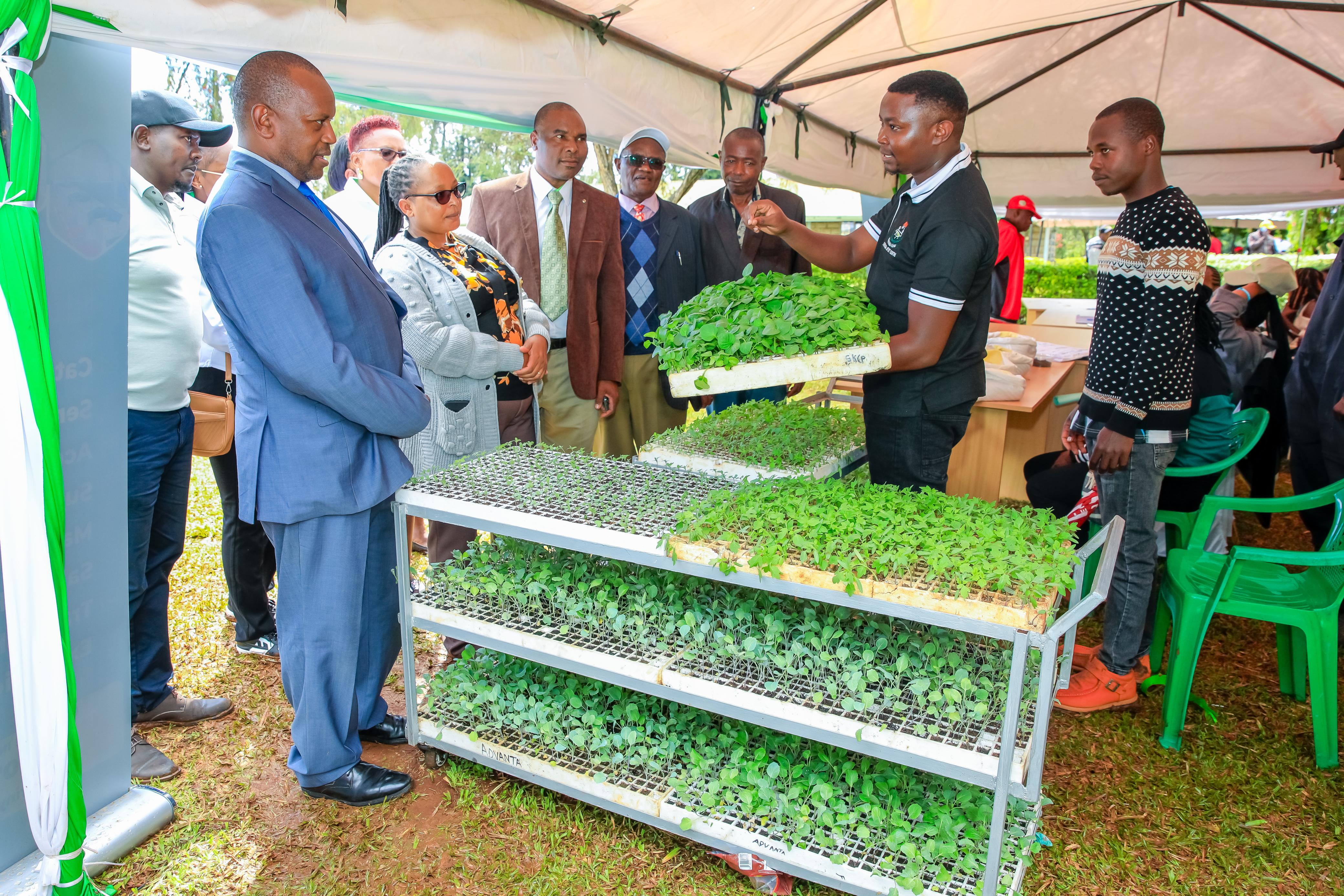
 Kirinyaga agriculture CECM John Gachara (left) listens to agronomist Zachary Mwangi during a training forum held at the Kirinyaga Agricultural Technical and Vocational Education and Training Centre (ATVET) at Kamweti Farm/ ALICE WAITHERA
Kirinyaga farmers have been urged to adopt climate-smart farming practices to cushion them from losses caused by erratic weather patterns.
The farmers received hands-on training on climate-smart agriculture, modern farming technologies, and emerging agribusiness opportunities.
The two-day training brought together farmers, agricultural experts, agribusiness stakeholders, students, and members of the public for practical demonstrations, exhibitions, and training sessions.
These are aimed at boosting productivity and strengthening sustainable farming practices.
"The event highlighted the need for farmers to adopt sustainable practices that help them adapt to climate change while improving yields and farm incomes,” Agriculture executive John Gachara said.
The event took place at the Kirinyaga Agricultural Technical and Vocational Education and Training Centre at Kamweti Farm.
Gachara said the annual field day remains an important platform for empowering farmers with practical knowledge and exposure to modern farming techniques.
He said the forum enables farmers to interact directly with agricultural experts, researchers, and agribusiness companies while learning about new technologies that can improve productivity and profitability.
During the training sessions, farmers received guidance on improved crop varieties, livestock management, fisheries, sustainable soil management, and the responsible use of agrochemicals.
Gachara urged farmers to apply the knowledge gained during the event to improve productivity and value addition on their farms.
He also emphasised the need for proper use of agrochemicals to avoid health and environmental risks.
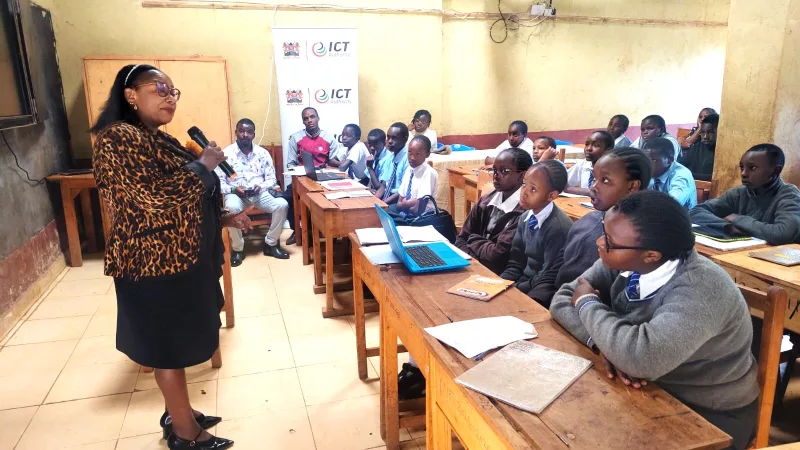
He also announced that the former Kamweti Agricultural Training Centre has been upgraded and officially registered as an agricultural TVET institution, strengthening its role in agricultural training and research within the county.
According to the county executive, the centre has already begun admitting students into new programmes, including ICT courses introduced in January, while agriculture courses are expected to begin in May.
He encouraged families to enroll their children at the institution, noting that practical agricultural skills can help transform farming into a viable and modern career for young people.
Agricultural experts at the event also trained farmers on organic and environmentally friendly farming methods aimed at improving soil health and reducing dependence on chemical inputs.
Organic agronomist Zachary Mwangi said the training sessions are helping farmers adopt healthier and more sustainable farming systems.
"We are here training farmers on organic farming, the best plants and how to maintain and improve soil organically,” he said, adding that the initiative is helping farmers transition to safer farm inputs.
Farmers hailed the demonstrations and training sessions, saying they had exposed them to new farming technologies and high-yield crop varieties.
Justus Kamau, a fish farmer from Kiamutugu who also grows maize, said he was particularly impressed by a maize variety showcased during the demonstrations.
"I have seen a particular variety of maize, and I am very impressed by its high-yielding nature,” he said, adding that he plans to plant the variety on his half-acre farm.
Another farmer, Evans Kabutu, said the field day had helped farmers learn improved techniques for crops such as cabbages, African nightshade (managu), and maize while also promoting organic farming practices.
He said the knowledge gained from the training will help farmers improve production and adopt sustainable farming systems.
The exhibition also showcased a wide range of agricultural innovations, including climate-smart farm inputs, irrigation technologies, value-added equipment, and farm produce.
Agriculture remains the backbone of Kirinyaga county’s economy, employing the majority of residents and contributing significantly to household incomes and food production.
The county is widely known for rice farming in the Mwea irrigation scheme, one of the largest rice-producing areas in Kenya.
Farmers also grow horticultural crops such as tomatoes, onions, French beans, capsicum, and cabbages.
This is alongside staple crops like maize and beans, supplying produce to Kagio market, one of the busiest open-air markets in the central region.
Through agricultural extension services, demonstration farms and farmer training forums such as the annual farmers’ field day, farmers learn practical techniques on crop management, irrigation, soil conservation and market-oriented farming.