The scrutiny follows recent controversy surrounding Ruto’s remarks on the escalating conflict between Iran and Israel, questions over alleged issuance of Kenyan passports to Sudanese militia figures and Nairobi’s perceived engagement with Sudan’s paramilitary group, the Rapid Support Forces.
Together, the issues have opened a new front in Kenya’s domestic political debate, with opposition figures warning that the country’s long-standing reputation as a neutral regional mediator could be at risk.
The controversy intensified after Ruto issued a statement urging de-escalation in the Middle East following the latest round of hostilities involving Iran, Israel and the United States.
“Kenya strongly condemns the strikes on the UAE, Qatar, Saudi Arabia, Iraq, Oman, Kuwait, Jordan and Bahrain in the evolving conflict in the Middle East,” he said.
“It is evident that the regionalisation of this conflict poses a grave threat to international peace and security.”
While the statement also called for restraint, critics argued that Kenya’s messaging appeared uneven, accusing the government of failing to address the actions of all parties involved.
Ahmed Hashi, a foreign policy analyst, opines that Kenya needs to take a neutral stance on the conflict.
“If there
is a time Kenya needs to play the neutral card, it is this,” he said.
“President Ruto has been making wrong choices when it comes to foreign policy. From the very beginning, the conflict in Russia, relations with the US and China, UAE and Sudan”.
“We have an epochal break of the international political economy and Kenya has to be careful in its foreign relations amidst the clash of civilisations.”
Africa Policy Institute CEO Prof Peter Kagwanja said it is double standard for the President to condemn the retaliation by Iran and not the initial attacks by Israel and America.
“You
condemn the person who attacked first, and then you can go on and say whether
the retaliation is within measures,” Kagwanja said.
Hundreds of thousands of Kenyans work across the Middle East, and any escalation in the region could affect remittances and labour markets that support many households at home.
PASSPORTS
At the
same time, opposition leaders have seized on reports that a senior Sudanese
militia figure linked to the RSF may have obtained a Kenyan passport illegally.
Wiper leader Kalonzo Musyoka has questioned the circumstances under which the alleged travel documents were issued, warning that the move could damage Kenya’s international reputation and relations with key partners.
“Now the Ruto government is issuing passports to militia leaders from Sudan and thus jeopardising relationships with friendly countries,” Kalonzo said.
Former Chief Justice and presidential aspirant David Maraga also weighed in on the matter, warning that irregular issuance of passports to conflict actors could erode trust in Kenya’s diplomatic standing.
He said
such actions risk turning passports into tools for evading sanctions and
prolonging conflicts, while also potentially damaging the credibility of Kenyan
travel documents globally.
Maraga termed “alarming” the revelation that Algoney Dagalo holds a Kenyan passport (AK1586127). Algoney is the younger brother of Rapid Support Forces commander Mohamed ‘Hemedti’ Dagalo and a key figure in procuring weapons for RSF's devastating campaign in Sudan.
Maraga noted that Algoney, a Dubai-based businessman and senior RSF logistics operative, is under sanction by the US and the EU.
Such actions, he said, erode trust in Kenya's role as a regional mediator under the Intergovernmental Authority on Development framework.
The
government has remained mum on allegations but has faced mounting calls to
investigate how the documents were issued and whether any immigration officials
were involved.
RSF
The passport controversy has revived broader criticism of Kenya’s relationship with the RSF, one of the main factions in Sudan’s ongoing civil war.
Critics argue that Nairobi’s engagement with RSF figures risks legitimising a group accused by international observers of human rights violations and atrocities during the conflict.
Analysts say that hosting meetings involving RSF leaders or facilitating political engagement could strain Kenya’s relations with the internationally recognised Sudanese authorities and complicate regional peace efforts.
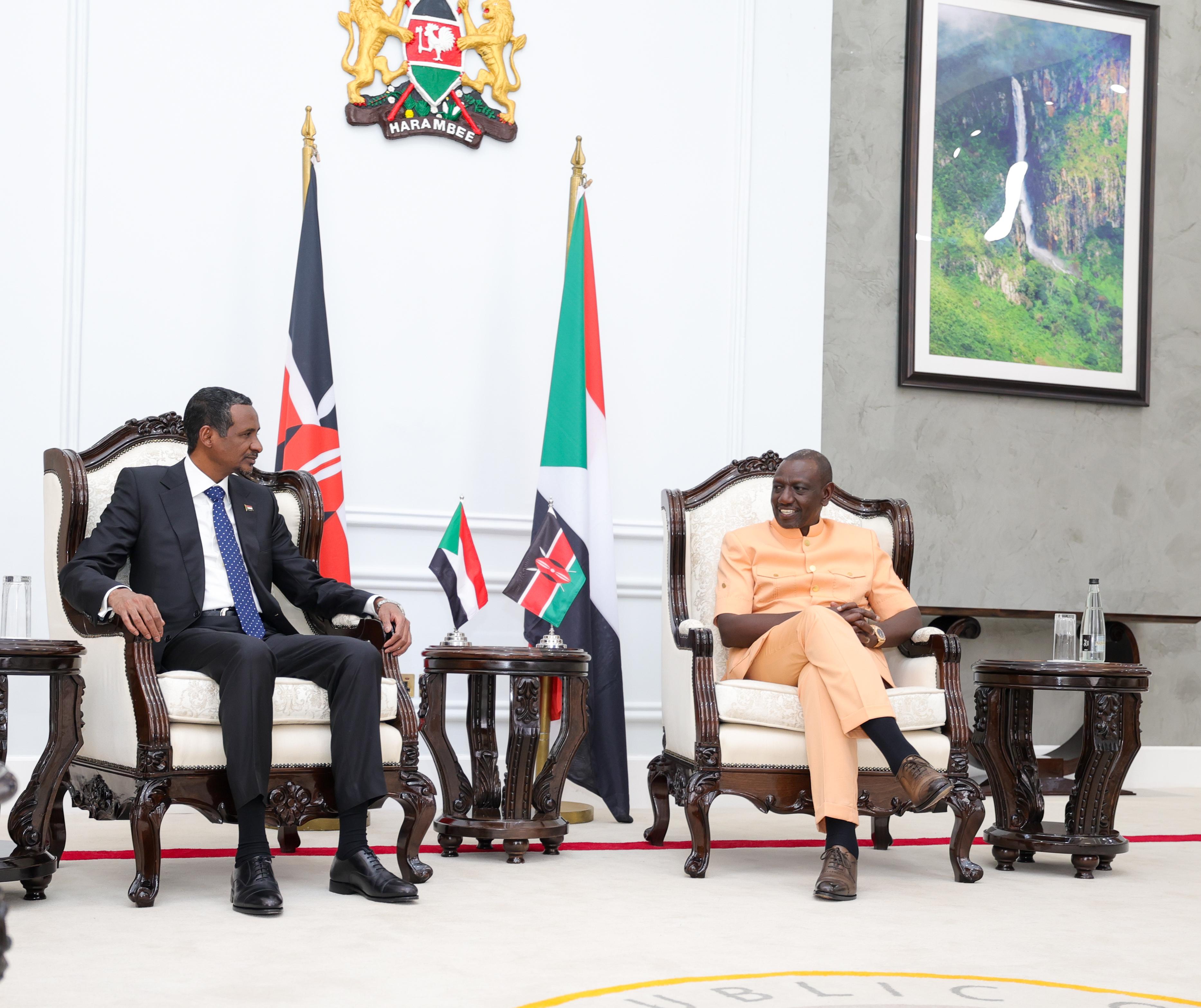
However, Ruto’s administration has consistently defended its approach, saying Kenya’s role is to provide a neutral platform for dialogue among Sudanese actors.
Ruto has previously dismissed claims Kenya is backing the RSF militarily, insisting Nairobi’s involvement in Sudan is limited to facilitating negotiations aimed at restoring civilian rule.
The Sudan question is particularly sensitive given Kenya’s role in Igad, which has been trying to broker a ceasefire between the Sudanese military and the RSF.
Critics say accusations that Nairobi is favouring one side and harbouring RSF commanders could weaken its ability to act as an impartial broker.
Just last week, former Deputy President Rigathi Gachagua claimed RSF commanders are living under state protection in Runda.
“The RSF
commanders are housed in Runda in a house guarded by the General Service Unit,”
Gachagua said.
With Kenya’s next General Election scheduled for 2027, opposition figures are increasingly framing foreign policy controversies as evidence of broader governance problems in the Ruto administration.