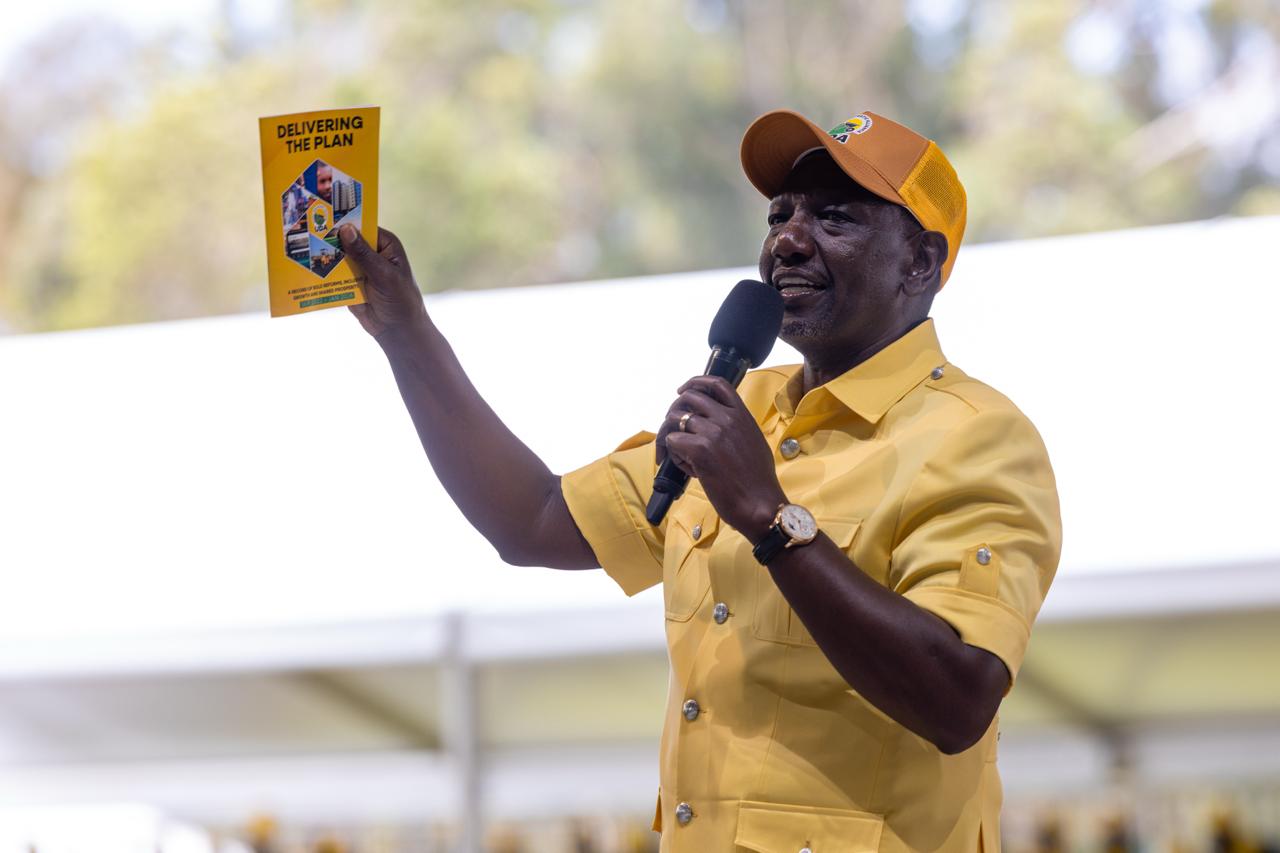
 President William Ruto speaks during a meeting with UDA aspirants at State House in Nairobi /FILE
Mt Kenya’s political landscape is witnessing a quiet but intense battle as establishedparties move to edge out fringe political outfits that could disrupt the region’s powerdynamics ahead of the 2027 general election.
At the centre of this are the United Democratic Alliance and the Jubilee Party. The twohave already tested the presidential power in 2017 and 2022.
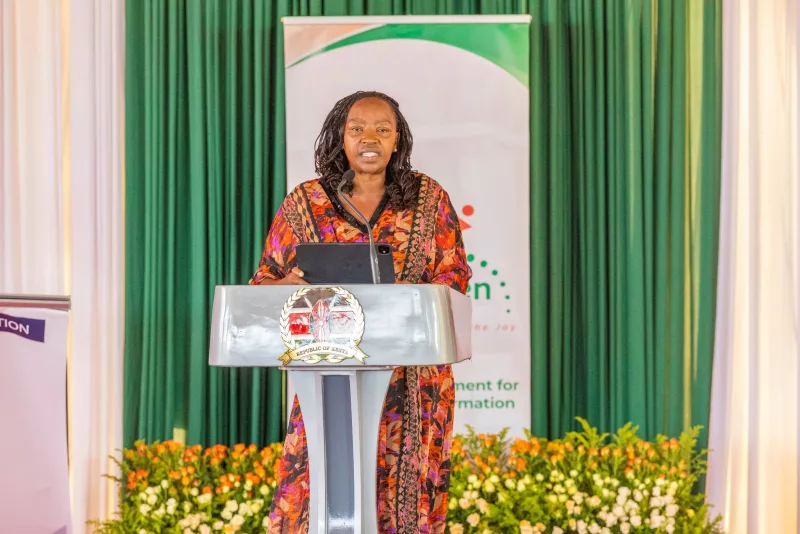
UDA is banking on the reelection of President William Ruto, whileJubilee has already declared former Interior Cabinet Secretary Fred Matiang’i as itsflagbearer.UDA and the Jubilee will have to compete with Martha Karua’sPeople’s Liberation Party, Democratic Party (DP), The Service Party, Chama Cha Kazi andThe Party of National Unity, among others.
On Wednesday, former Nyeri MP Ngunjiri Wambugu wrote a letter to former PresidentUhuru Kenyatta. He wanted to know if the Jubilee is ready for the 2027 election.Wambugu in his letter, further sought clarity on whether the party has entered into anyformal or informal political cooperation framework with other parties that could affectaspirants seeking to run for elective positions.
Speaking to Star, Wambugu further revealed plans for Jubilee to holdan aspirant’s forum in the last week of March, saying they will communicate the exact date.He has been actively pushing for the party’s preparedness.
Political analysts say that the battle to control the region is already affecting the smallparties in a big way, in a move that would shrink political democracy.
They termed the recent UDA and Jubilee grassroots popular moves as a pre-emptiveconsolidation strategies to win back their former allies. Leaders said the move is designed toformalise loyalty and create clear chains of command at the lowest levels of politicalmobilisation.
Speaking to the Star, Esau Kioni, chairman of the DP, said all parties, whetherregional or not, should be allowed to enjoy their democratic and constitutionalrights without being discriminated against.
He said regional parties or small parties are not threatened, as some have previously survivedhighly contested elections, producing leaders in various positions. He said most regional partieswill come together in 2027 to form a coalition to strengthen their position.
He said DP, led by Justin Muturi, is already talking to parties aboutworking together before 2027.
“Most of what you are calling small parties were once in power, and in the DP Party, we are ready towork with like-minded parties to form a force that can deliver victory,” he said.
Kioni pointed out that the 2027 election will likely follow the script of 2013, in whichthe so-called small parties supported a presidential candidate and fielded candidates inconstituencies and in ward level.
Political analyst John Wahinya, a Rongai parliamentary aspirant in Nakuru county, defended therelevance of smaller political formations in the democratic space, arguing that regional partiesstill play a critical role in representing local interests.
He argued that political diversity should not be seen as a lack of organisational strength.“We cannot simplify Mt Kenya politics to a two-party discussion,” he said. “Lesser-knownparties are there to enhance local voices and offer different leadership opportunities.”
He said Kenya’s smaller parties possess varied ideologies and play an essential role in enhancingthe democratic space.
“What individuals refer to as small parties are vital to multipartyism,” Wahinya said. “Forinstance, we have the Farmers Party representing farmers’ interests nationwide, and Ford Kenyaadvocating for social democracy, among others.”
The New Democrats Party national chairman Thuo Mathenge told Star that the regional parties arenecessary for balancing political competition and protecting community-based politicalrepresentation.
He said his TND Party has always thrived in competitive environments, especially in2017 and 2022, and produced leaders, adding that every party has its own stronghold anddemocratic space to thrive.
“Political space is never surrendered without a fight, smaller parties are doingeverything to guarantee survival and 2027 won’t be different; that is why we are pushingback early,” Mathenge said.
Kiamwangi MCA Kung’u Smart argued that the pushback by ‘smaller parties’ reflects a deeperstruggle for political space.
“When dominant parties consolidate early, smaller formations must either innovate orrisk extinction. They are trying to convince voters and aspirants that diversity inpolitical representation strengthens the region’s bargaining power nationally,” Kung’usaid.
He urged the regional parties to position themselves through proper messaging andleveraging on the gaps left by the national parties.
“Survival requires differentiation. If voters see no meaningful difference betweenparties, they will gravitate toward the strongest. Smaller parties must therefore presentthemselves as credible alternatives, rather than protest vehicles.”
Isaiah Gichu, party leader of the Party of Democratic Unity, said the resurgence of UDA andJubilee does not automatically erase alternative political voices.He instead said grassroot mobilisation and resurgence of their activities are forcing the smallparties to sharpen their messaging, strengthen their grassroots presence and redefine their appeal.
He said that the small parties are aware of the risks involved if they fail to strategicallyposition themselves.
“Smaller parties know that if they do not assert themselves now and set up their grassrootstructures, they risk being swallowed by the dominant parties or being forced into earlycoalition,” Gichu said.
“So, what we as Party of Democratic Unity doing is not surrender butreposition. We are emphasising regional identity, community interests anddissatisfaction within dominant parties to attract aspirants who feel sidelined.”
He said survival in the Kenyan political arena mostly depends on leveraging the existingopportunity.
“Even if a smaller party does not win the presidency, it can become influential bycontrolling key constituencies or negotiating power in coalitions. That bargaining poweris what we are fighting to protect.” Gichu added.
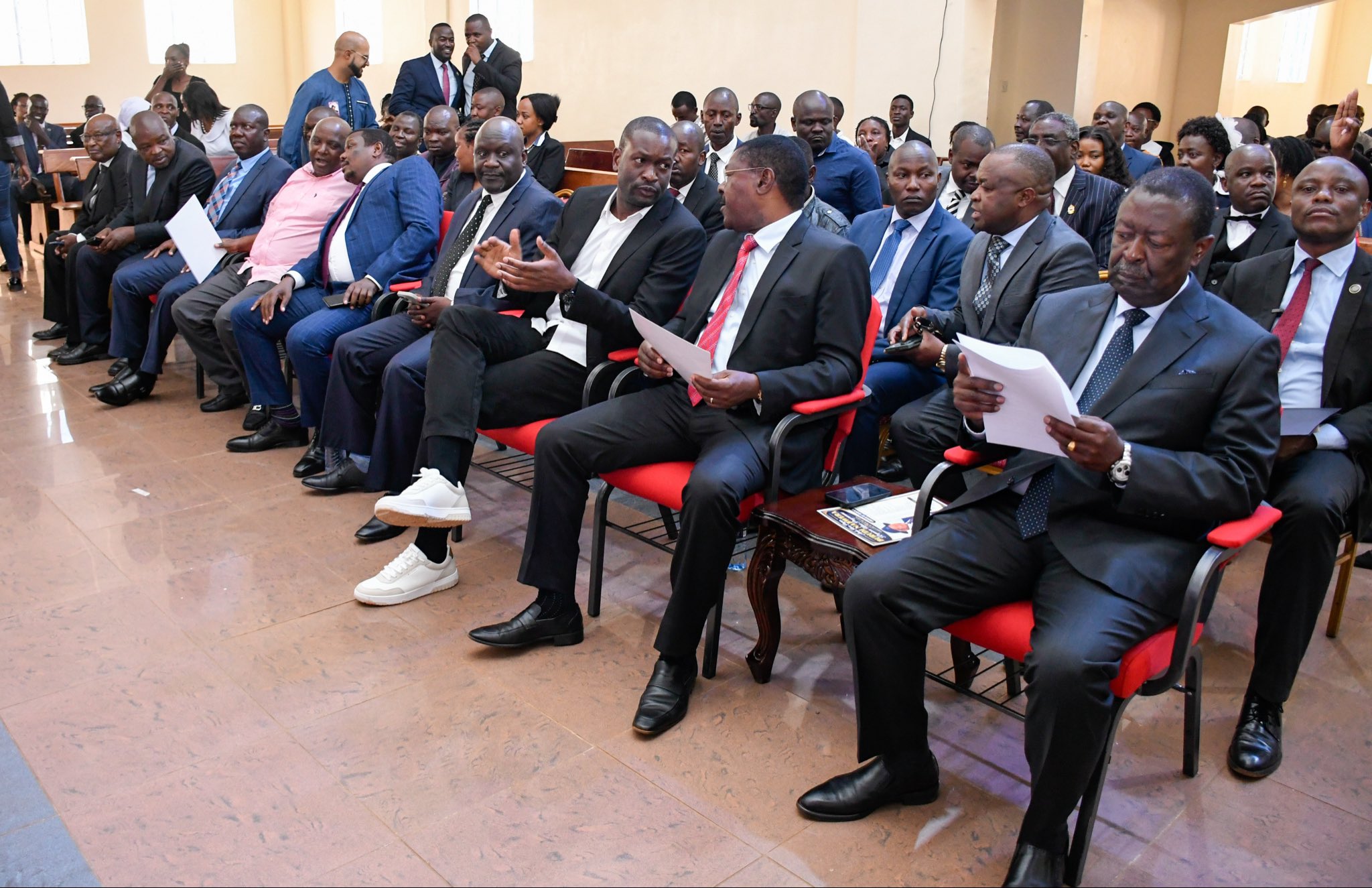
The UDA party during recent aspirants' meetings at State House asserted the nominationexercise will be free and fair.
President William Ruto said that no one will be favoured, a move aimed to calm anxietyamong contestants who fear being edged out by incumbents or powerful rivals withinthe party.
“Najua kila moja wenu hapa anajiuliza, mimi nimekuja hapa niko na mpinzani ambayekwa sasa ni governor ama senator ama mbunge wa UDA. Sasa yeye ni MCA na ako nje,sijui nitapata nafasi ya kuwa na fair nomination process,” Ruto said.
The President said the people will decide.
“We have done nominations before. I want to give you my personal undertaking that Iwill ensure this party conducts free, fair, democratic, credible elections,” Rutosaid amid cheers from attendees.
Political analyst Albert Kasembeli has told the Star that the recent UDA approachreflected strategic foresight aimed at winning more aspirants.
“What UDA is doing is not accidental,” he said. “By reorganising from the polling station leveland registering aspirants early, the party is creating what I would call a nomination shield. Itis attempting to reduce internal disputes before they happen and discourage independentcandidacies that often arise from chaotic primaries. This is an early capture ofpolitical space.”
Kasembeli added that on the other hand, the Jubilee party has also hosted a number of grassroot.
Mobilisation drives in a move to win back its former leaders who had defected to other politicalformations.
Former President Uhuru Kenyatta late last year hosted a political forum at Thika Green inMurang’a county where he declared party readiness for 2027.
Uhuru said that the party willconduct free and fair nomination exercises, noting that they are ready to traverse the countrymarketing the party.
“Jubilee is much alive and ready to work with other leaders; we need political sobriety whereby every leader is respected and not abused,” hesaid.
He used the forum to announce Matiang’i as the Jubilee presidential candidate.
The former CS declared total loyalty to Uhuru and has been holding meetingsalongside the coalition partners in preparation for 2027.
“I will work with leaders to ensure your legacy continues. We will speak to our peopleand make Jubilee bigger,” Matiang’i said to Uhuru.
Political analyst Charles Mwangi, a former Ichagaki MCA, said while UDA leveragesincumbency and organisational discipline, and Jubilee banks on presidentialclarity, smaller parties are fighting to prove that they can still command influence andshape coalition arithmetic.
“The mistake would be to assume smaller parties are finished,” he said. “Alliances in Kenya shiftvery quickly, and 2027 will not be different and a lot is set to happen. If small partiesorganise themselves, they will become a decisive player.”
Mwangi called on Kenyans to elect the next crop of leaders in 2027 based on theirperformance record and not be swept away by political euphoria witnessed in the 2022general election.
Laikipia East MP Mwangi Kiunjuri last year had also told off former Deputy President RigathiGachagua over what he termed as plans to muzzle existing political parties in the Mt Kenyaregion. He spoke late last year during a public forum in Marmanet ward.
Kiunjuri accused Gachagua of trying to edge out other political parties in the region infavour of his DCP Party.
He argued that the presence of several political parties poses a great gain to thedemocratic space, noting that Kenya will have a choice to elect a leader they deserve.
“We have always chosen our leaders based on their ability to serve us, not based onpolitical parties,” Kiunjuri said. “That is why we have no problem with people forming newparties.
Gachagua has been traversing the region, pushing for his Democracy for the Citizen Party as the‘only alternative’ in the region.
Speaking last year during the funeral of Alice Gakuya, mother of James Gakuya MPof Embakasi North, the former DP urged residents to reject emerging political outfits and maintain a single, collective political position.
“Let’s not be divided. We must remain as one. Our votes are only useful to this regionwhen it is in one basket, and once we have made a decision, we never go back,” he said.
Gachaguasaid that fragmentation through small political partieswould only serve external interests, claiming such parties are used as tools to dilute theregion’s influence.