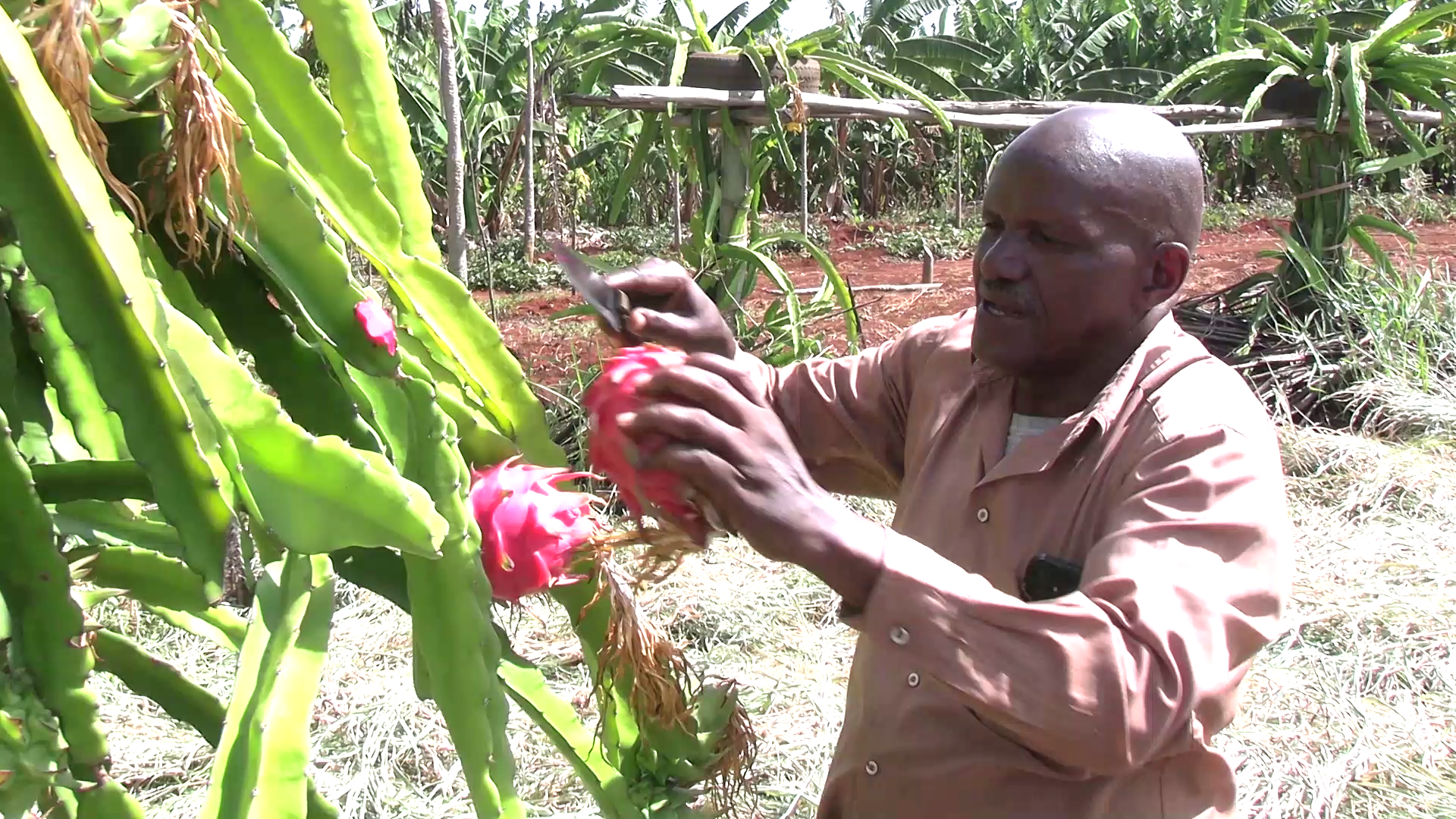
 Lincoln Mwachomba harvesting dragon fruits in his farm in Runyenjes, Embu county/ ALICE WAITHERA
Farmers in Runyenjes, Embu county, have abandoned traditional rain-fed agriculture and shifted to year-round high-value crops farming.
The shift follows the steady supply of irrigation water from the Kagaari–Gaturi–Kyeni Irrigation Project. For decades, farmers in the area largely depended on two rainy seasons to grow maize and beans.
However, unpredictable rainfall and recurring droughts often led to poor harvests and frequent crop failures.
The situation has, however, changed with the establishment of the irrigation project, which draws water from River Thuci and supplies it to farms across Kagaari South and Kyeni South wards.
The project covers about 2,250 acres and benefits more than 2,200 farmers, enabling them to farm consistently throughout the year.
With reliable irrigation water, farmers have diversified from traditional maize and beans to higher-value crops such as rice, dragon fruit, tomatoes, onions, French beans, bananas, macadamia and avocados.
“Before the project was established, many farmers experienced frequent crop losses due to drought and erratic rainfall,” project chairperson James Muchiri said.
The project, implemented under the National Irrigation Authority, has transformed farming and livelihoods in the area by enabling farmers to embrace modern, market-driven agriculture.
Muchiri said the availability of irrigation water has allowed farmers to sustain their crops throughout the year, reducing dependence on rainfall.
It has also enabled them to venture into crops that mature faster and fetch better prices in the market.
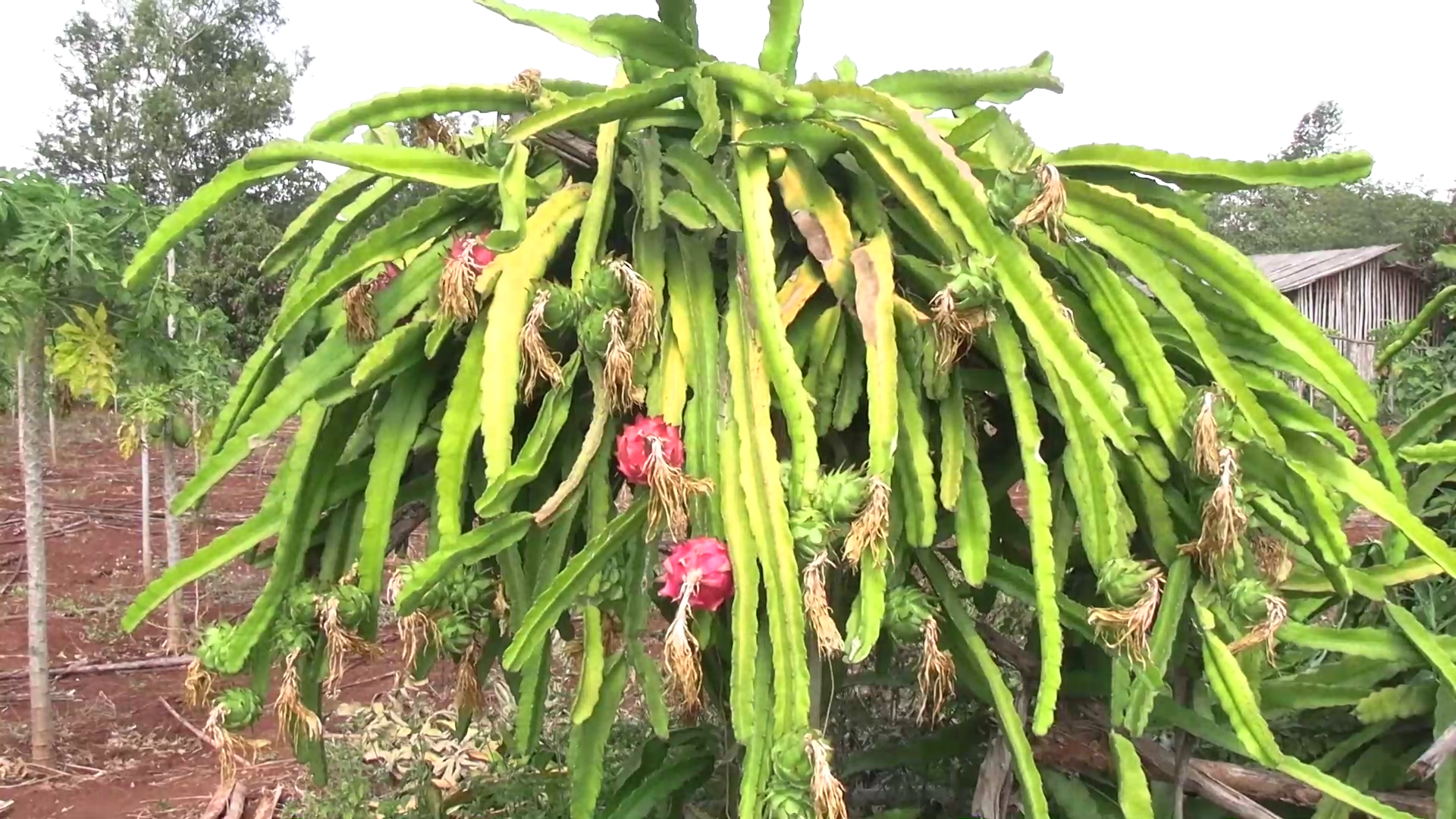 Dragon fruits in Lincoln Mwachomba's farm that has been connected to water from Kagaari–Gaturi–Kyeni Irrigation Project in Embu county/ ALICE WAITHERA
He noted that farmers are increasingly adopting high-value crops such as dragon fruit and Hass avocado, which have strong demand in both local and international markets.
Muchiri said the project has also improved household incomes, with many farmers now able to educate their children comfortably, improve their homes and invest in dairy farming.
He added that nearly 90 per cent of members are already utilising the water, while plans are underway to connect the remaining farmers.
Farmers in the scheme have also formed a cooperative society that helps them aggregate their produce and sell in bulk, protecting them from exploitation by middlemen who often buy produce at low prices.
The cooperative model has strengthened farmers’ bargaining power and helped them secure better markets for their produce.
He added that the irrigation project has significantly transformed the region, noting that households benefiting from irrigation farming are visibly more economically stable compared with those still relying solely on rain-fed agriculture.
“Most of the local markets source their produce from their members, providing us with a steady market while ensuring consumers acquire foods that are not highly priced.”
“The steady supply of irrigation water has also stabilised food supply in local markets as farmers produce horticultural crops and vegetables throughout the year,” Muchiri added.
He said the project now generates about Sh86 million annually from various farm produce, demonstrating the potential of irrigation in improving rural livelihoods and enhancing food security.
 Lincoln Mwachomba, one of the beneficiaries of Kagaari–Gaturi–Kyeni Irrigation Project in Embu county/ ALICE WAITHERA
“Provision of irrigation water is the best way of empowering smallholder farmers and cushioning them against the effects of climate change and erratic rainfall,” he added.
One of the beneficiaries, Lincoln Mwachomba from the Ugweri area, has ventured into rice and dragon fruit farming after accessing irrigation water from the project.
Mwachomba said irrigation water has enabled him to diversify his income streams, including rice farming, which was never grown in the area before.
Last year, he harvested eight bags of rice from his farm, enabling his family to meet their household consumption needs without purchasing rice from the market.
Besides rice, Mwachomba has also planted dragon fruit, which he described as an emerging but highly profitable crop.
He said he currently sells dragon fruit at about Sh100 per fruit at the farm gate, although the price can rise to about Sh200 in local markets.
According to him, dragon fruit farming is not labour-intensive and can easily be combined with other crops, making it attractive to small-scale farmers.
On his farm, he also grows bananas, sweet potatoes, yams and avocados while keeping fish and cultivating Napier grass and hay for livestock feed.
Mwachomba said the availability of irrigation water throughout the year has allowed farmers in the area to practise mixed farming, increasing both food security and household incomes.
“When one stream of income fails, mixed farming ensures you have several others that sustain you,” he said.
INSTANT ANALYSIS
For decades, farmers in the area largely depended on two rainy seasons to grow maize and beans, but unpredictable rainfall and recurring droughts often led to poor harvests and frequent crop failures. With reliable irrigation water, farmers have diversified from traditional maize and beans to higher-value crops such as rice, dragon fruit, tomatoes, onions, French beans, bananas, macadamia and avocados.