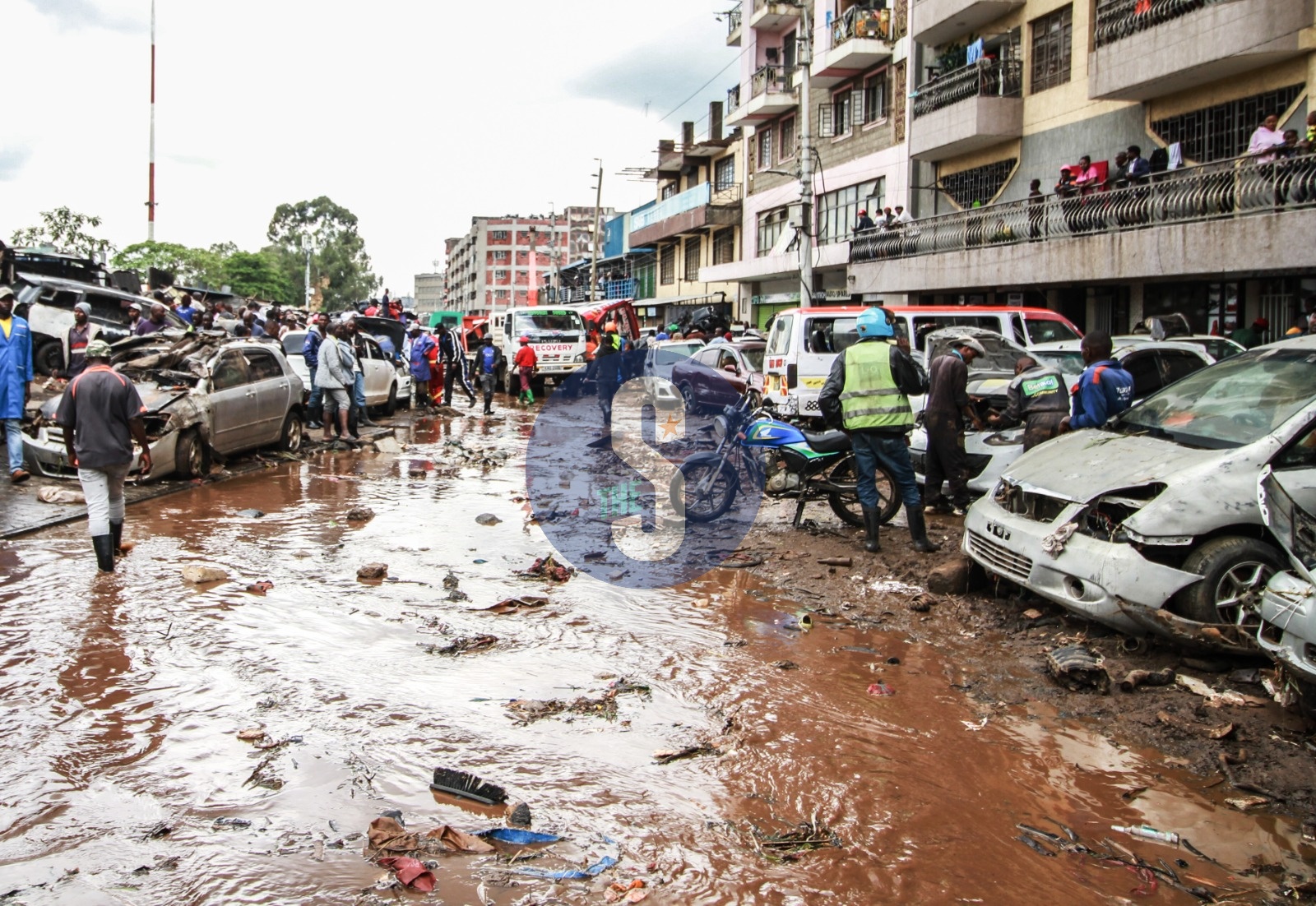
 Grogan Road in the industrial area /ENOS TECHE
The death toll from flash floods that swept parts of the country has risen to 25 after heavy rainfall triggered widespread destruction in several counties.
According to the Ministry of Interior and National Administration, most of the fatalities were reported in Nairobi after rivers burst their banks during heavy overnight rains.
“Twenty-five people have been killed and property of unknown value destroyed after flash floods swept parts of the country last night,” the ministry said in a statement issued on March 7, 2026.
Nairobi recorded the highest number of deaths, with 23 bodies retrieved from rivers in Starehe and Kamukunji sub-counties. Other people were also swept away by floodwaters in Kibra sub-county.
Authorities said the government has activated emergency response mechanisms following rain-related incidents reported across several counties after heavy rainfall that began on March 4 and intensified between March 6 and 7.
“Search and rescue operations are currently underway in Nairobi, where seven bodies have been retrieved from rivers following overnight flooding, while two persons remain missing in Kibra,” the ministry said.
Preliminary assessments show that the floods have affected multiple counties, including Kiambu, Kajiado, Makueni, Nakuru, Murang’a, Bungoma, Kwale, Kirinyaga, Migori and Tharaka Nithi.
Across the affected areas, the flooding has damaged homes, businesses, farms and public infrastructure.
The government estimates that more than 800 households have been displaced, with over 700 homes and structures affected, particularly in informal settlements and low-lying urban areas.
Emergency response teams have been deployed to support rescue operations and assist affected residents.
These teams include personnel from the Kenya Defence Forces, the National Police Service, the National Government Administration, county governments, engineers, the Kenya Red Cross, Kenya Power and other emergency partners.
The ministry said the teams are coordinating rescue efforts, supporting evacuations and working to restore essential services in affected areas.
In Nairobi, heavy overnight rains caused severe flooding in several parts of the city. Major roads, including Mombasa Road, Uhuru Highway, Lang’ata Road, Mpaka Road in Parklands and sections of Kangundo Road, experienced flooding that disrupted traffic.
Several residential areas were also affected, including Viwandani, Mukuru kwa Reuben, Kibra, Kawangware, South B, Eastleigh, Dandora, Kariobangi, Umoja, Kware, Parklands and Westlands.
Emergency teams have been helping families move to safer locations.
The government noted that many of the settlements affected in Nairobi are located along riparian corridors of the Nairobi, Ngong and Mathare rivers, which are highly vulnerable during heavy rainfall.
Officials said the ongoing Nairobi Rivers Regeneration Programme, which is about 30 per cent complete, aims to restore river channels, improve drainage systems and reclaim riparian reserves to reduce flooding risks and protect lives.
Residents living along riverbanks have been urged to move to safer ground.
“Residents currently living along riverbanks are strongly advised to voluntarily evacuate to safer ground, particularly during this period of sustained rainfall,” the ministry said.
Flooding has also disrupted transport infrastructure in other counties.
In Makueni County, the Wote–Emali Road was cut off near Isambani while Kyamelu Bridge overflowed after heavy downpours. Authorities have advised motorists to avoid flooded drifts and seek alternative routes.
The government said it is continuing to monitor the situation and will issue further updates as additional reports from affected counties are received.