County governments are calling for fair climate finance and debt justice to enable Kenya and other African countries to transition from fossil fuels to renewable energy.
This comes as devolved units backed a global push for the Fossil Fuel Treaty, a proposed international agreement intended to guide a global and equitable phase-out of coal, oil and gas.
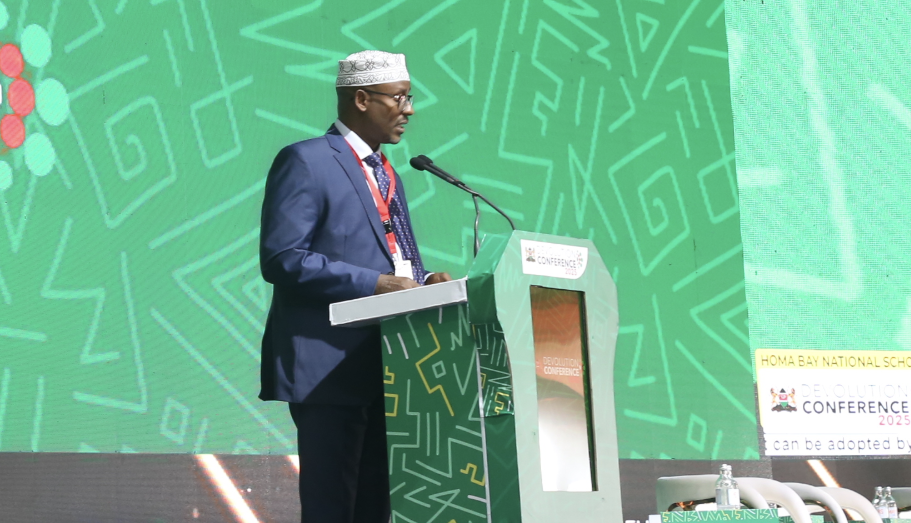
Martin Maseghe, chair of the County Executive Committee Members responsible for Energy at the Council of Governors, said subnational governments were ready to play their role in advancing a just and financed transition.
He spoke during a consultative meeting on Just Energy Transition, the Fossil Fuel Treaty Initiative and County Energy Planning in Naivasha.
The meeting, convened in partnership with the Fossil Fuel Treaty Initiative and Power Shift Africa, brought together county representatives to discuss pathways to an equitable transition to renewable energy.
Maseghe said Kenya had experienced effects linked to climate change, including floods that damage infrastructure, erratic rainfall that affects agricultural yields and rising sea levels that place pressure on coastal communities.
“Kenya’s response to this crisis has not been one of resignation, but of resolve and resilience,” he said.
He noted that under President William Ruto’s administration, Kenya has committed to pursuing 100 per cent renewable energy by 2035 and has placed climate action at the centre of national development planning.
The country also hosted the inaugural Africa Climate Summit in 2023, reinforcing its position in continental climate diplomacy.
However, Maseghe said ambition alone would not deliver results without adequate financing.
“Our fiscal space is captured. Across the continent, nations are spending more on debt servicing than on health, education or climate resilience,” he said.
He added that Kenya’s public debt had placed constraints on investment in renewable energy and green industrialisation.
He called for reforms in the global financial architecture to address structural inequalities that limit developing countries’ ability to fund climate action.
“It is for this reason that we continue to call for fair finance and debt justice. Without addressing these barriers, a just transition will remain out of reach,” he said.
On behalf of the Council of Governors, Maseghe said counties were joining 145 subnational governments worldwide in supporting the call for a Fossil Fuel Treaty.
The proposed treaty seeks to complement the Paris Agreement by directly addressing the production and expansion of coal, oil and gas, while providing financial and technical support for developing countries.
He said Africa’s transition should be guided by African priorities, including expanded energy access, green industrialisation and economic diversification.
“The world urgently needs a coordinated and funded plan to equitably transition away from coal, oil and gas, while ensuring developing countries receive the support necessary to power renewable and resilient economies,” he said.
Maseghe also referenced the upcoming First International Conference on Transitioning Away from Fossil Fuels, to be hosted by Colombia and the Netherlands in April 2026, and spoke of Kenya’s readiness to engage and ensure African voices contribute to shaping the global agenda.
He reiterated that climate action must go hand in hand with justice, equity and shared prosperity, and urged stronger collaboration between national and subnational governments.
“Together, we can make this transition transformative for Kenya, for Africa and for the world,” he said.