MPs have significantly tightened controls over President William Ruto’s proposed Sh5 trillion infrastructure fund, stripping it of sweeping financial powers and placing it firmly under constitutional oversight.
In far-reaching amendments to the National Infrastructure Fund Bill, 2026, the National Assembly's Finance Committee deleted key clauses that would have allowed the fund to borrow independently and operate with broad discretion under the National Treasury.
Instead, legislators moved to anchor the fund within existing public finance safeguards, ensuring it operates strictly under the Public Finance Management Act and remains subject to direct parliamentary scrutiny.
The changes mean all withdrawals from the fund will require approval from the Office of the Controller of Budget, while the Office of the Auditor-General will check its accounts.
Parliament will also approve both the fund’s investment policy and its investment plan—effectively giving legislators a decisive say over how the fund operates.
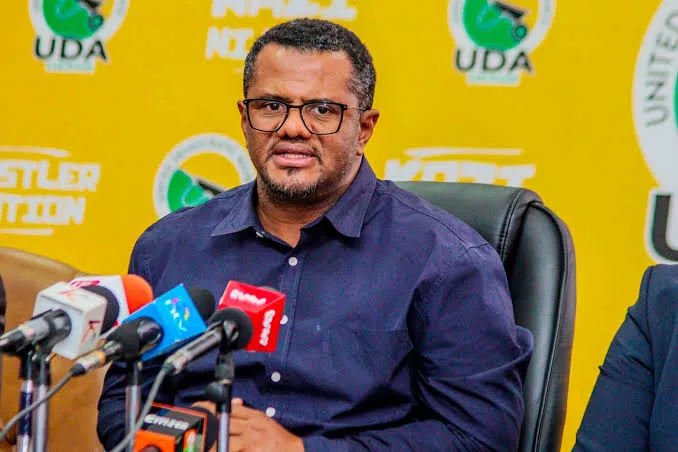
The Finance Committee, chaired by Molo MP Kuria Kimani, also removed a controversial clause that would have allowed the fund to raise loans independently of the exchequer process.
In another safeguard, MPs resolved that proceeds from privatisation must first be deposited into the Consolidated Fund before any allocation to the infrastructure kitty.
In effect, the amendments ensure that no major financial commitments will be made without parliamentary approval.
The sweeping revisions followed strong objections from civil society groups, economic policy institutions and opposition leaders who warned that the original proposal risked creating a parallel financial structure outside the normal budget framework.
Among the most contentious provisions was the fund’s proposed power to borrow independently.
Critics argued that such powers could allow the government to accumulate debt outside the conventional parliamentary appropriation process.
Institutions including the Katiba Institute and Kituo Cha Sheria cautioned that unrestricted borrowing could expose the country to unsustainable liabilities at a time when Kenya is already grappling with heavy debt repayments.
The Institute of Economic Affairs described the proposal as fiscally imprudent and recommended that Parliament reject the bill altogether.
The Institute of Public Finance warned that provisions allowing privatisation proceeds to flow directly into the fund risked violating constitutional safeguards governing public revenue.
MPs also revised the governance structure of the proposed fund.
While the original draft allowed the Treasury Cabinet Secretary—currently John Mbadi—to appoint independent directors through a search panel, the committee ruled that the inaugural board should instead be recruited by the Public Service Commission to strengthen transparency and limit political influence.
Concerns raised by Auditor General Nancy Gathungu about overlapping leadership roles within the fund were also addressed, with MPs proposing the merger of the Chief Executive Officer and Administrator positions to eliminate ambiguity.
Business lobby groups including the Kenya Association of Manufacturers and the Federation of Kenya Employers had pushed for private-sector representation on the board, but lawmakers declined the request, arguing that the proposed structure was adequate.
Despite the amendments, opposition leaders insist the fund remains problematic.
The United Opposition led by Kalonzo Musyoka and Rigathi Gachagua, has demanded that Parliament reject the proposal outright.
In a statement, the coalition accused the Treasury of attempting to establish what it termed “a solution in search of a problem.”
The opposition argues that Kenya already operates dozens of public funds outside the Consolidated Fund framework, raising concerns about accountability and fiscal discipline.
They cited Article 206 of the Constitution, which requires public revenue to flow through the Consolidated Fund and be subject to parliamentary appropriation.
“Adding a new fund to broken systems adds another layer of dysfunction with reduced oversight,” the coalition said.
The political stakes surrounding the infrastructure fund are unusually high.
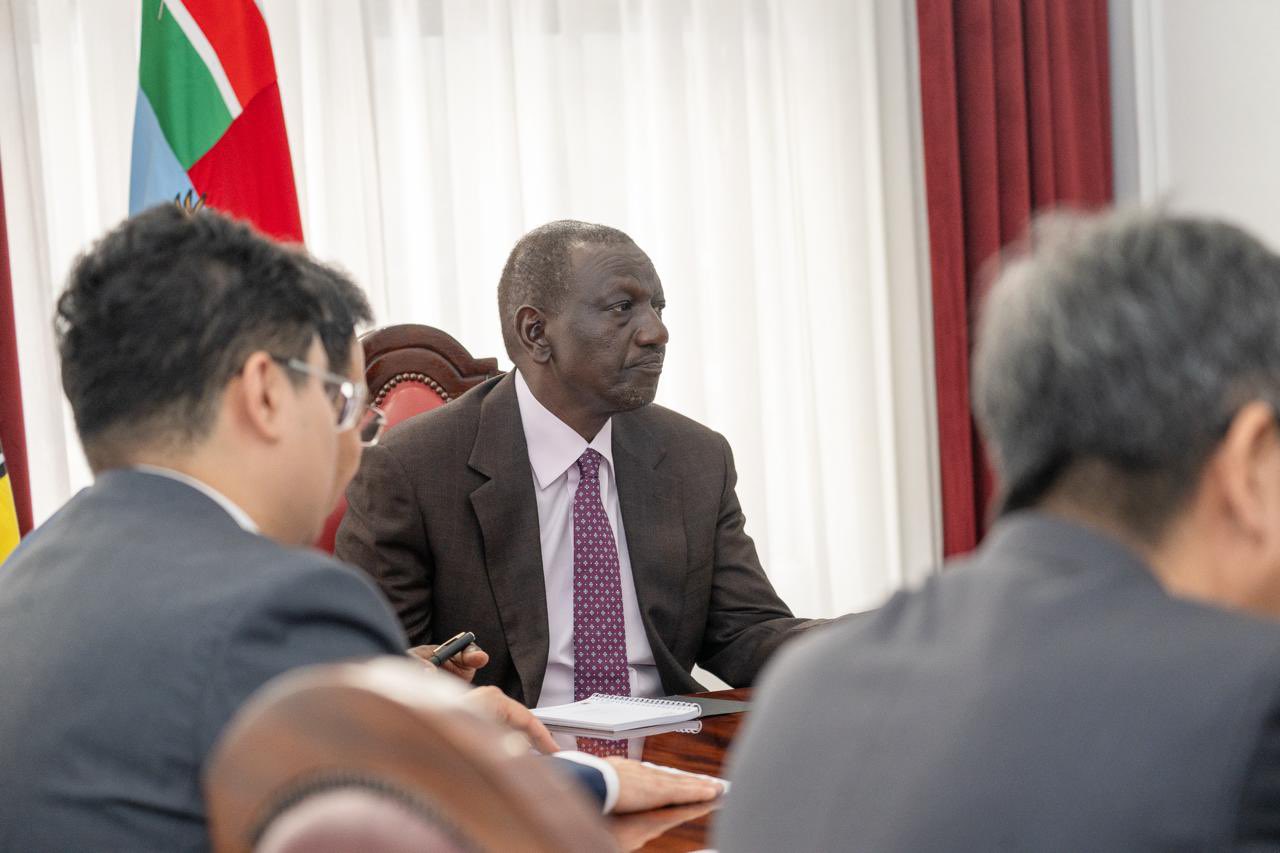
For President William Ruto, the proposed fund is central to his administration’s strategy of financing highways, railways, ports and energy corridors without relying solely on taxation.
His government has increasingly turned to alternative financing mechanisms such as Public-Private Partnerships, including the planned Rironi–Mau Summit expressway, as well as securitisation of the fuel levy to unlock capital for road construction.
Infrastructure financing has become politically sensitive amid Kenya’s rising public debt, which expanded rapidly over the past decade through large-scale borrowing for major projects.
Opposition leaders have repeatedly accused the government of exposing the country to expensive loans.
For the administration, visible infrastructure projects remain a key pillar of its economic transformation agenda and could play a central role in shaping the political narrative ahead of the 2027 General Election.
In effect, Parliament’s amendments transform what was initially proposed as a relatively autonomous investment vehicle into a tightly regulated public financing mechanism embedded within Kenya’s constitutional public finance architecture.
By placing the fund under the scrutiny of Parliament, the Controller of Budget and the Auditor-General, lawmakers have curtailed the Treasury’s ability to deploy it with broad discretion.
The move reflects deep institutional caution about off-budget borrowing in a country already grappling with high debt levels, even as the government seeks innovative ways to finance large-scale infrastructure.
Politically, the changes dilute executive control but may strengthen public confidence in the fund’s transparency as the debate over development financing increasingly intersects with the 2027 electoral calculus.