More than Sh20 billion taxpayers’ money pumped into struggling state agencies has effectively gone down the drain.
Parliament has uncovered that most of the beneficiaries are either defunct, insolvent or have stopped servicing the loans.
Fresh revelations in the 2023 report of the Public Accounts Committee show that 13 state entities owe the National Treasury Sh19.6 billion.
The balances showed no movement during the year ended June 2023, triggering a query by Auditor General Nancy Gathungu.
The loans have remained unpaid for years, with little indication that the money will ever be recovered.
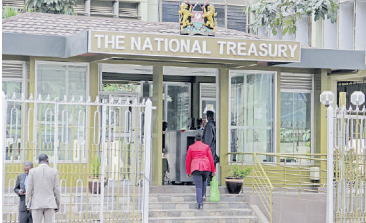
Treasury has now admitted that most of the entities are not in a position to repay and has sought Cabinet approval to write off the amounts.
“The entities reported as not having confirmed their loan balances are defunct, hence not in a position to confirm their balances. These entities’ loans are being considered for write off,” Treasury told MPs.
“Once approval is granted, the loans will be written off, removed from the records, and the same will be updated,” the report reads in part.
Among the most glaring cases is Mumias Sugar Company, which owes Sh3 billion in bailout funds advanced years ago when the once-dominant miller began collapsing under debt and mismanagement.
The funds were primarily intended to pay farmer arrears, settle debts with creditors, and rehabilitate ageing machinery. Reports suggest that a significant portion of the money was consumed without turning around the company's fortunes.
Retail chain Uchumi Supermarkets owes Sh1.2 billion, while the struggling Kenya Meat Commission has an unpaid balance of Sh940 million. While Uchumi has attempted to revive a few branches in Nairobi, the retail chain remains in the red.
Others on the list include Agro-Chemical and Food Company Limited (Sh2.9 billion), Local Government Loans Authority (Sh7.6 billion), National Irrigation Board (Sh1.1 million), and National Water Conservation and Pipeline Corporation (Sh2.4 billion).
Loans advanced to Halal Meat Products (Sh27 million), Utalii College (Sh122 million), Nairobi City Council (Sh102 million) and Mombasa Pipeline Board (Sh22 million) also remain unpaid.
Apart from Mumias Sugar and Uchumi, MPs were told that most of the entities have not even acknowledged the outstanding balances.
Five of the 13 entities are defunct, Treasury admitted, meaning recovery is practically impossible.
Five others have historical loans already recommended for write-off, while only three gave reasons for non-payment.
The findings reinforce long-standing concerns that state corporations plagued by inefficiency and mismanagement continue receiving taxpayer-funded loans with little consequence when they default.
The situation could be far bigger than the Sh19.6 billion flagged in the report.
Treasury data shows that 57 government institutions had a combined loan balance of Sh974 billion as of June 2023, raising fears that the unpaid Sh19.6 billion could just be a fraction of the debts.
Some of the country’s largest state agencies are already deeply indebted.
Kenya Railways is reported to owe up to Sh730 billion, while Kenya Airways has required repeated government financial support.
The Public Accounts Committee warned that some of the loans were poorly structured, weakly secured and continue to expose the country to mounting liabilities.
MPs have now given Treasury Principal Secretary three months to table a status report on the proposed write-offs.
The bailout problem is compounded by dormant government investments that are also at risk of total loss.
Auditors flagged Sh144 million in Treasury shareholdings in seven companies that are either non-operational or performing dismally.
The affected firms include National Agriculture Chemical and Fertiliser Limited, Busia Sugar, Nyari Estate Ltd, Kenya Poultry Ltd, Mercat and Ken-Ren Chemicals.
Treasury admitted that five of the seven companies are non-operational, making recovery of the investments unlikely.
It, however, dismissed claims that it holds shares in the Kenya Farmers Association as indicated in the audit.
Gathungu warned that there were no clear measures to ensure dormant investments generate returns.
“Non-repayment of the loans has led to the write-offs as bad debts; opportunity costs in funding other critical areas and eventual loss of public funds,” the auditor's report says.
Educational institutions have also been implicated in the growing debt burden. Kenyatta University tops the list with an outstanding Sh10.8 billion, while Moi University owes Sh231 million. The Kenya Urban Transport Project has an unpaid Sh40.7 million.
The mounting defaults paint a troubling picture of public finance management, where billions are advanced in rescue packages, but recovery mechanisms remain weak or non-existent.
The Sh19.6 billion now earmarked for possible write-off represents more than accounting entries.
It is money that could have funded classrooms, equipped hospitals, expanded irrigation schemes or reduced pressure on taxpayers.
Instead, it risks being erased from government books with little chance of recovery.