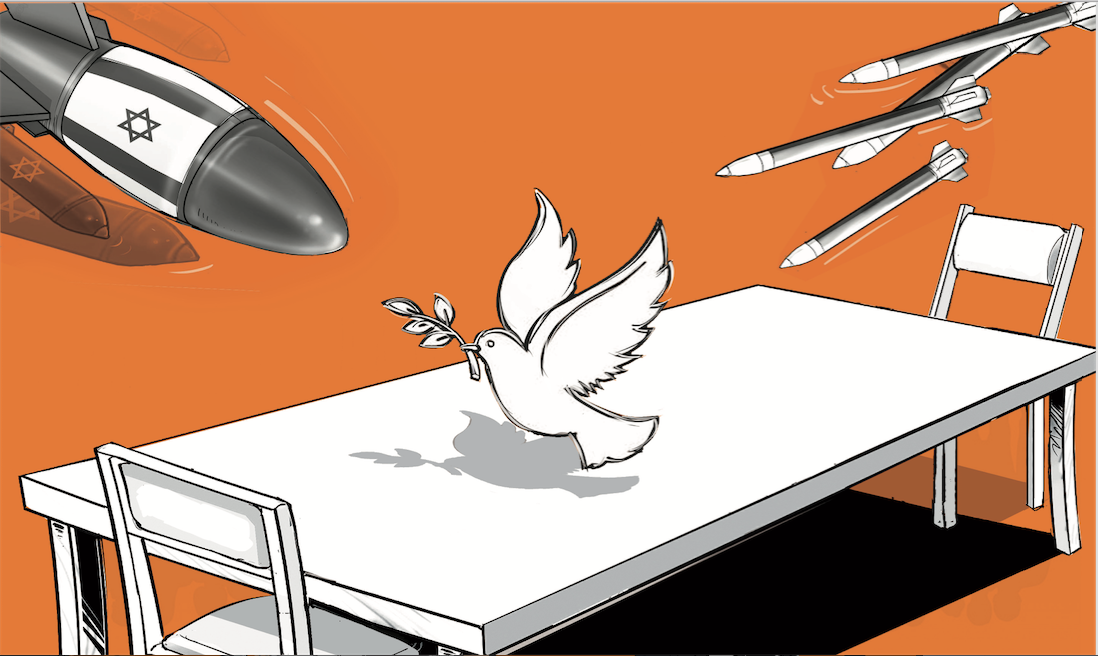
At a time when the world stands at the edge of multiple, overlapping crises, the call for peace cannot be reduced to mere rhetoric. Peace is not simply the absence of war. It is the presence of justice. It is the firm and consistent application of international law. It is the protection of human rights without discrimination.
It is equality among nations and among peoples. Without these pillars, what we call “peace” is merely a fragile pause between conflicts.
The global order established after the devastation of World War II was founded on a simple but profound principle: no state is above the law. The Charter of the United Nations sought to restrain unilateral aggression and ensure that disputes would be resolved through diplomacy rather than bombs. International law was envisioned as humanity’s collective shield against the return of imperial conquest, mass atrocities, and unchecked militarism. Yet today, that shield is cracking.
The ongoing war in the Middle East is a painful reminder of how far we have drifted from the ideals we profess. The recent attack on Iran by the United States and Israel, carried out in the middle of diplomatic talks aimed at diffusing tensions, represents a dangerous escalation. It sends a chilling message to the world: dialogue can be abandoned at any moment in favour of force.
Such actions undermine not only regional stability but the very principle of good-faith negotiations. When diplomacy is sabotaged by military aggression, trust in peaceful mechanisms of conflict resolution erodes. It tells weaker nations that international law may be selectively applied. It signals that power, rather than principle, determines outcomes. This is not merely a geopolitical miscalculation. It is a moral failure.
For decades, we have witnessed cycles of violence in the Middle East, with devastating consequences for civilians. In Palestine, the world is witnessing what many credible observers and human rights organisations have described as a modern-day genocide unfolding in full view of the global community. Entire neighbourhoods reduced to rubble. Hospitals and schools struck. Civilians, including thousands of women and children, buried under debris or forced into displacement without safe refuge.
The complicity and direct involvement of the United States and Israel in this catastrophe cannot be ignored. When powerful states provide military, financial, and diplomatic backing to operations that result in mass civilian suffering, they bear responsibility under international law. The prohibition against collective punishment, indiscriminate attacks, and targeting civilians is not optional. It is binding.
The tragedy in Palestine is not only a humanitarian crisis; it is a test of the world’s commitment to justice. If the rules are enforced selectively—if some states are shielded from accountability while others are sanctioned—then international law loses its legitimacy. Double standards corrode the moral authority of global institutions and fuel resentment, instability, and extremism. World peace cannot survive in an environment where impunity reigns.
However, a profound shift is underway in how global conflicts are perceived and understood. The era when governments could rely on a handful of powerful international media houses to shape a singular narrative is fading. For decades, public opinion could be influenced, sometimes manipulated, through carefully curated reporting, strategic omissions, and political framing.
Today, social media has transformed that landscape. From smartphones in Gaza to independent journalists on the ground, real-time images and testimonies reach millions within seconds. The truth, raw and unfiltered, is now accessible to everyone, everywhere. Ordinary citizens can witness events directly and form their own judgments. Attempts to obscure or sanitise atrocities are increasingly challenged by digital evidence and global solidarity networks.
This democratisation of information has profound implications. It empowers people to hold their leaders accountable. It challenges propaganda. It builds transnational movements rooted in shared humanity rather than nationalistic rhetoric.
In this new era, the demand for accountability is louder and more persistent than ever before. Calls for investigations, sanctions, and prosecutions are no longer confined to diplomatic chambers. They echo across digital platforms, university campuses, and civil society organisations worldwide.
International law is not a decorative instrument to be invoked when convenient. It is the foundation of world peace. The principles enshrined in the Geneva Conventions, the Rome Statute of the International Criminal Court, and countless human rights treaties exist to protect humanity from its worst impulses. They represent a collective commitment to ensure that might does not make right.
Those who have transgressed international law must face its full force—not as an act of vengeance but as an affirmation of justice. Accountability is not a threat to peace but a precondition. Justice deters future violations. Equality before the law restores trust in global institutions. Respect for human rights affirms our shared humanity.
World peace is not a utopian dream. It is a practical necessity in an interconnected world. However, it can only be truly achieved if justice is universal, human rights are non-negotiable, and equality among nations is respected.
Chief executive officer, VOCAL Africa