Over the last few weeks, legal practitioners and the country alike have been transfixed on the 100 interviews taking place at CBK Pension Towers building.
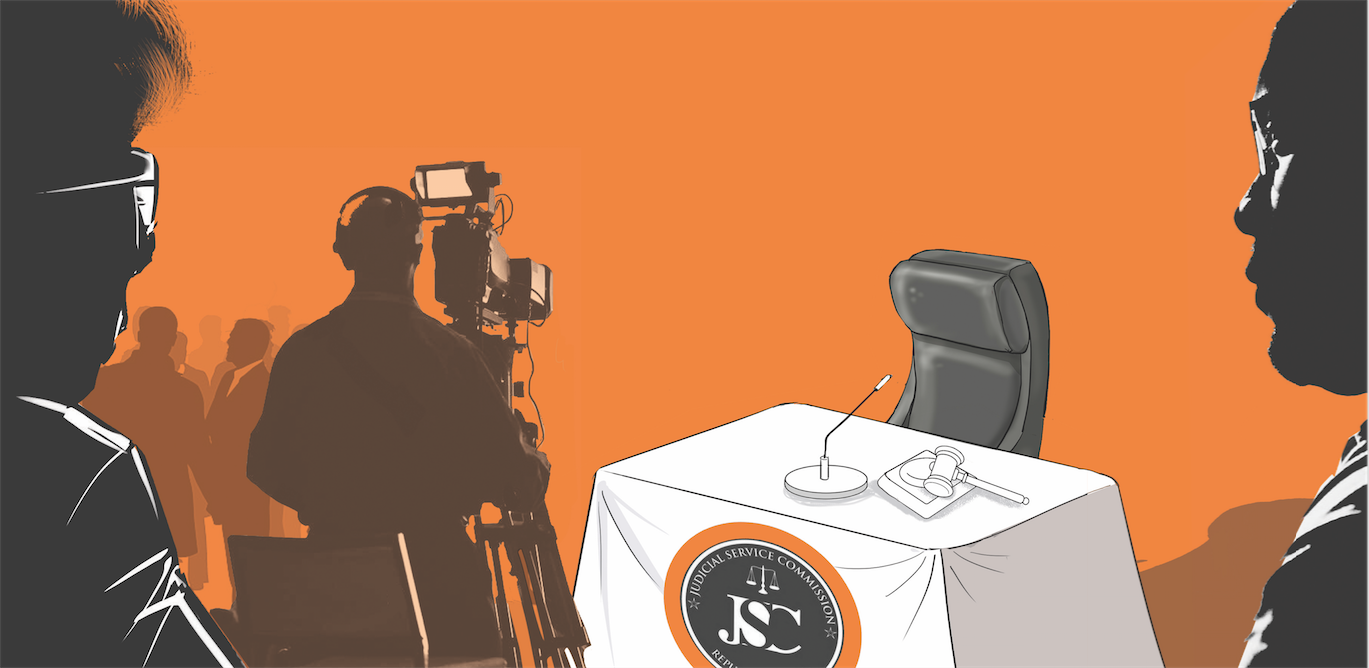
Conducted by the Judicial Service Commission (JSC), the exercise aims at identifying 20 men and women to join the High Court as judges.
The exercise, though not widely covered in mainstream media, has been streaming live on JSC’s social media channels. The links remain active for those who miss the sessions, those who wish to review candidates' performance, including JSC itself.
Being interviewed on live camera, and by a panel that includes top judges – the Chief Justice chairs the panel – and the titular head of the Kenyan bar, the Attorney General, is not a mean feat.
I have seen distinguished legal Goliaths freeze like a deer caught in the headlights. Under pressure, they gabbled to explain basic legal theories and to untangle legal scenarios presented to them by the panel.
Equally, I have seen least known practitioners, the Davids of the profession, capture the room with their brilliance, demeanour and clarity. As a matter of fact, I saw one seize up the entire JSC with his brilliance, suspending them in intellectual ecstasy for a while before dropping them.
The interviews have not been needlessly confrontational as the ones that took place in the aftermath of the 2010 constitutional moment. In those days, applying and being shortlisted for a high judicial office was akin to a self-assigned kamikaze mission. You either rose or fell on it.
I still remember the spectre of an inquisition that befell a respectable former judge of the Court of Appeal. His “second lower division” law degree was reduced to “third division” or “C minus” by one of the panellists, without a fair opportunity for appeal.
The gentleman never recovered from that appearance. The same fate befell the current Chief Justice, Martha Koome. Her pathetic LLB “pass” almost torpedoed her quest for promotion to the Court of Appeal.
It took the combined intervention of her predecessor Dr Willy Mutunga and her own long-winded explanation of the circumstances leading to it, to bury the matter.
Between the Kamikazes and the present crop of applicants, there is a group that was recruited in pitch darkness. Other than the JSC members who were present in the room when they were picked, nobody else knows what kind of people they are.
In a way, therefore, the 100 finalists have been lucky to be interviewed by the kamikaze survivors who also lived through the “interviews in the darkness” experience to know its shortcomings.
The survivors have now teamed up with the other panellists of the JSC to make the present interviews one of the most credible exercises of the recent past. They have pulled stops to make the exercise feel as friendly as possible.
Still, they have not made the exercise look as easy as drinking a grandmother’s porridge. Like a mouse that nibbles away the skin of a victim while blowing on it, they have skinned some of their applicants alive.
Some applicants have left the hot seat without their skin. It has been a moment of reckoning, especially for serving judicial officers who have excelled in the flip-flop application of the law.
Perhaps it would have helped for the JSC to scream aloud the context, import and value of the office of a High Court judge. This is an office like no other in our republic, one of the most important state offices of our democratic order.
In the opinion of some, the jurisdiction of a High Court judge is far greater and more important than the jurisdiction of any other judge, including a judge of the Supreme Court.
Besides the unlimited jurisdiction in criminal and civil matters, the High Court has the prerogative of interpreting the constitution and to determine violations, denial, threats and infringement of the Bill of Rights.
It is also an appellate court of sorts for all subordinate courts, quasi-judicial bodies and tribunals appointed to remove persons from office. Together with free and independent media and the office of an advocate, they provide a critical bulwark against tyranny and injustice in the republic.
Let us hope that the JSC will pick the best of the best for this critical office.
Advocate of the High Court and a Senior Project Manager with the Friedrich Naumann Foundation. The views expressed here are his own