 A man living with obesity measures the width of his abdomen.
Counties in Central Kenya have recorded the highest prevalence of overweight and obesity cases, raising concern among health experts over a rapid growing public health crisis.
According to the Kenya National Bureau of Statistics (KNBS), women aged 15–49 in central and urban-adjacent counties bear the heaviest burden. Kirinyaga leads nationally, with 65 per cent of women classified as overweight or obese. Other high-prevalence counties include Nyeri, Murang’a, Nairobi, Nyandarua and Kiambu.
The urban–rural disparity is equally striking. More than half of women living in urban areas 53 per cent, are overweight or obese, compared to 39 per cent in rural settings.
Health experts link this gap to urban lifestyles characterised by sedentary work, increased consumption of processed foods, and limited opportunities for physical activity.
Among men aged 15–54, the prevalence is lower than in women but follows similar geographic trends. Kajiado tops the list, with 31 per cent of men being overweight or obese. Kirinyaga (23.0 per cent), Nyeri (22.6 per cent), Isiolo (22.4 per cent), Nakuru (22.4 per cent) and Mombasa (21.2 per cent) also rank among the highest.
Urban men are significantly more affected than their rural counterparts, with 25 per cent classified as overweight or obese compared to 14 per cent in rural areas.
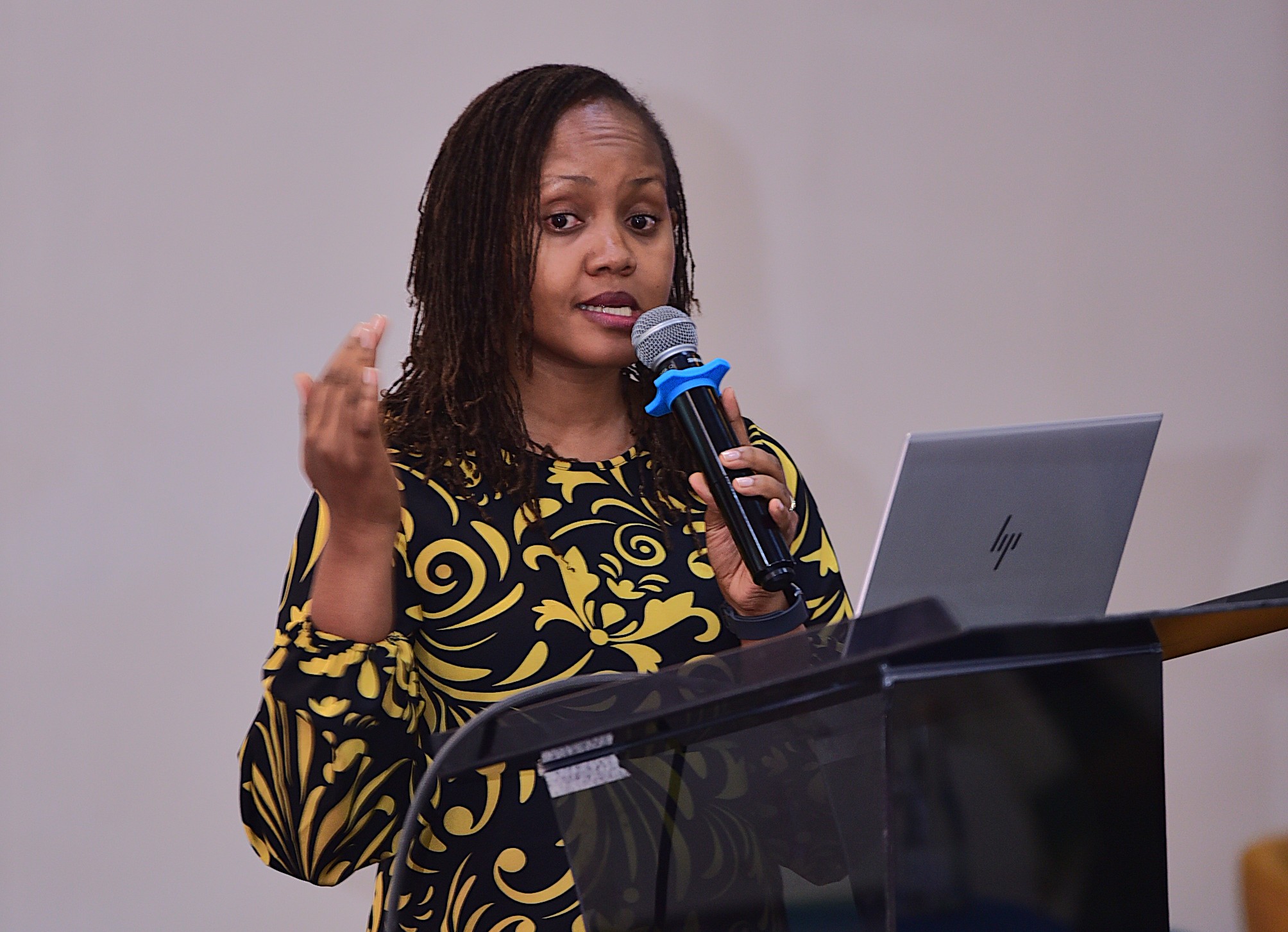 Dr Caroline Mithi during a commemoration of World Obesity Day themed, 8 Billion Reasons to Act on Obesity, on March 4, 2026./TIMON OTIENO
Dr Caroline Mithi, speaking during World Obesity Day, said that the county patterns reflect a broader systemic issue rather than individual lifestyle choices.
“Obesity is not just about how much someone eats or whether they exercise. It is driven by environmental, social and economic factors,” she said.
She warned that Kenya’s trends mirror global projections from the World Obesity Federation, which estimates that obesity could rise from one in eight people worldwide in 2022 to one in two by 2035. Currently, more than one billion people globally are living with obesity, a figure projected to quadruple within a decade if interventions are not scaled up.
In Kenya, adult overweight prevalence stands at roughly 10 per cent, while obesity accounts for about 13.5 per cent, according to recent data. However, the concentration of cases in specific counties signals emerging regional hotspots.
Dr Mithi noted that while most specialised services are concentrated in Nairobi, the highest-burden counties extend beyond the capital.
“The resources are largely in urban centres, yet counties like Kirinyaga and Kajiado are leading in prevalence. We must rethink how services are distributed,” she said.
The rising numbers are further complicated by Kenya’s double burden of malnutrition. While approximately 18 per cent of children remain stunted due to undernutrition, about 13 per cent are already living with obesity.
Health experts warn that overweight children are more likely to become obese adults, increasing the risk of diabetes, cardiovascular disease and other non-communicable diseases (NCDs).
Dr Mithi emphasised thatobesity is closely linked to rising NCDs, which have increased by over 20 per cent in recent years. High body mass index is a major risk factor for diabetes, heart disease, stroke, asthma and osteoarthritis.
She called for a comprehensive response built on four pillars: nutrition therapy, physical activity, behavioural modification, and medical or surgical interventions when necessary. However, she cautioned against overreliance on medication and bariatric surgery without addressing diet, mental health and lifestyle factors.
Experts are also urging stronger county-level screening, improved access to nutrition services, regulation of ultra-processed foods, and expansion of safe public spaces for exercise.
“Obesity is no longer a cosmetic concern. It is a chronic disease that demands structured policy, funding and collaboration,” Dr Mithi said.
“If we do not act now, the counties leading today may simply reflect a national reality tomorrow.”