Kenya is engaging the United Nations Office for Project Services (UNOPS) and the World Bank in separate discussions aimed at strengthening irrigation development and water infrastructure in the country.
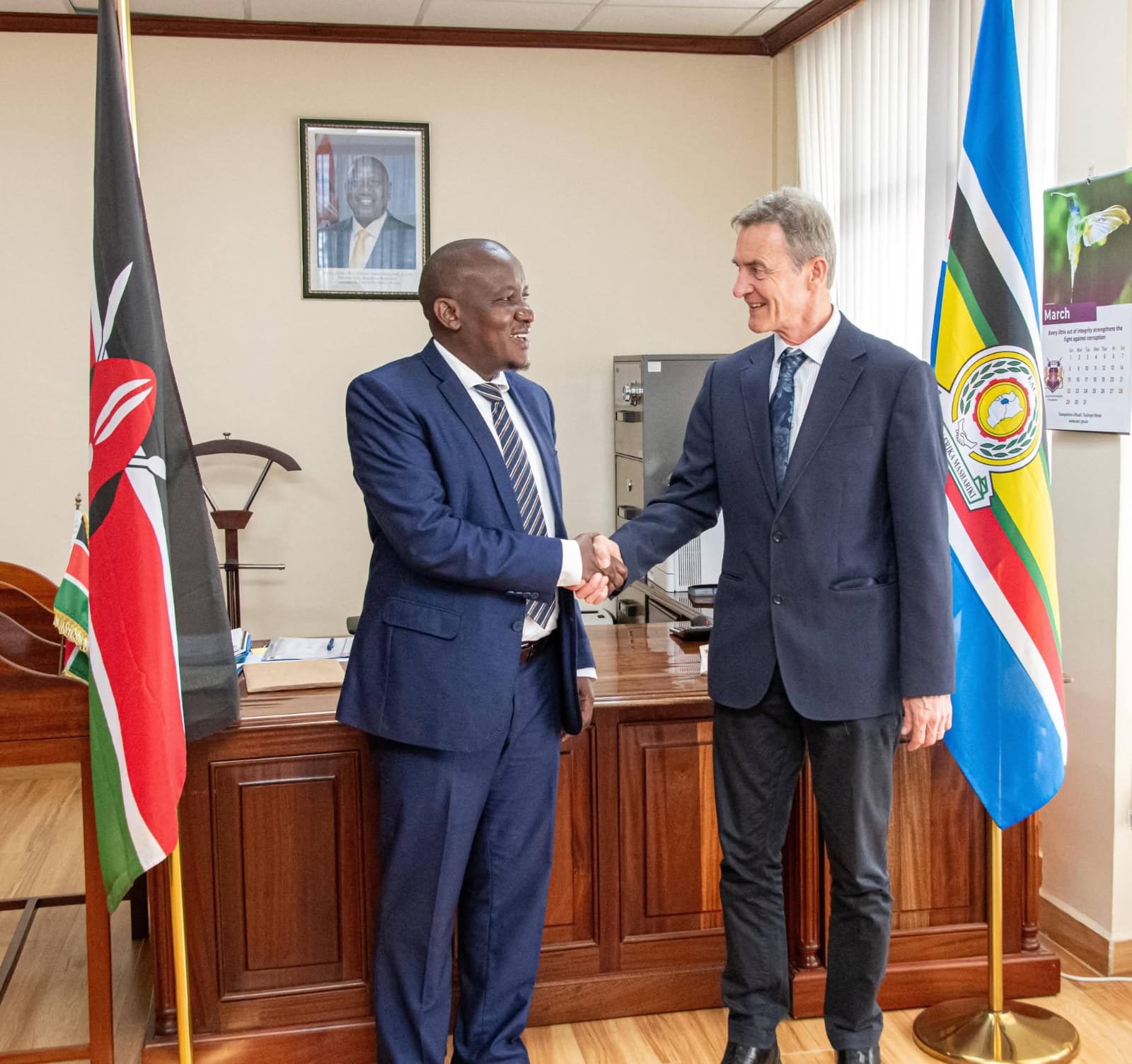
On Tuesday, UNOPS Director for East and Southern Africa Rainer Frauenfeld led a delegation in a courtesy call to Principal Secretary for Irrigation Ephantus Kimotho Kimani at Maji House to explore areas of collaboration with the State Department for Irrigation.
According to an official statement from the department, the discussions with UNOPS focused on potential technical support for priority dam projects under the government’s broader irrigation expansion plans, including President William Ruto’s 50 Mega Dams agenda.
“It is critical that we improve the performance and governance of irrigation schemes, strengthen corporate agribusiness models, and promote efficient and sustainable water management practices to maximise productivity and returns on investment,” Kimotho said.
The talks also highlighted the need for structured planning, sound procurement systems and efficient project management in delivering large-scale water and irrigation infrastructure.
UNOPS, which provides expertise in infrastructure implementation and project oversight, is expected to support institutional capacity building and contribute to Kenya’s progress toward its Sustainable Development Goals.
Separately on the same day, the Principal Secretary also met Soma Moulik, the new Water Practice Manager at the World Bank.
Officials said the meeting with the World Bank focused on ongoing cooperation between the lender and the State Department for Irrigation, particularly through the National Irrigation Sector Investment Plan (NISIP) and other initiatives supporting agricultural growth.
During the discussions, the parties explored the proposed Kenya Resilient Irrigation for Sustainable Economy (KRISE) programme, which seeks to accelerate farmer-led irrigation, introduce results-based financing, improve irrigation scheme efficiency and enhance water security in Arid and Semi-Arid Lands.
“Investing across the entire irrigation value chain is essential to empower both smallholder and commercial farmers and to ensure sustainable economic growth,” Kimotho said.
The talks also considered blended financing and co-financing models as possible approaches to mobilising resources and reducing risks in large-scale irrigation investments.
Government officials reiterated their commitment to working with development partners to expand irrigation coverage and achieve the target of placing 1.5 million acres of land under irrigation.
The engagements with UNOPS and the World Bank formed part of ongoing consultations by the State Department for Irrigation aimed at strengthening technical capacity, improving irrigation infrastructure management and advancing programmes designed to support food security and climate resilience.