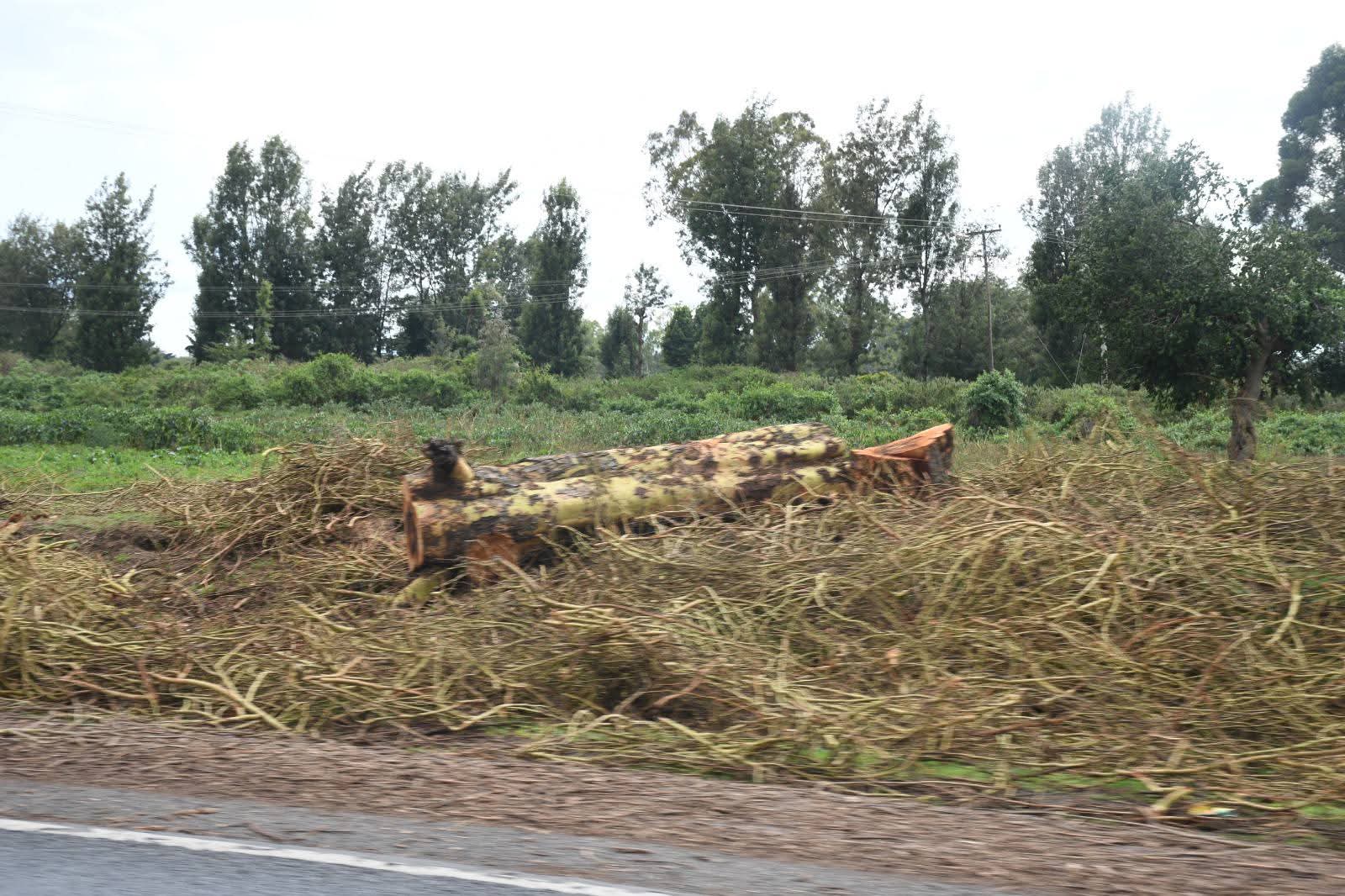
The Kenya National Highways Authority (KeNHA) says infrastructure development and environmental responsibility can go hand in hand.
At the ongoing dualling of the Rironi-Mau Summit Highway, the Authority has put in place a structured tree management and reforestation programme aimed at safeguarding the environment while upgrading the road.
KeNHA said every tree removed during the highway expansion is meticulously documented and accounted for, with a clear plan to plant four trees for every one removed.
The 1:4 replacement ratio, the Authority said, forms part of its environmental management framework designed to preserve ecological balance even as the road corridor is modernised.
As part of its Corporate Social Investment (CSI) initiative, KeNHA said it has handed over felled trees to public institutions, including the National Youth Service (NYS) and Kenya Prisons in Naivasha.
According to the Authority, the initiative promotes sustainable resource utilisation by ensuring that timber from the project is put to institutional and community use rather than wasted.
“This is a practical demonstration that infrastructure development can coexist with environmental conservation,” it said.
“Our approach ensures that we not only meet the nation’s transport needs but also enhance green cover and support climate resilience.”
KeNHA said it has also launched a comprehensive tree replacement programme under which more trees will be planted than those removed, with the aim of restoring and enhancing the ecological integrity of the highway corridor.
Beyond serving as visual enhancements along the road, the Authority said the replanted trees are expected to function as carbon sinks and contribute to national climate change mitigation efforts.
It noted that large-scale highway projects can pose risks of ecological disruption if not properly managed, but said its measures are intended to balance development needs with environmental protection.
The Rironi-Mau Summit Highway upgrade, a key artery linking Nairobi to western Kenya, is expected to improve transport efficiency and safety while incorporating environmental safeguards within the project design.
KeNHA said its approach demonstrates that careful planning, transparency and accountability can make major infrastructure projects compatible with sustainable development principles as the country continues to expand its road network to support economic growth.