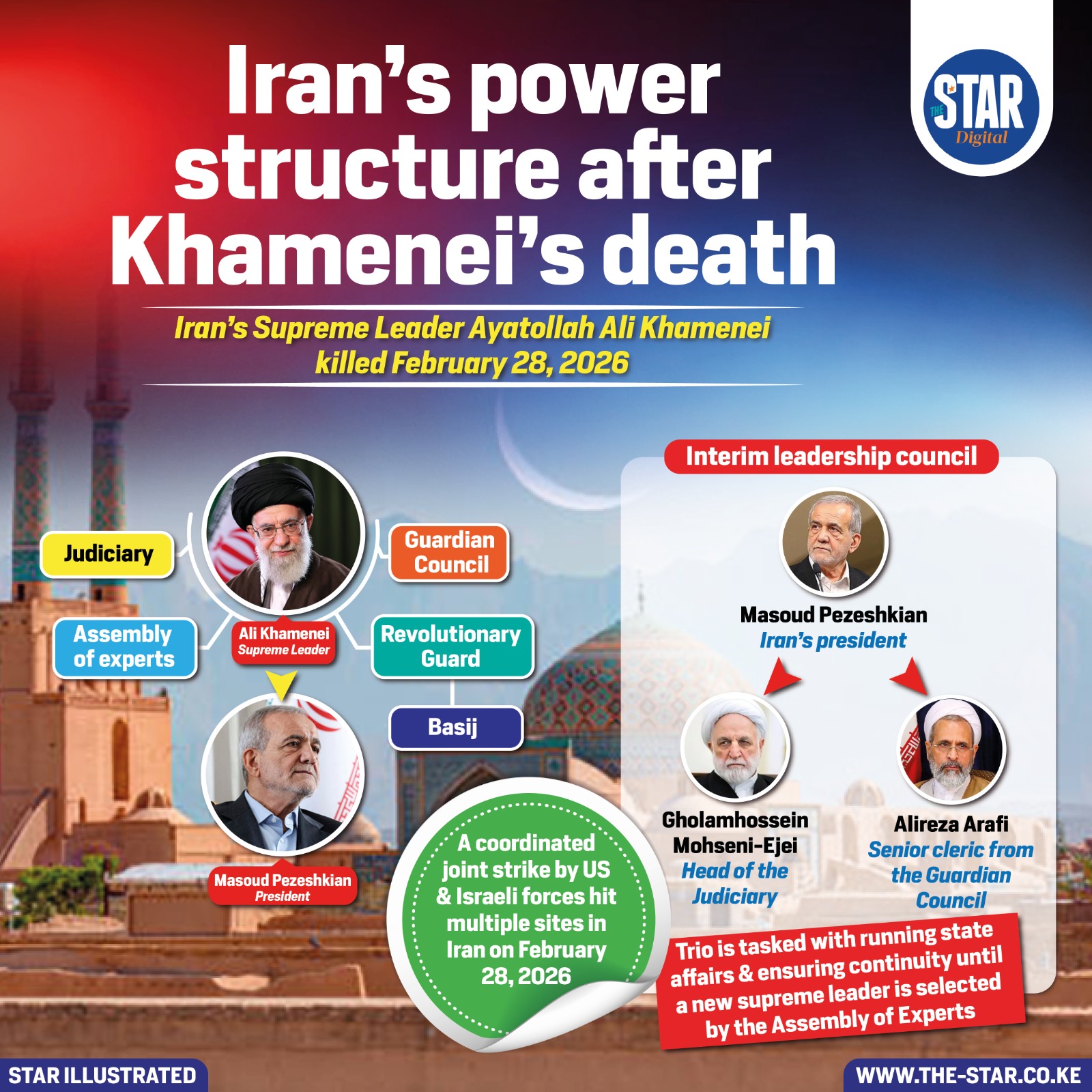
The Islamic Republic of Iran is navigating a critical shift in its power structure following the death of Supreme Leader Ayatollah Ali Khamenei.
The long-standing leader was killed on February 28, 2026, during a coordinated joint strike by United States and Israeli forces that targeted multiple sites across the country.
In the immediate wake of this seismic event, an interim leadership council has been established to maintain state stability and ensure administrative continuity during one of the most volatile periods in the nation’s modern history.
This transitional trio is led by President Masoud Pezeskhian, who is joined by Gholamhossein Mohseni-Ejei, the Head of the Judiciary, and Alireza Arafi, a senior cleric from the Guardian Council.
Together, they are tasked with running state affairs until a permanent successor is chosen. The constitutional responsibility for selecting the next Supreme Leader now falls to the Assembly of Experts.
While the interim council manages the executive and judicial functions, the country’s vast security and ideological apparatus—including the Revolutionary Guard, the Guardian Council, and the Basij—remain central pillars of the existing power framework.
As the Assembly of Experts deliberates, the interim council’s primary mandate is to project a front of internal order while the nation mourns and prepares for a new era of leadership.