
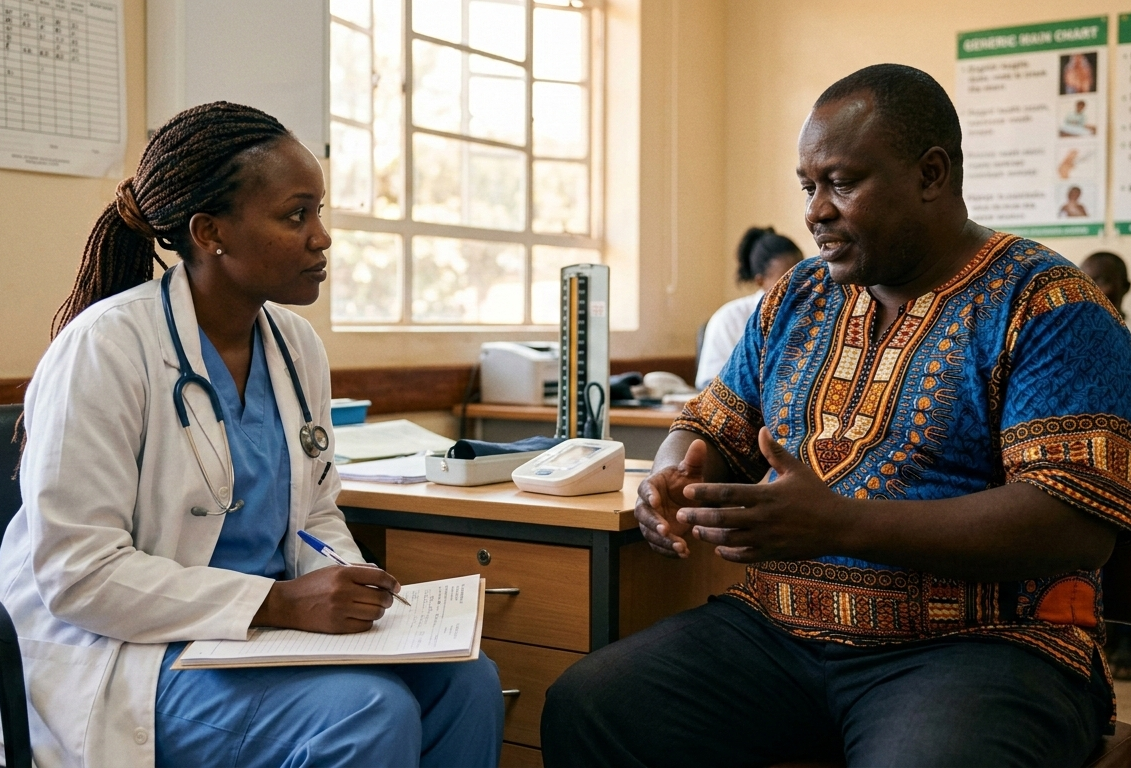
A doctor speaking or consulting a patient during World Obesity Day/AI-GENERATED
Kenyan doctors have warned that the world is on course for an unprecedented surge in obesity. They project that the number of people living with the condition could rise from one in eight in 2022 to one in every two by 2035.
Speaking during this year’s World Obesity Day commemorations, consultant endocrinologists Dr Caroline Mithi and Dr Nicola Oketch said the global trajectory mirrors a pandemic accelerating fastest in low- and middle-income countries such as Kenya.
Citing data from the World Obesity Federation, Dr Mithi noted that over one billion people worldwide currently live with obesity.
“If trends continue, that number could quadruple to four billion within the next decade,” she warned, adding that global prevalence has been doubling since 1990 and is projected to rise even more sharply.
She said the concern is not only the rising numbers but also the lack of preparedness.
“Only about seven per cent of countries are adequately prepared to deal with what is coming,” she said, describing obesity as a systemic disease driven by environmental, economic and social factors rather than individual willpower.
In Kenya, the situation is equally concerning. Recent estimates indicate that 10 per cent of adults are overweight, while 13.5 per cent are obese. Combined, nearly a quarter of adults are either overweight or obese.
Certain counties already record disproportionately high rates. Among women, central counties such as Kirinyaga and Nyeri lead, while among men, Kajiado and Lamu have the highest prevalence.
Despite this, specialists say most obesity-related services remain concentrated in Nairobi, leaving high-burden counties underserved.
“The resources are in the capital, but the need is increasingly outside it,” Dr Mithi observed, questioning whether medical therapies, insurance coverage and specialist care are reaching affected populations.
Kenya is also facing a double burden of malnutrition. While about 18 per cent of children remain stunted due to undernutrition, roughly 13 per cent are living with obesity.
“We are fighting undernutrition on one side and a wave of obesity on the other,” she said, warning that an obese child is highly likely to become an obese adolescent and adult, with elevated risk of diabetes and cardiovascular disease.
Dr Oketch described obesity as a precursor to non-communicable diseases (NCDs) such as diabetes, heart disease, stroke and obstructive sleep apnoea.
She emphasised that high body mass index (BMI) is a leading driver of Kenya’s rising NCD burden, which has increased by more than 20 per cent in recent years.
“Obesity affects the immune system and multiple organs. It is not a cosmetic issue; it is a chronic disease,” she said, urging clinicians to move beyond viewing patients as mere BMI figures and instead screen proactively for complications.
Both doctors called for a comprehensive, whole-of-society response. They outlined four pillars of management: nutrition therapy, physical activity, behavioural modification, and medical or surgical interventions where necessary.
However, they cautioned against rushing to medication or bariatric surgery without first addressing diet, mental health and lifestyle.
They also highlighted structural barriers, including the high cost and limited availability of healthy foods compared to cheaper ultra-processed options, inadequate safe spaces for exercise, and persistent stigma within healthcare settings.
“How many clinics have equipment and seating that can accommodate a patient with class III obesity?” Dr Oketch asked.
The specialists urged the Ministry of Health, insurers and primary care providers to strengthen screening, counselling and early intervention under universal health coverage frameworks.
They also called for stronger food policies, clearer front-of-pack labelling, and investment in community health promoters to support early detection.
“Obesity is not about laziness or lack of discipline,” Dr Oketch said. “There is biology and science behind it. People living with obesity deserve dignity, respect and evidence-based care.”
Without decisive action, the doctors warned, Kenya risks being swept into a global crisis where half the world’s population could be living with overweight or obesity by 2035.







