Kenyan households are staring at a potential commodities shortage and spike in the cost of living amid a drop in exports, as the Middle East war disrupts the global supply chain.
The joint US-Israel attack on Iran on February 28, which has triggered retaliatory strikes across the Middle East, including on countries hosting US military bases, has clamped movement along key sea and air routes, hurting trade.
Saudi Aramco, one of the key partners in Kenya's Government-to-Government (G2G) oil import deal (alongside Abu Dhabi National Oil Company and Emirates National Oil Company), on Monday shut operations at its Ras Tanura refinery after drone strike.
The Ras Tanura complex, on the kingdom's Gulf coast, houses one of the Middle East's largest refineries with a capacity of 550,000 barrels per day (bpd) and serves as a critical export terminal for Saudi crude.
On Monday, Iran’s Islamic Revolutionary Guard Corps (IRGC) declared the Strait of Hormuz was closed, and that any vessel attempting to pass through would be set ablaze.
At least three tankers had as of Tuesday been attacked with hundreds of vessels dropping anchor outside the Strait, which provides the only sea passage from the Persian Gulf to the open ocean and one of the world's most strategically important choke points.
After the stop of traffic on the Strait of Hormuz, benchmark oil price, Brent crude, jumped about six per cent to over $77 a barrel. It initially spiked as high as $82, its highest level since January 2025.
While Kenya pegs its fuel prices on products ordered a month earlier, a short in supply as a result of delays and higher freight costs are likely to influence pump prices, currently at Sh178.28 per litre of petrol, Sh166.54 for diesel and Sh152.78 for Kerosene in Nairobi, respectively.
The Energy and Petroleum Ministry yesterday assured the country has sufficient stocks to cover both the country and the region.
“We have scheduled imports for delivery up to end of April 2026 and, therefore, as it stands, we are assured of security of supply. We are closely monitoring the fluid situation as it evolves whilst engaging with our G-G suppliers for contingency planning,” CS Opiyo Wandayi said.
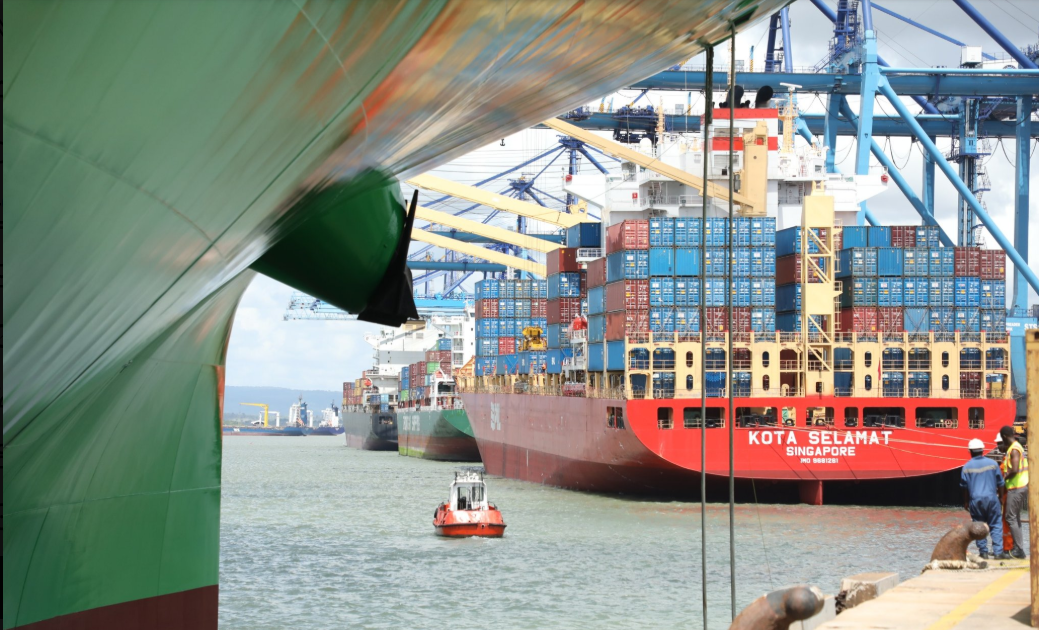
However, shipping lines operating both container and conventional cargo vessels have since suspended some routes, re-routed to longer routes and introduced “emergency conflict surcharges”, which translate to higher import costs hence affecting final commodity prices.
An increase in fuel prices has ripple effect in the economy, impacting manufactruing, transport, agriculure, building and construction, tyravel and tourism among other key sectors.
CMA CGM for instance, a key liner serving the Port of Mombasa, has introduced a $2,000 (Sh258,100) Emergency Conflict Surcharge” on a 20-foot container, $3,000 (Sh387,150) on a 40-foot container and $4,000 (Sh516, 200) on refrigerated containers.
“CMA CGM advises that all vessels inside Gulf and bound to Gulf, have been instructed with immediate effect to proceed to shelter. Passage through the Suez Canal has been suspended until further notice, and vessels will be rerouted via the Cape of Good Hope,” it said.
Mediterranean Shipping Company (MSC), the largest container vessels and primary operator at the Port of Mombasa has suspended all bookings for worldwide cargo to the Middle East region “until further notice.”
Maersk on the other hand has re-routed its vessels to around-Africa instead of the Suez routing, meaning voyages will take longer.
According to the Shippers Council of Eastern Africa (SCEA), this translates to a “disaster” for Kenya, with exports such as avocado whose season starts in two weeks being most exposed.
“Freight time will increase as vessels re-route via the Cape of Good Hope. The Red Sea which connects Red Sea to Mediterranean, ensures that shipments from Mombasa reach Europe within 18 to 20 days. As a result of re-routing it shall take 40 to 45 days,” SCEA chief executive, Agayo Ogambi, noted.
This will lead to cold chain disruptions, higher rejection rates by buyers and financial losses for exporters.
The red sea is one of the most crucial maritime trade corridors in the world handling over 30 per cent of global shipping traffic according to UNCTAD.
Longer transit time and increased freight costs have forced European importers to reconsider their sourcing strategies, leading to a significant shift in global market preferences.
Competition to Kenya will most likely come from South Africa, Egypt and other markets sources where supply chain disruptions have been minimal.
“Subsidised airfreight, tax relief to exporters should be considered by the government,” said Ogambi.
Kenya Ships Agents Association has since cautioned a worldwide delay in shipping operations, rerouting challenges and higher insurance premiums.
“Freight rates will climb placing additional strain on import-dependent countries,” CEO Elijah Mbaru, who also has global shipping and maritime leadership roles, said.
A closure of the Strait of Hormuz, he notes, immediately sends shockwaves across the global economy, with nearly one-fifth of the world’s oil supply passing through the narrow waterway connecting the Persian Gulf to global markets.
If blocked, oil shipments from major producers such as Saudi Arabia, the UAE, Kuwait, Iraq and Qatar are severely disrupted.
Kenya’s trade with the Middle East, valued at Sh718.1 billion in 2024, also remains exposed.
During the year, the country exported goods worth Sh106.6 billion up from Sh164.6 billion the previous year, against imports that totaled Sh554.5 billion having dropped from Sh616.3 billion in 2023.
Kenya's top exports to the Middle East are dominated by tea, horticultural products (cut flowers, fruits), meat, coffee, nuts and vegetables, with UAE, Saudi Arabia, Yemen and Iran as main markets.
Top imports include refined petroleum (diesel, gasoline, jet fuel), plastics, fertilizers and electronic equipment, essential for Kenya's energy and manufacturing sectors.
While the country’s main import source is China, vessel schedules could affect delivery, hurting trade as Kenya remains a net importer.
About 90 per cent of global trade is transported by sea, acting as the backbone of the international economy and supply chain.
The war also affects Kenya’s tea exports to Iran, a key market, which was expected to pick after the two countries in August last year agreed to established a 60-day roadmap to lift a ban that had been put in place.
The ban was as a result of a major scandal where Kenyan firm Cup of Joe Limited allegedly re-exported low-quality tea as premium, causing severe trade disruptions and legal actions against exporters.
A joint committee was formed to restore trade, though the renewed tensions threaten this recovery.
With escalating tensions, financial markets are also expected to react with volatility, a move likely to weaken currencies in oil-importing nations such as Kenya. Inflation pressures are also expected to intensify globally.
The Middle East, led by Saudi Arabia, has also emerged as a crucial, fast-growing source of remittances for Kenya, with billions of shillings sent annually by workers in the region, helping families back home cope with critical bills mainly health and education.