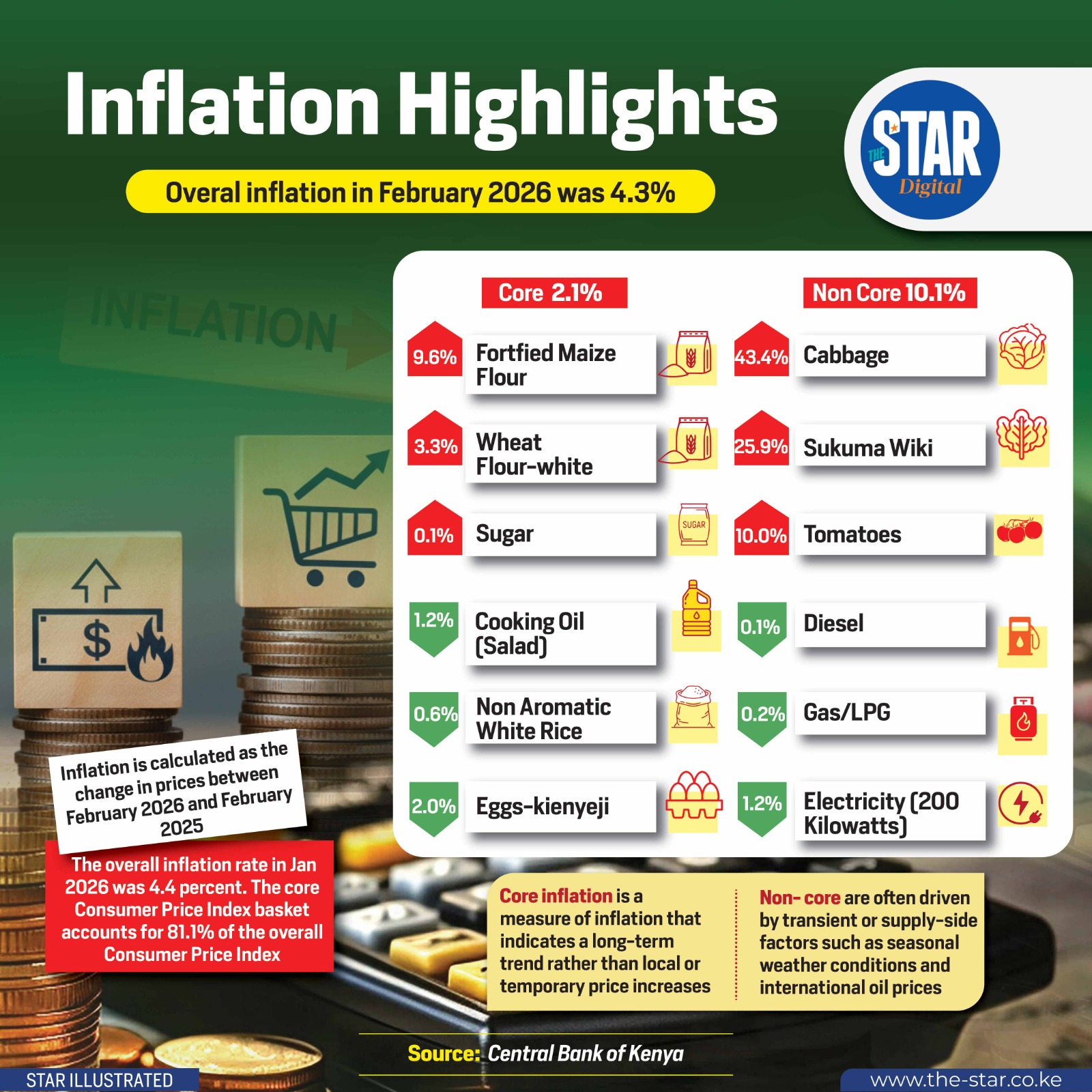
Kenya’s overall inflation rate eased slightly to 4.3 per cent in February 2026, down from 4.4 per cent recorded in January.
Data from the Central Bank of Kenya indicates a significant divide between core inflation, which stood at 2.1 per cent, and non-core inflation, which surged to 10.1 per cent.
While core inflation reflects long-term trends, the non-core sector remains highly volatile due to seasonal weather conditions and international oil price shifts.
Household staples saw varied price movements throughout the month. Within the core basket, which accounts for 81.1 per cent of the Consumer Price Index, fortified maize flour rose by 9.6 per cent and wheat flour by 3.3 per cent.
Conversely, items like sugar and non-aromatic white rice remained relatively stable with marginal increases of 0.1 per cent and 0.6 per cent.
The most dramatic price hikes occurred in the non-core category, particularly in fresh produce. Cabbage prices spiked by 43.4 per cent, while Sukuma Wiki saw a 25.9 per cent increase.
Tomatoes also rose by 10 per cent. In the energy and utility sector, price changes were more subdued; electricity costs for 200 Kilowatts increased by 1.2 per cent, while diesel and gas/LPG saw minimal shifts of 0.1 per cent and 0.2 per cent, respectively.