Nearly two decades after the 2007–08 post-election violence, time has done little to dull Bernard Ndege’s pain.
The years have passed, governments have changed, commissions have written reports — but for him, the fire of that January night in 2008 still burns.
On January 28, in Naivasha, horror arrived at his doorstep.
Nine members of his family were trapped inside their house and burnt alive in attacks blamed on the outlawed Mungiki sect.
In a matter of hours, laughter turned to screams and a home became a funeral pyre.
Of the 12 people who had gathered under that roof, Ndege was the sole survivor.
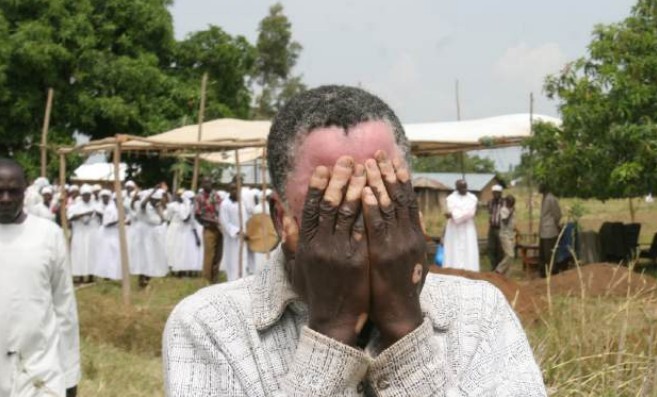
When the Star traced him to his rural home in Osodo village, Kobala location, Wang’chieng’ ward in Karachuonyo constituency, the weight of that loss was visible long before he spoke.
His house stands fragile against time — patched mud walls, a sagging iron-sheet roof that leaks when it rains, and barely any furniture inside.
Outside, in the fading afternoon light, Ndege sat on the only plastic chair available, forcing us to settle on the untended grass.
The scars on his face and hands are still visible—a permanent reminder of the flames he escaped.
As he began to speak, his voice trembled.
At times, words failed him.
He fought back tears as he revisited memories no father, no husband and no son should ever have to carry.
For Ndege, the violence did not end when the country moved on.
It lives in the silence of his home, in the empty spaces at the dinner table, and in the long nights when sleep refuses to come.
Nearly 18 years later, he is still surviving. But healing, he says quietly, has never truly come.
“I have heard many stories that even during war, rival soldiers will spare lives of expectant women, they will not kill them,” he told the Star.
“What is paining me to date is that the previous night (Saturday) one of my two wives told me she was counting days to deliver, only for the attackers to burn her to death the following day (Sunday) without considering her condition.”
"As we kept screaming inside that we were being burnt alive, the attackers were also screaming outside to confuse anybody who would have wanted to come to our rescue. We were in this situation for hours it was the most painful thing you can never wish on your worst enemy.”
In the attack, he lost nine children, his wives and all he had worked for.
Police rushed him to hospital where he stayed for days before he was taken to the adjacent mortuary to identify the bodies of his family members.
“All I had accumulated for 30 years I was in Naivasha, was reduced to ashes in one night,” said the 73-year-old man.
Life after the violence has been a chain of misfortunes for the victim who was the face of 2007 bloodbath survivors.
Ndege lives a fragile life, struggling even with basic tasks.
He said the injuries and trauma from the night of the attack left him physically weak and cannot withstand two hours of hard work in the sun.
“If I stay under the sun working for two hours, I will collapse and blood will ooze from the scars you are seeing on my face.”
In a bid to rebuild, Ndege invested the cash he received from well-wishers in small rental houses, hoping the income would help him start again but floods later swept through the area and destroyed the structures, wiping out his only source of livelihood.
He also remarried as his life requires constant support.
The tragedies took a heavy toll on his family, his first wife eventually left, taking four children with her after years of struggle and poverty when he could no longer provide for the family.
“She left with my four children because I could not put food on the table,” a dejected Ndege said.
“I took another wife because I can’t live on my own. She is
out in the lake trying to get fish for our upkeep.”
Today, the responsibility of keeping the household afloat rests largely on his wife, who wakes up before dawn to sell fish in nearby markets.
The little she gets helps feed the family and pay school fees for their Grade 9 daughter.
Now older and struggling with health complications from the burns, Ndege is appealing to President William Ruto and the government to remember survivors like him.
“I am just asking the government to help me live like a human being again, the President knows me so are our leaders,” he said.
Despite all he went through, Ndege has never received any help from the government but still waiting, hoping that one day the government will finally remember him.
“Through this radio,” he said pointing at a transistor radio.
“I hear plans to compensate recent victims of election related violence and no mention of my case. People from Central and other regions received compensation. It hurts me why nobody is listening to my case.”
Even the recent compensation programme announced under the political truce between President William Ruto and opposition leader Raila Odinga left him out.
“It feels like my family died twice, once in the fire and again from this deliberate omission,” he says tearfully.
“Many times I contemplate suicide under this tree but I hold back hoping someone will one day remember my case.”
The issue came up in Parliament in June 2023 when then Interior CS Kithure Kindiki was questioned why Ndege was never compensated alongside other victims.
He promised to look into the plight of those who missed out. Nothing so far.
Ruto and the late Raila on March 27 formed a five-member committee to oversee the implementation of a 10-Point Agenda and the NADCO Report.
The Committee is chaired by former nominated senator Agnes Zani.
Amongst the mandate of the committee is to ensure compensation for victims of protests and riots.
It is supposed to develop a comprehensive operational framework to verify, categorise, and facilitate compensation for victims—both civilians and security personnel—who suffered bodily harm or lost their lives during protests and riots held since 2017.
This technically locks out Ndege’s group who suffered violence following the declaration of 2007 disputed presidential election results.
A final comprehensive report detailing the status of the MoU's implementation will be released to the public on March 7, 2026, marking the one-year anniversary of its signing.
Ndege told the Star how his attempts to seek help from government offices ended in disappointment with then Naivasha District Commissioner only advising him to ‘ immerse himself in church’.
“Only the late Raila came to my rescue, he gave me two lorries which carried the coffins and the few items I received from well-wishers,” Ndege narrated.
“I visited several government offices in Naivasha, including the DC’s office. The DC told me that the government does not intervene in cases like mine involving poll chaos.”
According to Ndege, Naivasha OCPD after listening to his case offered him a bible – which he keeps to date – and advised him to find a church at home.
“He listened carefully to my case and the only thing he gave me was a holy bible and told me I will die soon if I don’t find a church to ‘immerse’ myself in,” Ndege said.