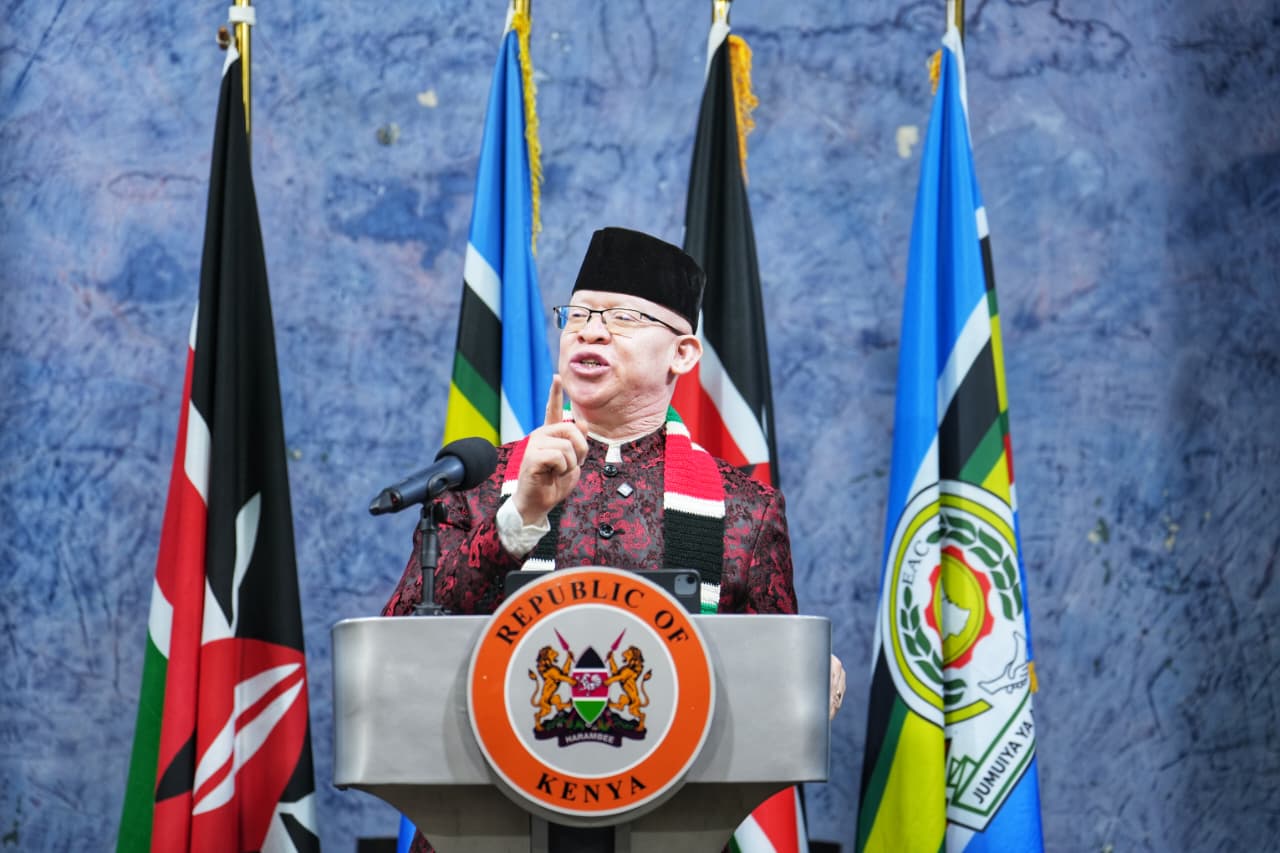
Government Spokesman Isaac Mwaura has outlined how the government plans to implement the National Dialogue Committee (NADCO) Report, amid claims that it has stalled.
Mwaura reaffirmed the government’s commitment to delivering on the recommendations through a structured and time-bound framework.
According to him, three implementation pathways have been adopted: administrative, legislative, and constitutional.
He explained that the first pathway involves administrative action across government ministries and departments.
“Regarding the NADCO report, there have been claims that it is not being implemented. We reiterate our strong commitment to its implementation through a three-pronged approach,” Mwaura said.
“We have developed templates for all 54 State Departments headed by principal secretaries to guide the integration and execution of the report’s recommendations within their respective mandates.”
The spokesman said that the second pathway focuses on legislative reforms.
On constitutional matters, including proposals requiring a referendum, Mwaura said the government is exploring structured options.
“There are 16 pieces of legislation that will be processed to anchor the recommendations in law and ensure institutional compliance. We are addressing the referendum either during the general elections or by other means, as provided for within the Constitution,” Mwaura added.
He revealed that the implementation structures remain operational and adequately supported, adding that the State’s approach will be inclusive and transparent.
“The task force and the five-member committee are well supported and continue their work. A comprehensive public progress report will be released in due course. The government is firmly committed to an inclusive, transparent, and time-bound implementation through administrative, legislative, and constitutional pathways,” he said.
The government, he added, remains resolute in seeing through the reform process under President William Ruto’s leadership.
The NADCO Report emerged from bipartisan talks aimed at easing political tensions and addressing key governance, electoral, and cost-of-living concerns, with its implementation viewed as critical to sustaining political stability and institutional reforms.
In February, NADCO chairperson Agnes Zani assured Kenyans that the committee will deliver on its mandate within the set timelines.
Zani urged the public to have confidence in the committee, saying that they now have a full picture of what Kenyans want addressed.
She noted that the political class has been putting pressure on the team to speed up the report.
The 10-point agenda was signed by the late former Prime Minister Raila Odinga and President William Ruto on behalf of the ODM and UDA parties, respectively.
The team has a timeline of March 7 to present the report.
The committee, tasked with overseeing the implementation of the 10-point agenda, conducted a public participation exercise in Homa Bay County over the weekend.